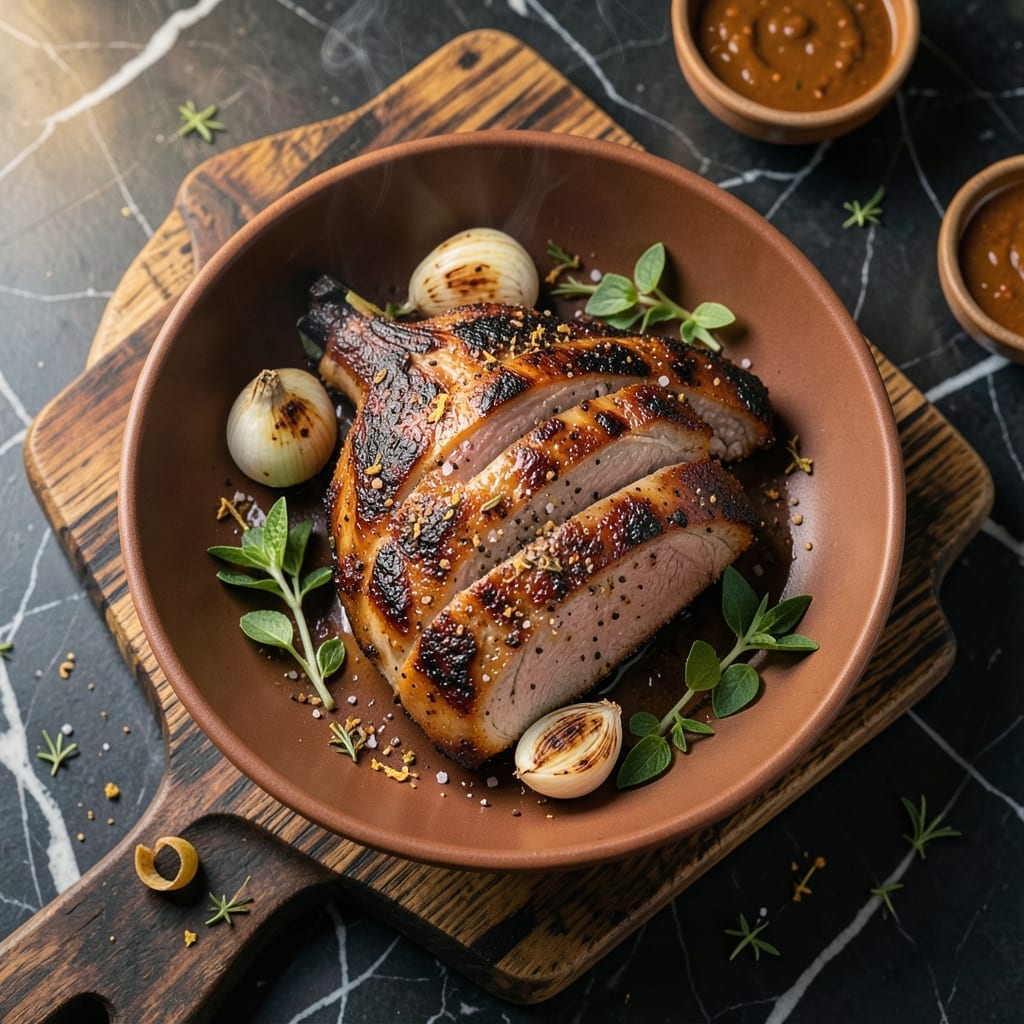
There’s nothing like the smell of wood smoke mingling with fresh herbs to announce dinner is coming. This cut transforms over direct heat, developing a deep smoky char while staying tender inside.
I start with a simple herb rub—no fancy techniques, just good ingredients and patience. The pork neck soaks up every bit of flavor, making each bite herb-infused and juicy.
Grilling low and slow ensures the meat stays moist while building that coveted crust. It’s a straightforward method with restaurant-quality results.
Serve it sliced or shredded, with sides that let the pork shine. This dish proves great flavor doesn’t need to be complicated.
Ingredients for Grilled Pork Neck
A few quality ingredients and patience create restaurant-quality smoky, herb-infused pork neck every time.
| Ingredient | Amount | Notes |
|---|---|---|
| Pork Neck 🍖 | 2 ½ lb | Bone-in, skin-on for best texture |
| Kosher Salt 🧂 | 1 ½ tbsp | Diamond Crystal preferred for even seasoning |
| Black Pepper 🌶️ | 1 tbsp | Freshly ground for bold flavor |
| Smoked Paprika 🌶️ | 1 tbsp | Spanish variety for authentic smokiness |
| Garlic Powder 🧄 | 1 tbsp | Not garlic salt for pure flavor |
| Dried Oregano 🌿 | 1 tbsp | Mediterranean oregano for depth |
| Dried Thyme 🌿 | 1 tbsp | Rubbed between fingers to release oils |
| Brown Sugar 🍚 | 2 tbsp | Light or dark for caramelization |
| Olive Oil 🫒 | ¼ cup | Extra-virgin for herb rub binding |
| Apple Cider Vinegar 🍏 | 2 tbsp | Balances richness in the meat |
| Hickory Wood Chips 🪵 | 2 cups | Soaked in water for 30 minutes |
| Fresh Rosemary Sprigs 🌿 | 4 pieces | For aromatic smoke while grilling |
| Yellow Onion 🧅 | 1 whole | Quartered for indirect heat flavor |
[recipe_ingredient_scaler]
Pork neck is the star here. Bone-in, skin-on cuts deliver the best texture and flavor absorption. Source from local butchers or specialty meat counters at Whole Foods—they’ll often have it pre-cut. Look for pieces with good marbling; this fat renders down during the long cook, keeping the meat juicy. Avoid pre-brined or enhanced meats, as they can throw off the seasoning balance.
No smoked paprika? Chipotle powder adds a different but complementary heat. Fresh garlic can replace garlic powder at a 3:1 ratio (3 cloves = 1 tbsp powder). For the wood chips, cherry or apple wood offers a milder smoke if hickory feels too intense. The vinegar can be swapped with lemon juice for brightness, but apple cider vinegar’s mildness pairs best with pork.
The dry rub keeps in an airtight container for 3 months, but it’s best used fresh. Pork neck can be brined overnight for extra juiciness—just reduce the rub’s salt by half. Leftovers hold in the fridge for 4-5 days or freeze for up to 3 months (shredded meat freezes best).
Why You’ll Love This Recipe
- Five-Minute Prep: I just rub the pork neck with salt, pepper, smoked paprika, and garlic powder—no marinating, no fuss.
- Smoky, Garlicky Bite: That first charred crust with the garlic and paprika hits different every time.
- Feeds a Crowd: One slab on the grill, and suddenly I’ve got a centerpiece for four without extra effort.
- Leftovers? Yes Please: Honestly, the flavors deepen overnight, so lunch the next day tastes even better.
Step-by-Step Instructions for Grilled Pork Neck
Master the technique for achieving perfectly charred, herb-infused pork neck with a smoky depth.
Step 1: Prepare the Dry Rub and Marinade
In a small bowl, combine the 1.5 tbsp Kosher Salt, 1 tbsp Black Pepper, 1 tbsp Smoked Paprika, 1 tbsp Garlic Powder, 1 tbsp Dried Oregano, 1 tbsp Dried Thyme, and 2 tbsp Brown Sugar. Rub this mixture evenly over the 2.5 lb Pork Neck, ensuring all surfaces are coated.
In a separate bowl, whisk together the 0.25 cup Olive Oil and 2 tbsp Apple Cider Vinegar. Pour this over the seasoned pork neck, massaging it into the meat. The vinegar tenderizes while the oil helps the rub adhere. Let it marinate for at least 1 hour or overnight for deeper flavor penetration.
Step 2: Set Up the Grill for Indirect Heat
Soak the 2 cups Hickory Wood Chips in water for 30 minutes before grilling. Prepare your grill for indirect heat by banking coals to one side or turning off half the burners on a gas grill. This creates a cooler zone for slow cooking and a hot zone for searing.
Place the soaked wood chips directly on the coals or in a smoker box on the gas grill. Add the 4 pieces Fresh Rosemary Sprigs to the coals for an aromatic touch. Quarter the 1 whole Yellow Onion and place it on the grill grates over indirect heat—this will infuse the pork with subtle sweetness as it cooks.
Step 3: Grill to Smoky Perfection
Place the pork neck on the grill over indirect heat, fat-side up. Cover the grill and maintain a temperature of 275-300°F. Cook for 2.5 to 3 hours, or until the internal temperature reaches 195-203°F for tender, fall-apart meat.
Baste the pork occasionally with the pan juices or a mix of olive oil and vinegar to keep it moist. The pork neck is done when a probe or fork slides in effortlessly, and the surface is deeply caramelized with a dark, smoky bark.
Step 4: Rest and Serve
Remove the pork neck from the grill and let it rest, tented loosely with foil, for 15-20 minutes. This resting period allows the juices to redistribute, ensuring moisture in every bite.
Shred the pork using two forks or chop it into chunks. Serve with the grilled yellow onion and any accumulated juices. The meat should be rich, smoky, and infused with the herb ACE, with a perfect balance of crispy exterior and juicy interior.
Pro Tips For Making Grilled Pork Neck
- Score the Fat Cap: I learned this the hard way—cut shallow crosshatches in the pork neck’s fat cap every ½ inch so the salt and smoked paprika actually penetrate and the fat renders out evenly.
- Dry the Surface: Pat the pork neck completely dry with paper towels before seasoning; excess moisture steams instead of sears, and you’ll lose that crispy crust.
- Use Medium-High Heat: Start over medium-high heat for 3-4 minutes per side to get a good char, then move to a cooler part of the grill to finish cooking without burning the garlic powder.
- Rest Before Slicing: Give it a solid 8-10 minutes under foil after grilling—this lets the juices redistribute, so every bite stays moist instead of dry.
Flavor Customization for This grilled pork neck
Spice It Up
For heat lovers, add 1 tsp cayenne pepper or 1 tbsp chipotle powder to your dry rub. I also love mixing in ½ tsp ground cumin for earthy warmth. A pinch of cinnamon—just ¼ tsp—adds surprising depth without overpowering. 🌶️
Sweet and Smoky
Boost caramelization by increasing brown sugar to 3 tbsp or adding 1 tbsp molasses to the rub. For a fruity twist, mix in 1 tsp orange zest or 1 tbsp apple butter. The sugar creates a sticky, glossy bark that’s irresistible.
Herb Variations
Swap dried herbs for fresh—use 2 tbsp chopped rosemary and thyme instead of dried. Add 1 tbsp fresh sage for a pine-like aroma. I often toss in bay leaves while grilling for subtle complexity.
Wood Smoke Options
Try cherry or apple wood chips for sweeter smoke than hickory. Pecan wood offers a mild, nutty flavor. For intense smokiness, mix mesquite with hickory—but use sparingly to avoid bitterness. 💡
Acid Balance
Swap apple cider vinegar for lemon juice or white wine vinegar for brightness. Add 1 tbsp Dijon mustard to the marinade for tangy depth. A splash of hot sauce in the rub adds layers of flavor.
Crust Enhancers
Brush the pork with melted butter or honey during the last 30 minutes for extra shine. Sprinkle coffee grounds into the rub for deep, roasted notes. These small tweaks make a big difference.
Nutrition Facts
Frequently Asked Questions
How long should I marinate the meat?
For best flavor, marinate the pork neck for at least 1 hour, but overnight in the fridge yields the deepest herb infusion. Don’t exceed 24 hours, as the vinegar can start to break down the meat too much.
Can I use a gas grill instead of charcoal?
Yes! Use a gas grill with indirect heat by turning off one burner. Add wood chips in a smoker box for that essential smoky flavor. Maintain 275-300°F for 2.5-3 hours.
What’s the ideal internal temperature?
Aim for 195-203°F internally for tender, fall-apart texture. Use a meat thermometer to check—this ensures juiciness without overcooking. Rest for 15-20 minutes after grilling.
How do I prevent dry meat?
Baste with oil-vinegar mix or pan juices every 45 minutes. Avoid high heat; stick to 275-300°F. Letting it rest after cooking locks in moisture.

Trained in classic French technique but raised on slow-cooked ribs and spicy rubs, she blends culinary skill with smoke and soul.
- Recipe for Boneless Pork Chops in Cast Iron Skillet: Sear and Baste to Juicy Perfection - October 3, 2026
- Recipe for Boneless Cross Rib Roast: Slow-Roasted Beef with Herb Crust - October 3, 2026
- Hamburgers in Sauce Recipe Crock Pot: Slow-Cooked Savory Delight - October 3, 2026