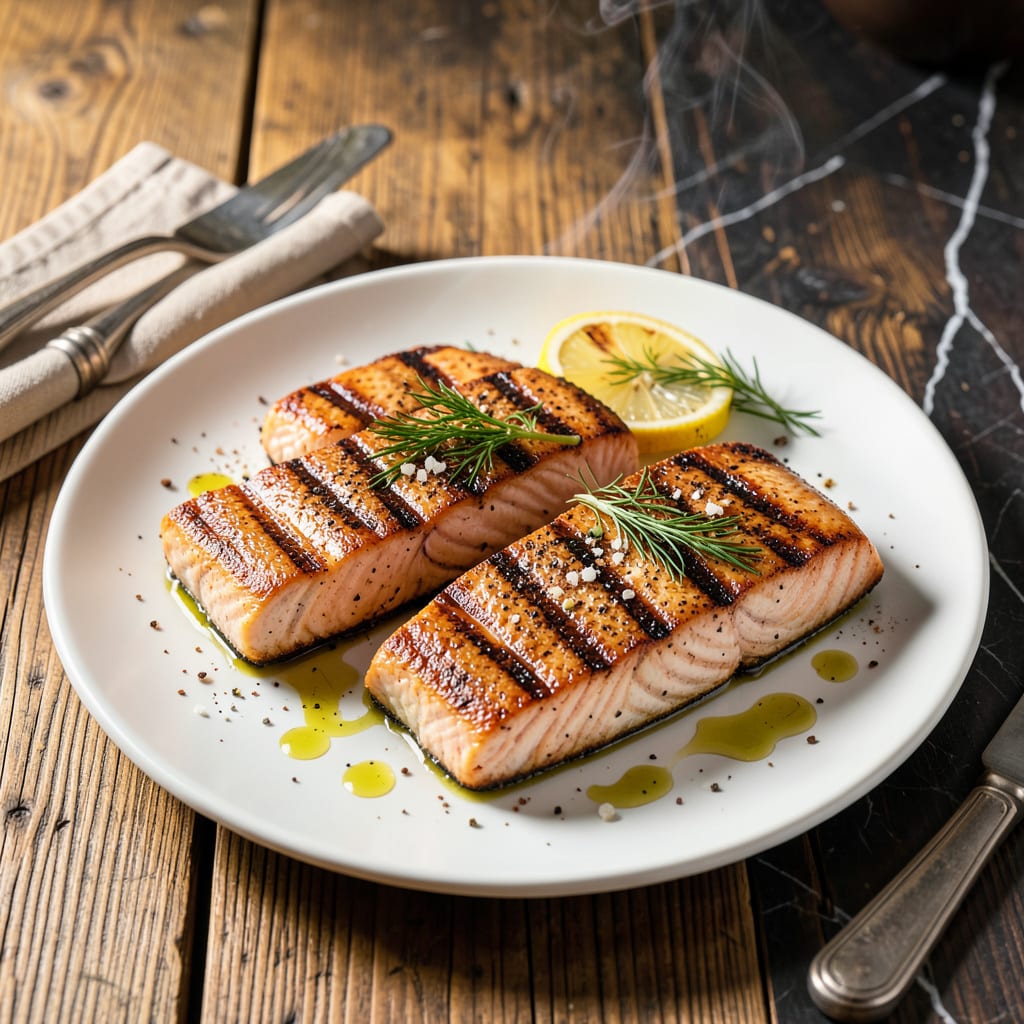
Mastering grilled salmon steaks means achieving flaky centers with perfectly charred edges. This method relies on precise timing and heat control to preserve the fish’s natural moisture and tenderness.
With a hot grill and a simple seasoning blend, you’ll create restaurant-quality results at home. The key is knowing exactly when to flip and when to pull the steaks for the best texture.
Ingredients for Grilled Salmon Steak
Fresh salmon, bold seasonings, and bright citrus create this restaurant-quality dish at home.
| Ingredient | Amount | Notes |
|---|---|---|
| Salmon Steaks 🐟 | 1 ½ lb | Skin-on, center-cut preferred |
| Olive Oil 🫒 | 2 tbsp | Extra-virgin for best flavor |
| Kosher Salt 🧂 | 1 ½ tsp | Diamond Crystal preferred |
| Black Pepper 🌶️ | 1 tsp | Freshly ground for optimal flavor |
| Garlic Powder 🧄 | 1 tsp | Not garlic salt |
| Smoked Paprika 🌶️ | ½ tsp | Adds depth to seasoning |
| Dried Thyme 🍃 | ½ tsp | Crushed for better release of flavor |
| Lemon 🍋 | 1 whole | Zested and juiced |
| Fresh Dill 🌿 | 2 tbsp | Chopped, for garnish |
| Unsalted Butter 🧈 | 2 tbsp | Melted, for basting |
| Light Brown Sugar 💛 | 1 tsp | Optional, for caramelization |
[recipeingredientscaler]
The salmon quality is non-negotiable for this recipe. Wild-caught sockeye or coho deliver the best flavor and texture. Look for steaks about 1 to 1.5 inches thick with vibrant color and no fishy odor. Most Whole Foods or Trader Joe’s locations carry excellent frozen options—thaw overnight in the fridge. Avoid previously frozen fish at the seafood counter; the texture suffers after refreezing.
No fresh dill? Fresh parsley or chives work as substitutes. Out of smoked paprika? Regular paprika plus a pinch of cayenne mimics the smokiness. The lemon can be swapped for lime if that’s what you have. For a sweeter glaze, increase the brown sugar to 1 tablespoon. The butter is optional but adds richness—olive oil works too if avoiding dairy.
Prepare the seasoning blend up to 2 days ahead. The salmon steaks can marinate with the dry rub for 30 minutes before grilling. Leftovers keep for 2-3 days in the fridge—reheat gently in a skillet to preserve moisture. This dish doesn’t freeze well; the texture changes significantly.
Why You’ll Love This Recipe
- 5-Minute Prep: I just rub the steaks with olive oil, salt, pepper, and garlic powder—no marinating, no fuss.
- That Charred Crust: The high heat locks in moisture while the garlic powder gives it a smoky, savory kick that’s ridiculously good.
- Weeknight Hero: It’s my go-to for busy evenings—ready faster than takeout and fancy enough for company.
- Leftovers? Yes Please: Cold salmon steaks flake beautifully into salads or wraps the next day. Honestly, I make extra on purpose.
Step-by-Step Instructions for Grilled Salmon Steak
This method ensures perfectly flaky centers with beautifully charred edges every time.
Step 1: Season the Salmon Steaks Thoroughly
Pat the 1.5 lb Salmon Steaks dry with paper towels to remove excess moisture. This step is crucial for achieving good sear marks. Place them on a clean work surface.
In a small bowl, combine the 1.5 tsp Kosher Salt, 1 tsp Black Pepper, 1 tsp Garlic Powder, 0.5 tsp Smoked Paprika, and 0.5 tsp Dried Thyme. Sprinkle this mixture evenly over both sides of the salmon, pressing gently to adhere.
Drizzle the 2 tbsp Olive Oil over the seasoned steaks, ensuring all surfaces are lightly coated. Let the salmon sit at room temperature for 15 minutes while you preheat the grill.
Step 2: Preheat and Prepare the Grill
Preheat your grill to medium-high heat (about 400°F). Clean the grates thoroughly with a grill brush to prevent the salmon from sticking. For gas grills, close the lid while preheating to reach the desired temperature.
Zest the 1 whole Lemon and set the zest aside. Halve the lemon and juice it, reserving the juice for later use. The zest and juice will add brightness to the finished dish.
Step 3: Grill the Salmon to Perfection
Place the salmon steaks on the preheated grill, skin-side down if they have skin. Close the lid and cook for 4-5 minutes without moving them. You should see the edges turn opaque as they cook.
While the salmon cooks, melt the 2 tbsp Unsalted Butter and mix in the reserved lemon zest and 1 tsp Light Brown Sugar. This creates a basting liquid that adds flavor and helps with caramelization.
Carefully flip the salmon steaks using a wide spatula. Brush the top with the melted butter mixture and cook for an additional 3-4 minutes with the lid closed. The salmon is done when it flakes easily with a fork and reaches an internal temperature of 145°F.
Step 4: Rest and Garnish Before Serving
Transfer the grilled salmon to a serving platter. Drizzle with the remaining butter mixture and any reserved lemon juice. Sprinkle with the 2 tbsp Fresh Dill, finely chopped, for a fresh herbal note.
Tent loosely with foil and let rest for 3-5 minutes. This allows the juices to redistribute throughout the fish, ensuring each bite is moist and flavorful. Serve immediately while still warm.
Pro Tips For Making Grilled Salmon Steak
- Pat the Salmon Dry: After rinsing the steaks, pat them thoroughly with paper towels—this helps the seasoning stick and prevents steaming on the grill.
- High Heat First: Start with a screaming-hot grill to get a good sear on the salmon, then move to a cooler spot to finish cooking through.
- Don’t Overseason the Skin: Skip the salt on the skin side—it can make it tough and hard to crisp. Just a light dusting of garlic powder is enough.
- Rest Before Serving: Let the salmon rest for 3-4 minutes after grilling so the juices redistribute—otherwise, they’ll all spill out when you cut into it.
Pro Cooking Tips for This Recipe
Grill Preparation
Always start with a clean, well-oiled grill to prevent sticking. I preheat my Weber Spirit to 400°F and brush the grates with olive oil just before adding the salmon. This creates a non-stick surface that ensures beautiful grill marks. 🔥
Timing Precision
The 4-5 minutes per side rule works for 1.5-inch thick steaks. For thinner cuts, reduce to 3-4 minutes. Use a timer—overcooking is the most common mistake with salmon. The flesh should turn opaque but still feel slightly firm when pressed.
Basting Technique
I melt the 2 tbsp Unsalted Butter with lemon zest and brown sugar in a small saucepan on the grill’s side burner. Baste the salmon during the last 2 minutes of cooking for maximum flavor absorption. This adds a glossy finish and subtle sweetness.
Temperature Control
Use a ThermoWorks Instant Read to check internal temp at the thickest part. Pull the salmon at 140°F—it’ll rise to 145°F during resting. This ensures perfect flakiness without dryness. I learned this trick at a coastal BBQ competition.
Resting Importance
Let the steaks rest for 3-5 minutes under foil. This lets the juices redistribute, so every bite stays moist. Skipping this step means losing precious moisture to the cutting board. Trust me, the wait is worth it.
Tool Recommendation
A wide, thin spatula is essential for flipping delicate salmon. I use a Mercer Culinary fish spatula—its flexible edge slides right under the steaks without breaking them. Never use tongs, which can tear the flesh.

Trained in classic French technique but raised on slow-cooked ribs and spicy rubs, she blends culinary skill with smoke and soul.
- Recipe for Boneless Pork Chops in Cast Iron Skillet: Sear and Baste to Juicy Perfection - October 3, 2026
- Recipe for Boneless Cross Rib Roast: Slow-Roasted Beef with Herb Crust - October 3, 2026
- Hamburgers in Sauce Recipe Crock Pot: Slow-Cooked Savory Delight - October 3, 2026