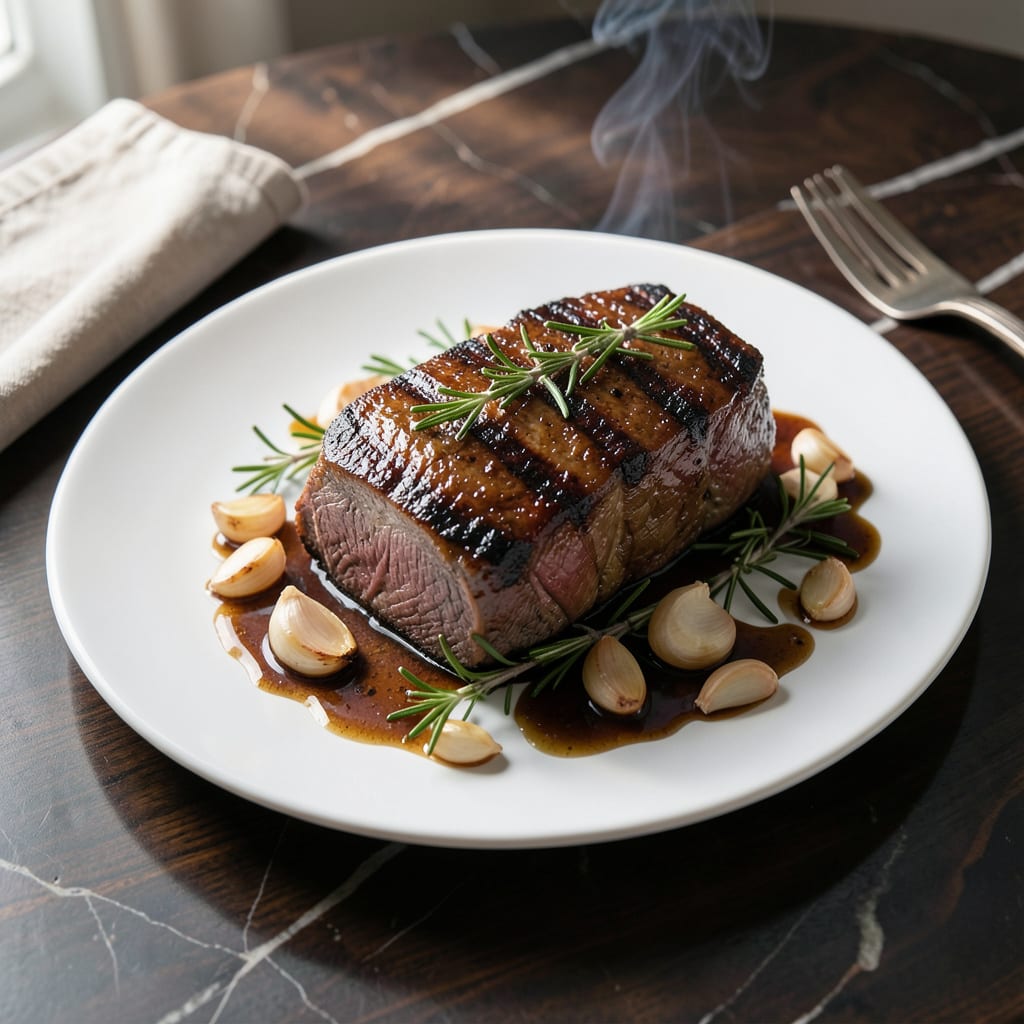
This method delivers a tender beef tenderloin with a deeply flavorful crust every time. The high-heat sear locks in juices while building a smoky char that complements the meat’s natural richness.
I developed this approach after years of perfecting grill techniques, ensuring the interior stays buttery while the exterior develops that coveted caramelized bark. The result is restaurant-quality at home.
Ingredients for Grilled Whole Beef Tenderloin
Restaurant-quality beef tenderloin starts with these premium ingredients for a perfect sear and buttery interior.
| Ingredient | Amount | Notes |
|---|---|---|
| Whole Beef Tenderloin 🥩 | 3 lb | Trimmed of excess fat, even thickness |
| Kosher Salt 🧂 | 2 tbsp | Diamond Crystal preferred for even seasoning |
| Freshly Ground Black Pepper 🌶️ | 2 tsp | Coarse grind for texture |
| Garlic Cloves 🧄 | 6 cloves | Smashed, peeled, halved lengthwise |
| Fresh Rosemary Sprigs 🌿 | 4 whole | Woody stems removed, roughly chopped |
| Fresh Thyme Sprigs 🍃 | 4 whole | Leaves stripped from stems |
| Extra-Virgin Olive Oil 🫒 | ¼ cup | High smoke point variety for searing |
| Unsalted Butter 🧈 | 4 tbsp | Room temperature for basting |
| Dijon Mustard 🟡 | 2 tbsp | For crust adheasion |
| Worcestershire Sauce 💧 | 2 tbsp | Anchovy-free if preferred |
| Red Wine 🍷 | ½ cup | Dry variety like Cabernet Sauvignon |
| Beef Stock 🥣 | ½ cup | Low-sodium preferred for control |
[recipeingredientscaler]
The beef tenderloin is the star. USDA Prime or Choice grades ensure optimal marbling and tenderness. Source from a reputable butcher or high-end grocer like Whole Foods—they’ll trim it to your specifications. Look for bright red color with creamy fat, avoiding any grayish hues. The cut should be uniform in thickness to ensure even cooking across the entire piece.
No fresh herbs? Dried rosemary and thyme at one-third the amount work in a pinch, though the flavor won’t be as vibrant. Substitute garlic powder for fresh cloves at a 1:3 ratio (1 tsp powder = 1 clove). For a non-alcoholic version, replace the red wine with beef stock plus 1 tbsp balsamic vinegar. Always use full-fat butter for the best basting results.
Trimmed tenderloin can be refrigerated for 2-3 days before cooking—vacuum-sealing extends this to 5 days. Bring it to room temperature before grilling for even cooking. Leftover slices make incredible sandwiches and keep in the fridge for 4 days or freeze for 3 months.
Why You’ll Love This Recipe
- One Pan Wonder: Honestly, it’s just season, grill, and rest—no marinades or fancy prep.
- Herb-Infused Perfection: The rosemary and garlic crust forms this insane aromatic seal that makes every bite worth the wait.
- Dinner Party Hero: I serve this for holidays and it feels fancy, but the work is minimal.
- Leftovers Luxe: Cold slices make the best sandwiches the next day—my secret post-grill reward.
Step-by-Step Instructions for Grilled Whole Beef Tenderloin
Master the technique for a perfectly charred exterior and tender, juicy interior every time.
Step 1: Prepare and Season the Beef Tenderloin
Pat the 3 lb whole beef tenderloin completely dry with paper towels—this is critical for achieving a proper sear. Trim any remaining excess fat and ensure the roast is of even thickness throughout for consistent cooking.
In a small bowl, combine the 2 tbsp kosher salt, 2 tsp freshly ground black pepper, 6 cloves garlic cloves (smashed and halved), 4 whole fresh rosemary sprigs (chopped), and 4 whole fresh thyme sprigs (leaves stripped) with the 0.25 cup extra-virgin olive oil. Rub this mixture all over the tenderloin, pressing firmly to adhere. Let it sit at room temperature for 30-45 minutes before grilling.
Step 2: Sear the Tenderloin Over Direct Heat
Preheat your grill to high heat (about 450-500°F) for direct searing. Clean and oil the grates thoroughly to prevent sticking. Place the tenderloin on the grill and sear for 3-4 minutes per side, rotating occasionally to create an even, deep brown crust.
During the last minute of searing, brush the tenderloin with a mixture of the 2 tbsp Dijon mustard and 2 tbsp Worcestershire sauce. This will form a flavorful, caramelized crust. Watch for flare-ups and move the roast to a cooler part of the grill if necessary.
Step 3: Finish with Indirect Heat and Baste
Once seared, move the tenderloin to the indirect heat side of the grill (or reduce the heat to medium). Add the 4 tbsp unsalted butter to a small dish and place it near the heat to soften. Baste the tenderloin with the melted butter every 2-3 minutes as it cooks.
Insert a meat thermometer into the thickest part of the roast. Continue grilling until the internal temperature reaches 125-130°F for medium-rare, which should take approximately 20-25 minutes total cooking time, depending on your grill’s heat.
Step 4: Rest and Prepare the Au Jus
Transfer the tenderloin to a cutting board and tent loosely with foil. Let it rest for 15 minutes—this allows the juices to redistribute, ensuring a moist and tender result. Meanwhile, combine the 0.5 cup red wine and 0.5 cup beef stock in a small saucepan. Simmer over medium heat until reduced by half, about 5-7 minutes.
Slice the tenderloin into 1-inch thick medallions and serve with the reduced au jus drizzled over the top. The meat should be pink and juicy in the center with a rich, smoky crust on the outside.
Pro Tips For Making Grilled Whole Beef Tenderloin
- Rest the Meat: Pull it off the grill when it hits 5-10 degrees below your target temp—it’ll coast up while resting. I learned this the hard way after slicing into a perfect medium-rare only to watch it bleed all over the board.
- Trim the Silver Skin: Take 2 minutes to peel off that tough membrane with a sharp knife—your knife (and guests) will thank you. Sounds tedious, but it actually changes the outcome of every bite.
- Skip Cold Meat: Let the tenderloin sit at room temp for 30-45 minutes before grilling. After burning the outside of a cold center once, I finally figured out why the pros always do this.
- Crush the Garlic: Smash the cloves with the flat of your knife before mincing—it releases way more flavor into the rosemary rub. My grandmother swore by this, and she was right.
Pro Cooking Tips for This Recipe
Grill Setup Secrets
I always use a two-zone fire for tenderloin—one side with direct 450-500°F heat for searing, the other with indirect heat for finishing. This gives you complete control. Clean your grates with a brass brush and oil them with a paper towel soaked in oil using tongs.
Thermometer Accuracy
Invest in a high-quality instant-read thermometer like ThermoWorks MK4. You’ll need it to monitor both grill temperature and the meat’s internal temperature. I check the thickest part of the tenderloin, avoiding the ends. 🌡️
Basting Technique
Use a silicon basting brush for the butter mixture—it won’t melt like a regular brush. Baste every 2-3 minutes while cooking over indirect heat. The butter adds flavor and helps develop that gorgeous crust we all love.
Resting Importance
Never skip the 15-minute rest after grilling. I tent my tenderloin loosely with foil and place it on a warm plate. This keeps it at the perfect serving temperature while the juices redistribute. The difference is night and day.
Slicing Method
Use a long, sharp slicing knife for even 1-inch thick medallions. I cut against the grain for maximum tenderness. Wipe your knife between slices for clean cuts—presentation matters as much as taste.
Au Jus Pro Tip
While the meat rests, reduce your 0.5 cup red wine and 0.5 cup beef stock mixture by half. This concentrated au jus adds incredible depth when drizzled over each serving. 💡

Trained in classic French technique but raised on slow-cooked ribs and spicy rubs, she blends culinary skill with smoke and soul.
- Recipe for Boneless Pork Chops in Cast Iron Skillet: Sear and Baste to Juicy Perfection - October 3, 2026
- Recipe for Boneless Cross Rib Roast: Slow-Roasted Beef with Herb Crust - October 3, 2026
- Hamburgers in Sauce Recipe Crock Pot: Slow-Cooked Savory Delight - October 3, 2026