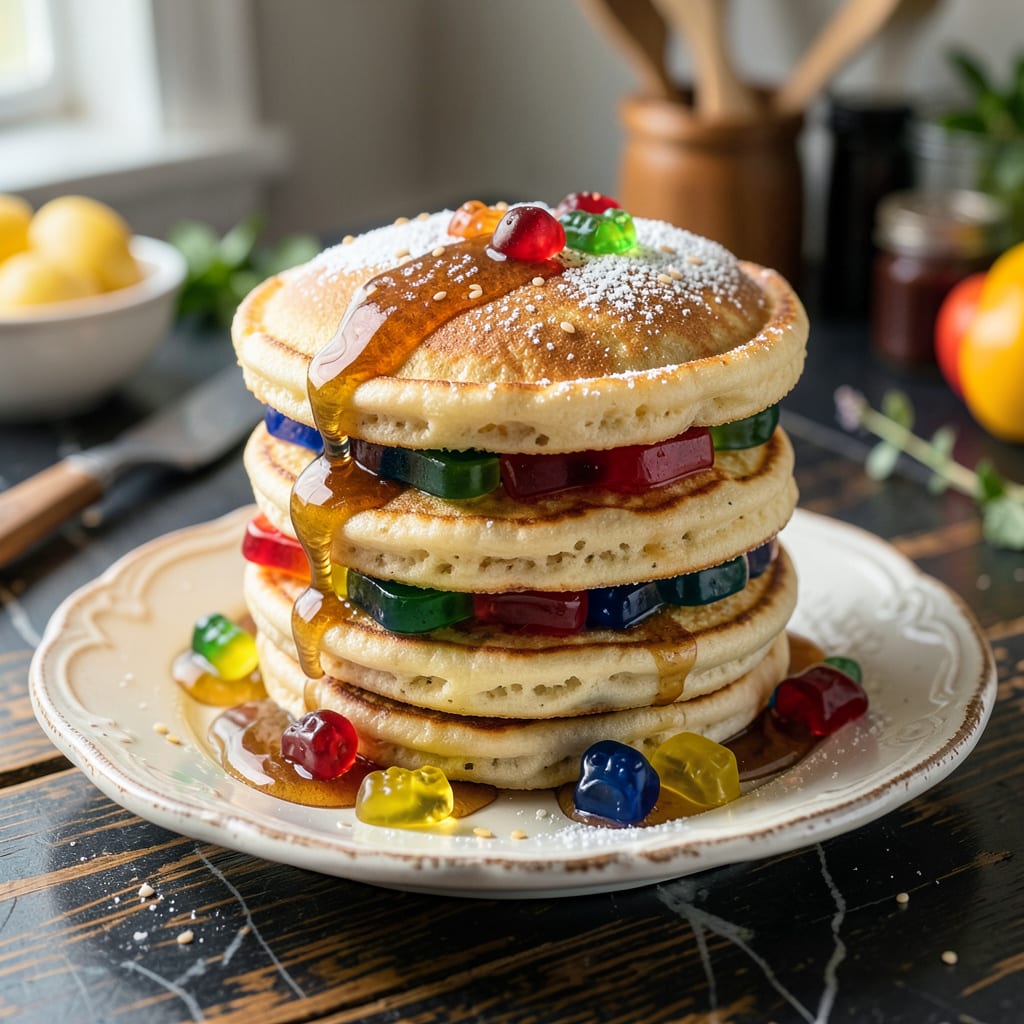
Gummy pancakes are thick, chewy Japanese-style hotcakes with a soft, jelly-like center and slightly crispy edges. They’re made with a unique batter technique that creates their signature bouncy texture, often served with whipped cream and syrup.
This isn’t your average breakfast stack—these fluffy towers are a dessert-like experience that blends the best of soufflé and pancake. 🔥 The magic happens when whipped egg whites are folded into the batter, creating air pockets that expand during cooking while the dense base maintains that signature jelly-like core. I’ve seen them called “Japanese soufflé pancakes” in some cafes, where they’re stacked three-high with fresh berries and powdered sugar for that Instagram-worthy moment.
What sets them apart is the dual-texture contrast—the exterior develops a delicate crispness while the interior stays custardy and elastic. This requires precise temperature control and patience; rushing the process often leads to deflation. The payoff? A pancake that wobbles like jello but holds its shape when sliced, making every bite a playful mix of textures.
💡 In This Article
- The Science Behind Gummy Pancake Texture
- Step-by-Step Guide to Perfect Gummy Pancakes at Home
The Science Behind Gummy Pancake Texture
The secret lies in the meringue-based batter that transforms these pancakes from ordinary to extraordinary. When egg whites are whipped to stiff peaks and gently folded into the batter, they create thousands of tiny air bubbles. During cooking, these bubbles expand from the heat, giving the pancakes their impressive height.
The key difference from regular pancakes? We use 3-4 times more egg whites relative to flour, creating that signature jiggly texture while maintaining structure. 💫
Temperature control is everything. Cooking at low heat (275-300°F) allows the exterior to set gradually while the interior stays moist and custard-like. Traditional pancakes cook at higher temps (350°F+) for quick browning, but that would collapse our delicate air structure.
The sugar content (typically 3-4 tablespoons per cup of flour) also plays a crucial role—it caramelizes slowly at lower temps, contributing to both the golden color and the subtle chewiness that makes these pancakes so addictive.
What most people don’t realize is how the flour-to-liquid ratio creates that gummy center. While standard pancakes use about equal parts flour and liquid, gummy pancakes often have 20-30% less flour relative to the eggs and milk. This creates a batter that’s thicker than traditional pancake batter but still pourable—similar to a thick cake batter.
The reduced flour means less gluten development, resulting in that tender, almost pudding-like interior that melts in your mouth.
The cooking process itself is a delicate balance. We’re essentially creating a two-stage structure: the bottom forms a crispy crust from direct pan contact, while the top stays soft and jiggly.
This is why covering the pan with a lid for the first 5-7 minutes is crucial—it traps steam to cook the top gently without drying it out. The final flip is more about browning the top than cooking through, since the interior is already set from the steam.
Here’s where the magic happens: as the pancakes cool slightly after cooking, the egg proteins continue to set, creating that perfect bouncy-yet-tender texture. The sugar syrup in the batter (from both granulated sugar and any added vanilla) helps retain moisture, preventing the dreaded dry pancake syndrome.
This is why they’re best served immediately—the texture evolves as they sit, becoming progressively more gummy over time. ✨
Compare this to American pancakes which rely on baking powder for lift and have a more uniform crumb structure. The gummy version’s texture comes from the physical leavening of whipped egg whites rather than chemical leavening.
It’s this fundamental difference in leavening method that creates the dramatic height and the distinctive wobble that makes these pancakes so mesmerizing to watch—and even better to eat.
The moisture content is also carefully calibrated. Too much liquid and the pancakes won’t hold their shape; too little and they become dense. Most recipes call for 1/4 to 1/3 cup milk per cup of flour, plus the moisture from the egg whites.
This precise hydration level, combined with the low-and-slow cooking method, is what gives these pancakes their signature jelly-like center that’s become so beloved in Japanese kissaten (coffee shops) and brunch spots worldwide.

Trained in classic French technique but raised on slow-cooked ribs and spicy rubs, she blends culinary skill with smoke and soul.
- Recipe for Boneless Pork Chops in Cast Iron Skillet: Sear and Baste to Juicy Perfection - October 3, 2026
- Recipe for Boneless Cross Rib Roast: Slow-Roasted Beef with Herb Crust - October 3, 2026
- Hamburgers in Sauce Recipe Crock Pot: Slow-Cooked Savory Delight - October 3, 2026