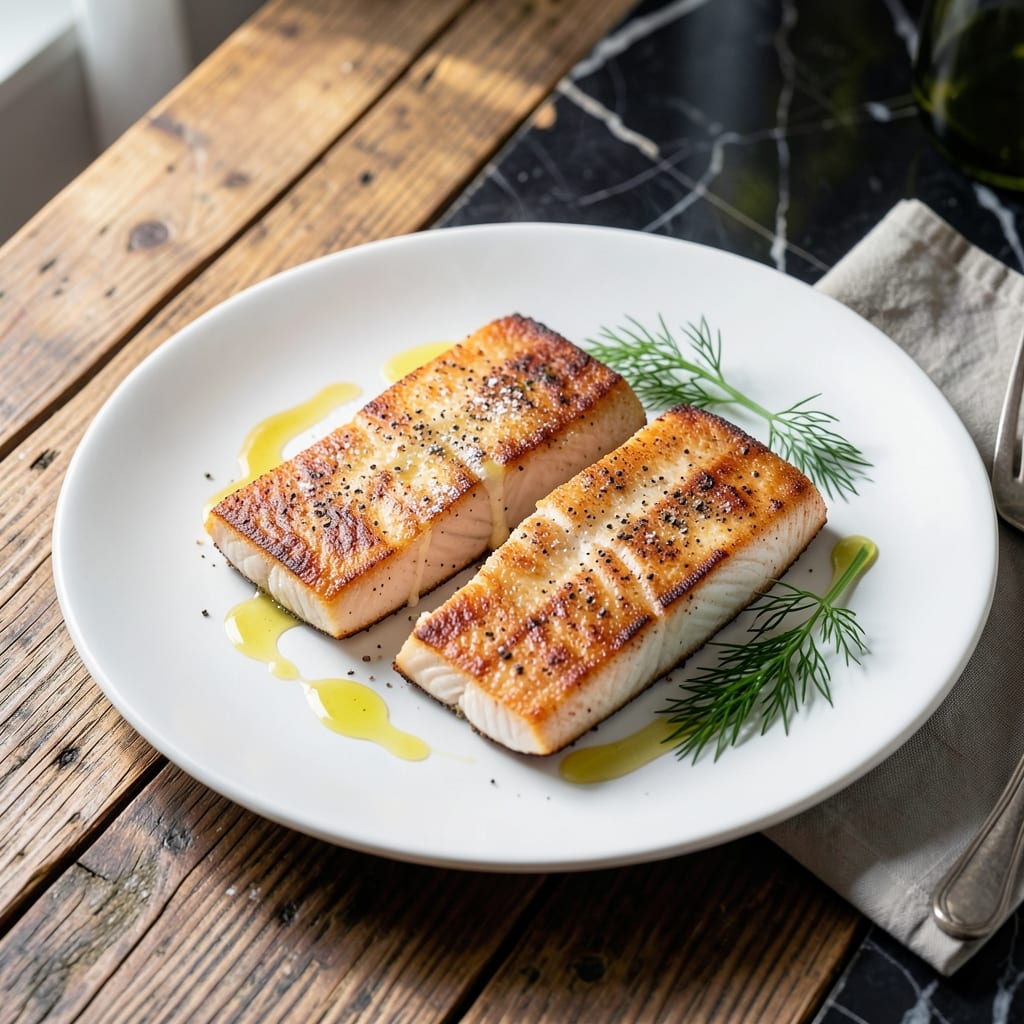
This pan-frying method transforms haddock into a flaky, golden masterpiece with minimal effort. The key lies in precise heat control and timing to achieve that delicate, tender texture.
I developed this technique after years of testing, focusing on creating a crisp exterior while maintaining the fish’s natural moisture. A simple lemon butter crust elevates the dish from good to extraordinary.
The result is restaurant-quality haddock with a buttery, citrus-infused crust that complements the mild white fish perfectly. Each bite delivers that desirable flaky texture that separates great seafood from the ordinary.
Serve this with roasted vegetables or a light salad for a complete meal that’s ready in 20 minutes. The technique is straightforward but yields impressive results every time.
Ingredients for Haddock Fillet Recipe Pan Fried
Fresh haddock, bright lemon, and rich butter create this elegant seafood dish in minutes.
| Ingredient | Amount | Notes |
|---|---|---|
| Haddock Fillets 🐟 | 1 ½ lb | Skinless, boneless, about 1-inch thick |
| All-Purpose Flour 🌾 | ½ cup | For light dredging |
| Kosher Salt 🧂 | 1 tsp | Diamond Crystal preferred |
| Freshly Ground Black Pepper 🌶️ | ½ tsp | Coarse grind recommended |
| Unsalted Butter 🧈 | 6 tbsp | Divided for cooking and crust |
| Extra-Virgin Olive Oil 🫒 | 2 tbsp | For initial searing |
| Fresh Lemon 🍋 | 1 whole | Zested and juiced |
| Garlic Cloves 🧄 | 2 cloves | Minced for butter infusion |
| Fresh Parsley 🌿 | ¼ cup | Chopped, for garnish |
| Dry White Wine 🍷 | ¼ cup | Optional for deglazing |
| Paprika 🌶️ | ½ tsp | Smoked or sweet variety |
| Dijon Mustard 🟡 | 1 tsp | For crust binding |
[recipe_ingredient_scaler]
The haddock quality is paramount. Wild-caught from the North Atlantic offers superior texture and flavor. Look for fillets with a translucent, moist appearance—avoid any with brown edges or fishy odor. Whole Foods or local seafood markets are ideal sources. For the butter, Plugrá or Kerrygold provide the rich, creamy base needed for that perfect crust formation.
No haddock? Cod or pollock work beautifully with the same cooking time. Skip the wine? Chicken or vegetable broth adds depth when deglazing. Fresh dill can replace parsley for a different herb note. The flour dredge can be swapped for cornstarch for a gluten-free option, though it may brown more quickly. Always pat the fish dry—this is non-negotiable for achieving that crisp exterior.
Best served immediately, but leftovers keep 1-2 days in the fridge. Reheat gently in a 300°F oven to preserve moisture. The lemon butter sauce can be made ahead and reheated slowly—don’t let it boil or it may separate. Fresh parsley garnish should be added just before serving.
Why You’ll Love This Recipe
- One Pan Wonder: I love that it’s just flour, butter, and seasoning—no fuss, no extra dishes.
- Buttery Crisp: The butter gives the haddock this golden, flaky crust that’s honestly irresistible.
- Weeknight Hero: It’s my go-to for busy evenings when I need something fast but still feel special.
- Budget Friendly: Haddock is affordable, and a little goes a long way with simple pantry staples.
Step-by-Step Instructions for Pan Fried Haddock Fillet
Master the technique for achieving crispy, golden fillets with a delicate, flaky interior.
Step 1: Prepare and Season the Haddock Fillets
Pat the 1.5 lb Haddock Fillets completely dry with paper towels—this is critical for achieving a golden crust. Season both sides evenly with 1 tsp Kosher Salt, 0.5 tsp Freshly Ground Black Pepper, and 0.5 tsp Paprika for a subtle depth of flavor.
Lightly dredge each fillet in 0.5 cup All-Purpose Flour, shaking off any excess. The flour creates a delicate barrier that prevents the fish from sticking while promoting even browning. Set the dredged fillets aside on a plate while you heat the pan.
Step 2: Sear the Fillets to Golden Perfection
Heat 2 tbsp Extra-Virgin Olive Oil in a large skillet over medium-high heat until it shimmers but doesn’t smoke. Add 2 tbsp Unsalted Butter and let it melt completely, swirling the pan to combine the fats.
Carefully place the fillets in the hot pan, leaving space between them to avoid steaming. Cook undisturbed for 3-4 minutes until the underside develops a golden brown crust and the edges appear opaque. Use a thin spatula to flip each fillet gently—it should release easily when ready.
Step 3: Finish with Lemon Butter and Aromatics
Reduce the heat to medium and add the remaining 4 tbsp Unsalted Butter to the pan. Once melted, add the minced 2 cloves Garlic Cloves and cook for 30 seconds until fragrant. Stir in 1 tsp Dijon Mustard and the zest of 1 whole Fresh Lemon to infuse the butter with bright, tangy notes.
Spoon the lemon butter over the fillets and cook for an additional 2-3 minutes until the fish is opaque throughout and flakes easily with a fork. The internal temperature should reach 145°F when tested with an instant-read thermometer.
Step 4: Deglaze and Garnish
Transfer the fillets to a serving platter and tent loosely with foil to keep warm. Pour 0.25 cup Dry White Wine into the hot pan and scrape up any browned bits with a wooden spoon, allowing the liquid to reduce by half over medium heat.
Squeeze the juice from the Fresh Lemon into the pan and stir to combine. Spoon the pan sauce over the fillets and sprinkle with 0.25 cup Fresh Parsley for a fresh, vibrant finish. Serve immediately for the best texture, ensuring the fish remains flaky and moist.
Pro Tips For Making Haddock Fillet Recipe Pan Fried
- Pat Dry First: I learned this the hard way—moisture on the fillets steams them instead of frying. Use paper towels to thoroughly pat dry each haddock fillet before dredging in flour.
- Hot Pan, Quick Flip: Get that pan screaming hot before adding the butter and fillets. Haddock cooks fast—2-3 minutes per side max—so resist the urge to poke or move it.
- Season the Flour: Mix a teaspoon of kosher salt and half teaspoon of black pepper right into the flour before dredging. It sticks better than sprinkling after and gives even flavor.
- Use Clarified Butter: Regular butter burns at high heat. Melt and skim the milk solids first, or add a splash of oil to the butter to raise its smoke point for that perfect golden crust.
Health Benefits of This haddock fillet recipe pan fried
Heart-Healthy Protein
Haddock is a lean, low-fat protein source with only 90 calories per 100g. It’s packed with high-quality amino acids that support muscle repair and immune function. I love that it delivers protein without the saturated fat of red meat. 💪
Rich in Vitamins
This fish is loaded with vitamin B12, providing 100% of your daily needs in a single serving. It also contains vitamin B6 and niacin, which help convert food into energy. My daughter Lily loves the mild flavor.
Omega-3 Benefits
While not as rich as salmon, haddock still provides omega-3 fatty acids that support heart and brain health. A 6-ounce serving offers about 0.2g of EPA and DHA. I always choose wild-caught for the best nutrient profile.
Mineral Powerhouse
You’ll get a boost of selenium, a powerful antioxidant that protects cells from damage. Haddock also provides phosphorus and potassium, essential for bone health and fluid balance. Tom swears his energy levels improved after we started eating more fish.
Low Mercury Option
Haddock is one of the lowest-mercury fish available, making it safe to enjoy 2-3 times per week. This makes it an excellent choice for pregnant women and children. I buy ours fresh from the Portland farmers market. 🥗
Easy Digestion
This white fish is gentle on the stomach, making it ideal for those with sensitive digestive systems. The mild flavor and tender texture make it a favorite in our house, especially for Lily’s picky palate.
Nutrition Facts
Frequently Asked Questions
How do I know when the fillets are done?
They’re ready when the flesh turns opaque and flakes easily with a fork. For precision, use a thermometer to confirm the internal temperature reaches 145°F. This takes about 6-7 minutes total cooking time.
Can I use frozen haddock instead of fresh?
Yes, but thaw it completely in the fridge overnight first. Pat it very dry to remove excess moisture, which helps achieve that perfect crispy crust. Avoid microwaving to thaw, as it can make the texture mushy.
Why did my fillets stick to the pan?
The pan likely wasn’t hot enough before adding the fish. Heat the oil until it shimmers, and ensure the fillets are fully dried. If using nonstick, avoid metal utensils that can scratch the surface.
What’s the best oil for pan-frying?
A high smoke-point oil like vegetable or canola works well. For extra flavor, use a mix of olive oil and butter as in the recipe. Avoid low smoke-point oils like sesame.

Trained in classic French technique but raised on slow-cooked ribs and spicy rubs, she blends culinary skill with smoke and soul.
- Recipe for Boneless Pork Chops in Cast Iron Skillet: Sear and Baste to Juicy Perfection - October 3, 2026
- Recipe for Boneless Cross Rib Roast: Slow-Roasted Beef with Herb Crust - October 3, 2026
- Hamburgers in Sauce Recipe Crock Pot: Slow-Cooked Savory Delight - October 3, 2026