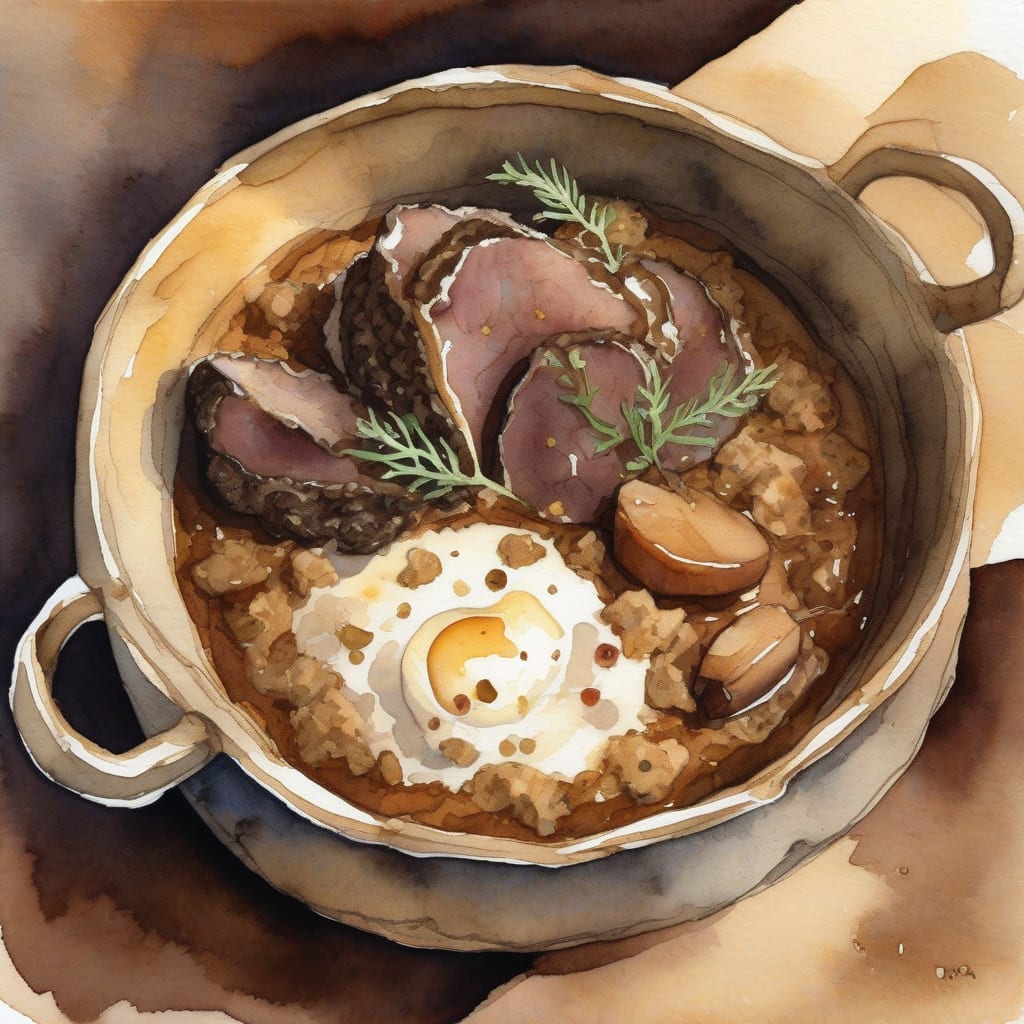
Haggis Recipe: Traditional Scottish Dish with Rich Flavor Profile
As a food enthusiast, I’ve always been fascinated by traditional Scottish cuisine, and haggis is one of its most iconic dishes. This savory pudding, made from sheep’s heart, liver, and lungs, mixed with onions, oatmeal, and spices, is a staple of Scottish culture.
Preparing haggis from scratch requires attention to detail and a bit of patience, but the end result is well worth the effort. I’ll guide you through the process, from mixing the ingredients to cooking the haggis to perfection.
With this recipe, you’ll be able to create an authentic Scottish haggis that’s rich in flavor and history. Let’s get started!
Ingredients for haggis food
Here’s everything you need to create this traditional Scottish haggis recipe at home.
| Ingredient | Amount | Notes |
|---|---|---|
| Sheep's Heart ❤️ | 1 whole | Cleaned and chopped |
| Sheep's Liver 🍖️ | 1 whole | Cleaned and chopped |
| Sheep's Lungs 🌬️ | 1 whole | Cleaned and chopped |
| Onion 🧅 | 1 whole | Finely chopped |
| Pinhead Oatmeal 🌾 | 1 cup | Traditional Scottish oatmeal |
| Salt 🧂 | 1 tsp | Kosher salt preferred |
| Black Pepper 🌶️ | ½ tsp | Freshly ground |
| Nutmeg 🌿 | ¼ tsp | Freshly grated |
| Beef Suet 🥩 | ½ cup | Shredded or grated |
| Water 💧 | 1 cup | For mixing |
| Haggis Casing 🌮 | 1 piece | Natural sheep's stomach or synthetic |
[recipe_ingredient_scaler]
For authentic ingredients, try specialty butcher shops or Scottish markets. Look for high-quality pinhead oatmeal from health food stores or online retailers. When sourcing lamb's organs, ensure they come from a trusted butcher to maintain food safety. Some recipes use synthetic casings, but traditionalists prefer natural sheep's stomach.
If you can't find sheep's organs, some recipes substitute with beef or pork offal, though this alters the traditional flavor. For a vegetarian version, use mushrooms and lentils to mimic the texture. Adjust the spices to taste, adding more nutmeg or black pepper as needed. If pinhead oatmeal is unavailable, steel-cut oats are a decent substitute, though the texture will be slightly different.
Store leftover haggis in an airtight container in the refrigerator for up to 5 days. To freeze, wrap tightly in plastic wrap then foil and store for up to 3 months. Reheat gently in simmering water or microwave until warmed through. Always handle raw haggis ingredients with clean utensils and wash hands thoroughly after preparation.
Step-by-Step Instructions for Haggis
Follow my detailed guide to create authentic Scottish haggis with rich, savory flavors.
🔥 Step 1: Prepare the Offal and Onion
Start by thoroughly cleaning and chopping the 1 whole Sheep’s Heart, 1 whole Sheep’s Liver, and 1 whole Sheep’s Lungs. I like to use a sharp knife and cutting board for this task. Make sure to remove any membranes or connective tissue for the best texture. Next, finely chop 1 whole Onion until it’s soft and translucent.
To ensure food safety, handle the offal carefully and keep it refrigerated until you’re ready to mix it with the other ingredients. I always wash my hands thoroughly before and after handling raw meat.
👨🍳 Step 2: Mix the Haggis Ingredients
In a large mixing bowl, combine the chopped offal, onion, 1 cup Pinhead Oatmeal, 1 tsp Salt, 0.5 tsp Black Pepper, and 0.25 tsp Nutmeg. I like to use my hands or a wooden spoon to mix everything until it’s just combined. Be careful not to overmix, as this can make the haggis dense.
Now, add the 0.5 cup Beef Suet and mix until it’s evenly distributed throughout the mixture. The suet will help keep the haggis moist during cooking. Finally, add 1 cup Water and mix until the mixture is cohesive but not too wet.
🥘 Step 3: Stuff the Haggis Casing
Carefully fill the 1 piece Haggis Casing with the prepared haggis mixture, making sure to fill it about two-thirds full. I like to use a sausage stuffer or a piping bag with a large nozzle for this task. Leave enough room for the mixture to expand during cooking.
Once the casing is filled, tie off the open end with kitchen twine, making sure it’s secure. Prick any air pockets with a needle to prevent bursting during cooking.
🍳 Step 4: Cook the Haggis
Place the haggis in a large pot of boiling water or broth, making sure it’s fully submerged. I like to use a stockpot with a heavy bottom to maintain a gentle simmer. Cook for 3-4 hours, or until the haggis reaches an internal temperature of 160°F.
Keep an eye on the water level and top it up as needed to prevent the haggis from scorching. You’ll know it’s done when the casing is firm to the touch and the mixture is cooked through.
Haggis, the savory pudding made from sheep’s heart, liver, and lungs, mixed with onions, oatmeal, and spices, is a traditional Scottish dish that’s rich in flavor and history. 🥘 To make this authentic haggis recipe, you’ll need to gather a few key ingredients, including sheep’s pluck (heart, liver, and lungs), onion, oatmeal, suet, and a blend of spices. Here’s a breakdown of the ingredients and steps to create this classic Scottish dish.
Preparing the Ingredients 🔪
To start, you’ll need to clean and chop the sheep’s pluck, removing any blood vessels or membranes. Then, finely chop the onion and mix it with the chopped pluck, oatmeal, suet, and spices.
- 1 lb sheep’s pluck (heart, liver, and lungs)
- 1 large onion, finely chopped
- 1 cup oatmeal
- 1/2 cup suet, finely chopped
- 2 tsp salt
- 1 tsp black pepper
- 1 tsp nutmeg
Cooking the Haggis ⏰
Once the ingredients are prepared, mix everything together in a large bowl. Then, stuff the mixture into a clean, prepared casing (traditionally, a sheep’s stomach) or a synthetic casing. If you don’t have a casing, you can also shape the mixture into a round pudding and wrap it in foil. Boil the haggis for about 3 hours, or until it’s cooked through and firm to the touch.
💡 Pro tip: To add extra flavor, you can serve the haggis with mashed potatoes (tatties) and turnips or swede (neeps). This classic combination is a staple of Scottish cuisine and is sure to please even the pickiest eaters. 🌡️
| Nutrition Information (per serving) | Value |
|---|---|
| Calories | 420 |
| Protein | 25g |
| Fat | 35g |
| Sodium | 450mg |
📊 Nutrition information is an estimate and may vary based on specific ingredients and portion sizes.
Tips & Variations for Authentic Haggis
These practical tips will help you create a delicious and authentic Scottish haggis that honors traditional methods while achieving perfect results every time.
Offal Preparation: When cleaning and chopping the sheep’s heart, liver, and lungs, make sure to remove any membranes or connective tissue for the best texture. I always handle the offal carefully and keep it refrigerated until mixing to ensure food safety.
Mixing Technique: When combining the ingredients in Step 2, be careful not to overmix the haggis mixture, as this can make it dense. I like to use my hands or a wooden spoon to mix everything until it’s just combined, then add the beef suet and mix until evenly distributed.
Cooking Considerations: To prevent the haggis from scorching during the 3-4 hour cooking time, keep an eye on the water level and top it up as needed. You’ll know it’s done when the casing is firm to the touch and the internal temperature reaches 160°F.
Nutrition Facts
540kcal

Trained in classic French technique but raised on slow-cooked ribs and spicy rubs, she blends culinary skill with smoke and soul.
- Recipe for Boneless Pork Chops in Cast Iron Skillet: Sear and Baste to Juicy Perfection - October 3, 2026
- Recipe for Boneless Cross Rib Roast: Slow-Roasted Beef with Herb Crust - October 3, 2026
- Hamburgers in Sauce Recipe Crock Pot: Slow-Cooked Savory Delight - October 3, 2026