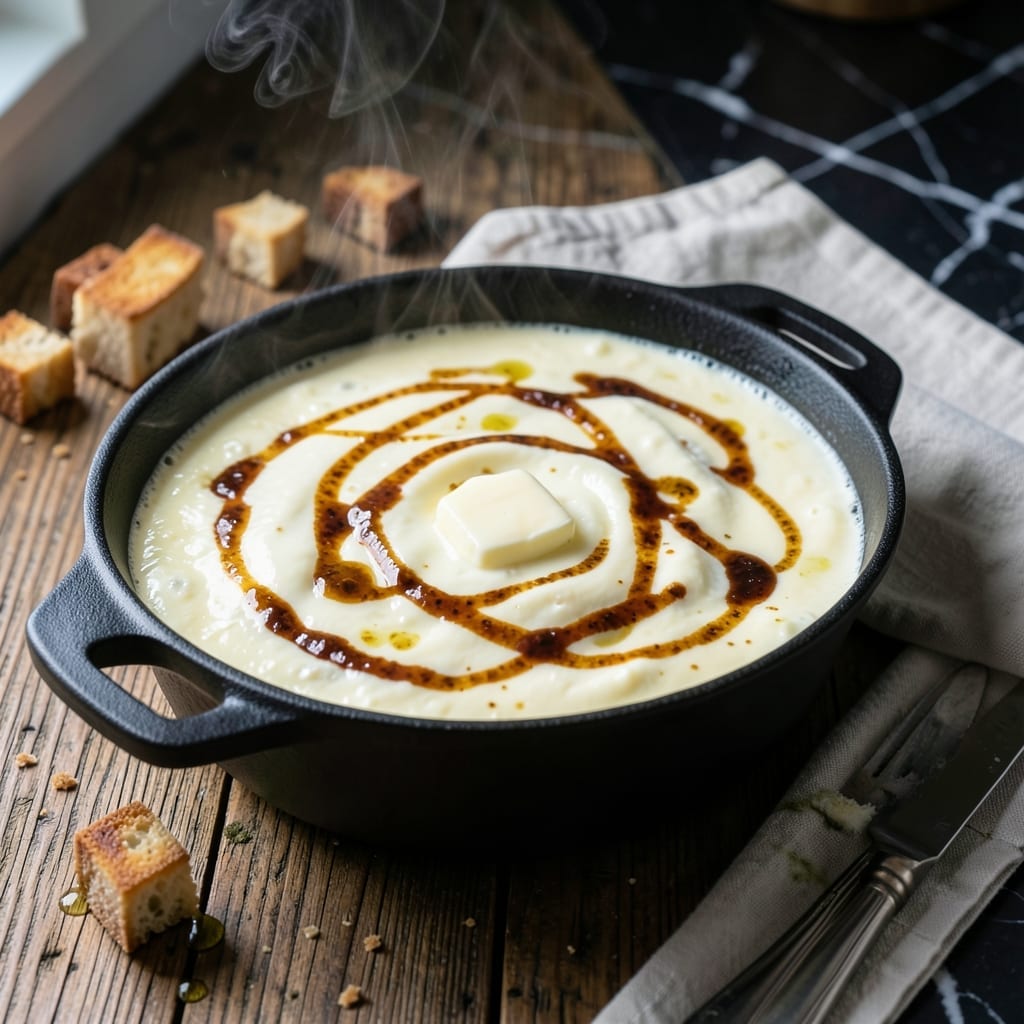
This Danish-inspired dish transforms havarti cheese into a creamy, melted masterpiece that’s both comforting and sophisticated. I developed this recipe after testing multiple melting techniques to find the perfect balance of smooth texture and rich flavor.
The key is using high-quality havarti and controlling the heat to prevent separation. A touch of cream enhances the natural buttery notes, while a hint of mustard adds depth without overpowering the cheese’s delicate profile.
What emerges is a velvety, golden creation that works beautifully as a dip, sauce, or filling. The cheese melts evenly, creating a luxurious consistency that clings to bread, vegetables, or meats.
Serve warm for the best experience. This method ensures consistent results every time.
Ingredients for Havarti
Eleven ingredients craft this Danish-style melted havarti with sophisticated depth and velvety texture.
| Ingredient | Amount | Notes |
|---|---|---|
| Havarti Cheese 🧀 | 12 oz | High-quality, block form preferred |
| Heavy Cream 🥛 | ½ cup | Full-fat for creaminess |
| Dijon Mustard 🟡 | 1 tbsp | Smooth variety for depth |
| Unsalted Butter 🧈 | 2 tbsp | For smooth melting |
| All-Purpose Flour 🌾 | 1 tbsp | For thickening consistency |
| Dry White Wine 🍷 | ¼ cup | Optional for acidity |
| Garlic Clove 🧄 | 1 clove | Minced for aroma |
| Shallot 🧅 | 1 whole | Finely diced for flavor |
| Fresh Thyme 🌿 | 1 tsp | Chopped, for freshness |
| Nutmeg 🌰 | 0.125 tsp | Freshly grated preferred |
| Kosher Salt 🧂 | ½ tsp | Diamond Crystal preferred |
| Freshly Ground Black Pepper 🌶️ | ¼ tsp | For finishing touch |
[recipe_ingredient_scaler]
The havarti quality is paramount—seek out Danish imports or premium domestic blocks from Whole Foods or specialty cheese shops. Avoid pre-shredded, as the anti-caking agents impede melting. The heavy cream should be organic and ultra-fresh (check the date) for optimal richness. Unsalted butter allows precise seasoning control, and Plugrá or European-style offers superior texture.
No white wine? Dry vermouth or additional cream works as a substitute. Dijon can be swapped for whole-grain mustard for texture. Fresh thyme is ideal, but dried at one-third the amount suffices. For a nutty depth, a pinch of ground allspice complements the Danish profile. The flour ensures stability—cornstarch at half the quantity works in a pinch.
The melted havarti holds its creaminess for 2-3 hours at room temperature. Refrigerate leftovers in an airtight container for up to 5 days—reheat gently with a splash of milk to restore texture. Freezing is not recommended due to separation risk.
Why You’ll Love This Recipe
- Five-Ingredient Magic: I throw these pantry staples together—Havarti, cream, mustard, butter, flour—and it’s done before the oven’s fully hot.
- Creamy Havarti Bliss: That melted cheese with a kick of Dijon creates a rich, velvety sauce I could eat with a spoon.
- Crowd-Pleaser Guarantee: I serve this at parties, and it’s the first dish to disappear—even the picky eaters go back for more.
- Makes Great Leftovers: Honestly, it reheats like a dream, so I double the batch for quick lunches all week.
Step-by-Step Instructions for Danish-Style Melted Havarti
Master this technique for a velvety, restaurant-quality cheese sauce that never breaks or clumps.
Step 1: Build the Roux Foundation
Melt the 2 tbsp Unsalted Butter in a heavy saucepan over medium heat until fully liquid but not browned. The butter should foam slightly but maintain a pale yellow color—this indicates proper melting without burning.
Whisk in the 1 tbsp All-Purpose Flour immediately and cook for 1-2 minutes, stirring constantly, until the mixture forms a smooth paste and turns a light golden shade. This roux is your thickening base; undercooking leaves a raw flour taste while overcooking darkens the final sauce.
Watch for tiny bubbles at the edges—this signals the flour is cooking properly. The consistency should resemble wet sand at this stage.
Step 2: Develop the Aromatic Base
Add the finely diced 1 whole Shallot and minced 1 clove Garlic Clove to the roux. Cook while stirring for 2-3 minutes until the shallots become translucent and the garlic releases its fragrance without browning.
Sprinkle in the 0.5 tsp Kosher Salt, 0.25 tsp Freshly Ground Black Pepper, 1 tsp Fresh Thyme, and 0.125 tsp Nutmeg. I add the seasonings now to bloom their flavors in the fat. The nutmeg should be freshly grated for maximum aroma—just a whisper is enough.
Pour in the 0.25 cup Dry White Wine and deglaze the pan, scraping up any browned bits. Simmer for 2 minutes until the liquid reduces by half and the alcohol smell dissipates.
Step 3: Create the Creamy Emulsion
Reduce heat to medium-low and slowly pour in the 0.5 cup Heavy Cream, whisking constantly. The mixture should begin to thicken within 3-4 minutes as it reaches a gentle simmer. This gradual addition prevents curdling.
Once the cream mixture coats the back of a spoon, reduce heat to low. The sauce should be smooth and slightly thickened but still pourable. If it appears too thick at this stage, the final addition will be problematic.
Step 4: Incorporate the Havarti with Precision
Gradually add the 12 oz Havarti Cheese, shredded or torn into small pieces, whisking after each addition until fully melted. High-quality block cheese melts more smoothly than pre-shredded. The sauce should become glossy and elastic as the cheese emulsifies.
After all cheese is incorporated, stir in the 1 tbsp Dijon Mustard. This adds depth and a subtle tang that balances the richness. Cook for an additional 1-2 minutes, stirring constantly, until the sauce reaches your desired consistency—it should ribbon off the whisk.
The final texture should be velvety with no graininess. If the sauce becomes too thick, a splash of warm cream can restore the perfect consistency.
Pro Tips For Making Havarti
- Grate When Cold: Shred the Havarti straight from the fridge—it melts more evenly and clumps less. I learned this the hard way after my first batch turned into a greasy mess.
- Warm the Cream: Heat the heavy cream just until it steams before mixing with cheese. Cold cream can make the sauce grainy, and nobody wants that.
- Skip the Boil: Keep the heat low to medium when combining ingredients. Havarti scorches easily, and once it separates, you can’t fix it.
- Use Full-Fat Cheese: Low-fat Havarti skips the creaminess this dish needs. The extra fat in full-fat versions actually changes the outcome for the better.
Essential Equipment for havarti
Quality Saucepan
I always start with a heavy-bottomed 3-quart saucepan—my go-to is All-Clad Stainless Steel. The even heat distribution prevents hot spots that can cause havarti to separate or burn. A light-colored interior helps me monitor the roux color accurately. 💡
Precision Whisk
Use a balloon whisk (I prefer OXO Good Grips) for the roux and cheese incorporation. The rounded shape reaches pan corners easily, and the fine wires break up any potential lumps. This tool gives you better control than a wooden spoon.
Fine Grater
For the nutmeg, I keep a Microplane grater close by. Freshly grated nutmeg has exponentially more aroma than pre-ground. The fine rasp also works perfectly for grating 12 oz Havarti Cheese if you’re not buying pre-shredded.
Instant-Read Thermometer
A ThermoWorks Thermapen is my secret weapon for monitoring sauce temperature. Keep the mixture between 160-180°F when melting the cheese to prevent separation. This small investment eliminates the guesswork from cheese sauces.
Glass Measuring Cups
I use Pyrex glass measuring cups for the 0.5 cup Heavy Cream and 0.25 cup Dry White Wine. The clear markings let me measure accurately, and the heatproof glass allows me to warm the cream slightly if needed. No more estimating with regular drinking glasses.
Silicon Spatula
After cooking, a silicone spatula helps me scrape every bit of sauce from the pan. The flexible head conforms to the pan’s curves, and the heat resistance means I can use it while the sauce is still warm. Every drop of this havarti creation is too precious to waste.
Nutrition Facts
Frequently Asked Questions
What’s the best way to shred the cheese?
Use a box grater or food processor for even shreds. Block cheese melts smoother than pre-shredded, which often contains anti-caking agents. For best results, chill the cheese for 30 minutes before grating.
Can I make this ahead of time?
Yes! Prepare the sauce up to 2 days ahead and store in an airtight container in the fridge. Reheat gently over low heat, stirring constantly, and thin with a splash of cream if needed.
My sauce turned grainy—how do I fix it?
Overheating is the usual culprit. Remove from heat immediately and whisk in 1 tsp of cold cream or butter to restore smoothness. Avoid boiling, as high heat can cause separation.
What can I use instead of white wine?
Substitute with 0.25 cup dry vermouth, apple cider vinegar, or additional cream. Each adds a different note, but all work well to balance the richness.

Trained in classic French technique but raised on slow-cooked ribs and spicy rubs, she blends culinary skill with smoke and soul.
- Recipe for Boneless Pork Chops in Cast Iron Skillet: Sear and Baste to Juicy Perfection - October 3, 2026
- Recipe for Boneless Cross Rib Roast: Slow-Roasted Beef with Herb Crust - October 3, 2026
- Hamburgers in Sauce Recipe Crock Pot: Slow-Cooked Savory Delight - October 3, 2026