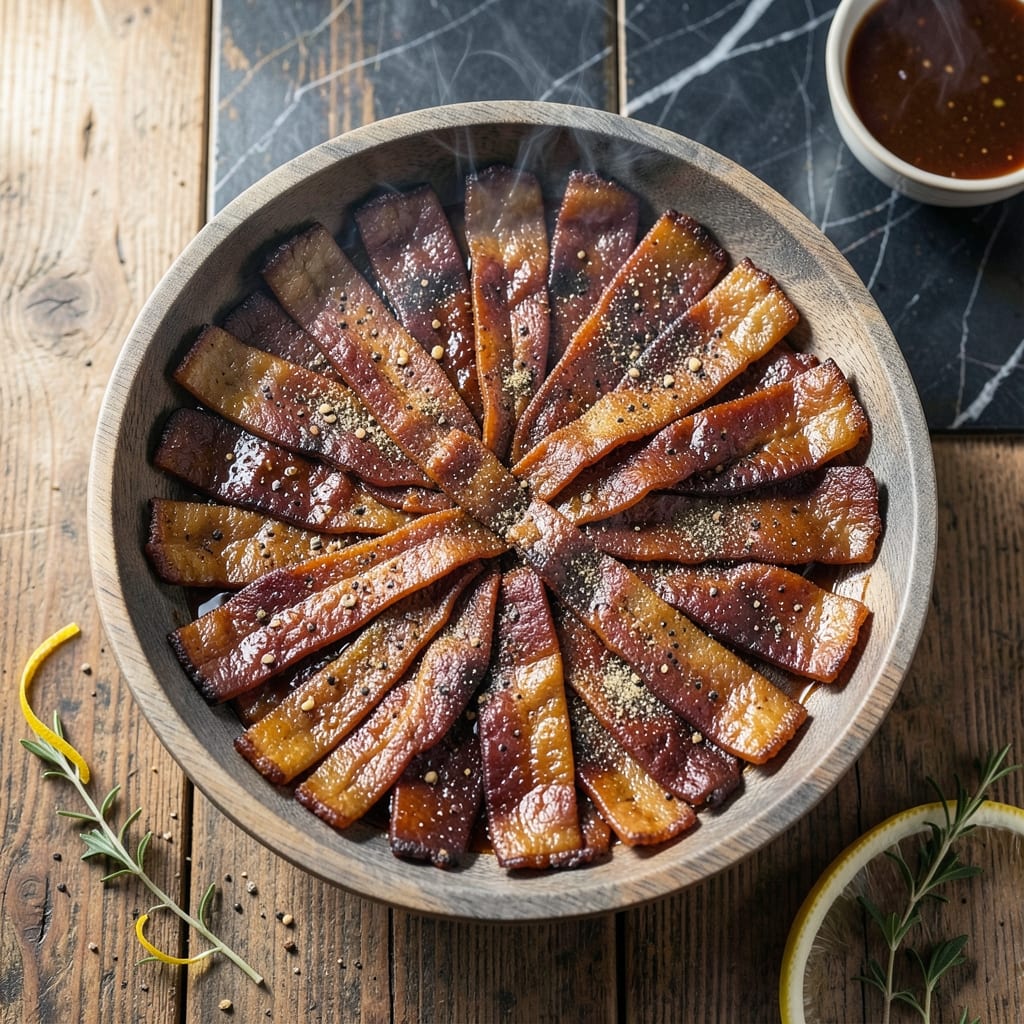
I developed this healthy beef jerky method after testing countless marinades and dehydration techniques. The result is a lean protein snack packed with bold flavor and none of the preservatives found in store-bought versions.
Using a dehydrator ensures consistent, safe drying at the right temperature. I’ve perfected the balance of soy sauce, Worcestershire, and spices to create a marinade that penetrates deeply without overpowering the natural beef taste.
The process is straightforward: slice, marinate, and dehydrate. What you get is tender yet chewy jerky with concentrated flavor in every bite. It’s the kind of snack that satisfies without the guilt.
Perfect for hikes, lunchboxes, or a protein boost during a busy day. This is jerky made the right way.
Ingredients for Healthy Beef Jerky Recipe Dehydrator
Lean beef, bold marinade, and a dehydrator are all you need for this snack.
| Ingredient | Amount | Notes |
|---|---|---|
| Lean Beef Top Round 🥩 | 1 ½ lb | Sliced against the grain |
| Low-Sodium Soy Sauce 🫒 | ½ cup | For marinade base |
| Worcestershire Sauce 🫒 | ¼ cup | Adds depth to marinade |
| Liquid Smoke 🔥 | 1 tsp | Optional for smoky flavor |
| Black Pepper 🌶️ | 1 tbsp | Freshly ground preferred |
| Garlic Powder 🧄 | 1 tsp | For savory depth |
| Onion Powder 🧅 | 1 tsp | Enhances marinade flavor |
| Smoked Paprika 🌶️ | 1 tsp | For warmth and color |
| Red Pepper Flakes 🌶️ | ½ tsp | Adjust for heat preference |
| Brown Sugar 🍚 | 2 tbsp | Balances savory flavors |
| Apple Cider Vinegar 🍎 | 1 tbsp | Tenderizes the meat |
| Salt 🧂 | 1 tsp | Kosher or sea salt |
[recipe_ingredient_scaler]
The beef is key here—top round or flank steak give the best texture. Look for lean cuts with visible grain at Whole Foods or your local butcher. Avoid pre-ground beef; it won’t slice properly. I always ask for the meat to be partially frozen when I pick it up—makes slicing into even strips way easier. For the soy sauce, low-sodium lets you control the salt content better.
No Worcestershire? Coconut aminos work in a pinch (though the flavor differs slightly). Swap smoked paprika for regular if you prefer milder spice. The liquid smoke is optional but adds that classic jerky depth. Brown sugar can be subbed with honey or maple syrup, but it’ll change the texture slightly. If you’re avoiding sugar, a sugar-free substitute works too (just adjust to taste).
Marinated beef keeps in the fridge for 24 hours before dehydrating. Once dried, store in an airtight container for up to 1 month at room temperature. For longer storage, freeze for 3-6 months (it’ll lose a bit of chewiness when thawed).
Why You’ll Love This Recipe
- Set and Forget: I slice the lean beef, mix the marinade, and let the dehydrator do all the work while I tackle my day.
- Smoky Depth: The liquid smoke and Worcestershire create that rich, campfire-like flavor I crave without firing up a grill.
- Trail-Ready Snack: Honestly, I pack this for hikes, road trips, or just stash it in my desk for a protein boost between meetings.
- Budget Protein: A single top round roast makes pounds of jerky—my wallet notices the difference compared to store-bought.
Step-by-Step Instructions for Healthy Beef Jerky in a Dehydrator
This method delivers perfectly seasoned, tender jerky with that ideal chewy texture.
Step 1: Slice and Prepare the Lean Beef Top Round
Begin by partially freezing the 1.5 lb Lean Beef Top Round for 30-45 minutes to make slicing easier. Using a sharp knife, slice against the grain into ¼-inch thick strips. Slicing against the grain ensures the jerky will be tender rather than chewy.
Trim away any visible fat or connective tissue, as these won’t dehydrate well and can cause spoilage. I’ve found that consistent thickness is key—use a ruler if needed to ensure uniform strips. This guarantees even drying and a consistent texture throughout your batch.
Step 2: Create the Flavorful Marinade
In a large bowl, whisk together the 0.5 cup Low-Sodium Soy Sauce, 0.25 cup Worcestershire Sauce, 1 tsp Liquid Smoke, 1 tbsp Black Pepper, 1 tsp Garlic Powder, and 1 tsp Onion Powder. The soy sauce provides the salty base while the Worcestershire adds depth.
Add the 1 tsp Smoked Paprika, 0.5 tsp Red Pepper Flakes, 2 tbsp Brown Sugar, 1 tbsp Apple Cider Vinegar, and 1 tsp Salt. Stir until the brown sugar dissolves completely. The vinegar tenderizes the meat while the brown sugar balances the savory flavors with a touch of sweetness.
Step 3: Marinate for Maximum Flavor Penetration
Place the beef strips in a large resealable plastic bag or shallow dish and pour the marinade over them. Massage the meat to ensure every strip is fully coated. Seal the bag, pressing out as much air as possible, or cover the dish tightly with plastic wrap.
Refrigerate for at least 4 hours, but I recommend 8-12 hours or overnight for the most flavorful results. The longer marinating time allows the spices and seasonings to deeply penetrate the meat, resulting in jerky with robust, well-distributed flavor in every bite.
Step 4: Dehydrate to Perfection
Arrange the marinated strips on dehydrator trays, ensuring they don’t overlap. Pat them dry with paper towels first to remove excess marinade—this helps the jerky dry more efficiently. Set your dehydrator to 160°F and dehydrate for 4-6 hours.
Check the jerky after 4 hours. It’s done when the strips are dry to the touch but still pliable—bend a piece to test. If it cracks but doesn’t snap completely, it’s ready. If it still feels moist, continue dehydrating in 30-minute increments until it reaches the desired texture.
Step 5: Cool and Store for Long-Lasting Snacks
Remove the jerky from the dehydrator and let it cool completely on a wire rack for 1 hour. This cooling period allows any remaining moisture to evaporate, ensuring crisp edges and a proper shelf-stable product.
Store the cooled jerky in an airtight container in the refrigerator for up to 2 weeks, or freeze for longer storage. For best results, use resealable bags with paper towels to absorb any residual moisture. This keeps your jerky fresh and ready for healthy snacking whenever you need a protein boost.
Pro Tips For Making Healthy Beef Jerky Recipe Dehydrator
- Slice Against the Grain: Cut the top round into 1/4-inch strips against the muscle fibers—this makes the jerky easier to chew and actually changes the outcome. I learned this the hard way after my first batch came out tough.
- Pat Beef Dry First: After marinating, pat the strips thoroughly with paper towels to remove excess moisture. Sounds weird, but it works: the jerky dehydrates faster and more evenly.
- Skip Overcrowding: Leave space between strips on the dehydrator trays—crowding traps moisture and leads to uneven drying. After burning three batches, I finally figured out this was the issue.
- Use Lean Cuts Only: Stick to top round or another lean cut with visible fat trimmed off. Even a little fat can spoil faster and make the jerky greasy—my grandmother swore by this, and she was right.
Make-Ahead Tips for This Dish
Prep Ahead Strategy
I always slice and marinate the beef the night before dehydrating. This saves 20 minutes on cooking day and lets flavors develop overnight. David swears he can taste the difference in the depth of seasoning.
Marinade Timing
For best results, marinate for 8-12 hours but never exceed 24 hours. The vinegar in the marinade will start breaking down the meat too much if left longer. I use gallon Ziploc bags for easy cleanup.
Dehydrator Prep
Line dehydrator trays with parchment paper before arranging strips to prevent sticking. This also makes cleanup a breeze. I test dehydrate a single strip first to check for doneness timing.
Batch Processing
My dehydrator holds 4 trays, so I process multiple batches at once. Rotate trays halfway through for even drying. This method works perfectly with my Nesco FD-75A dehydrator. 💡
Storage Prep
After cooling, portion jerky into 1-ounce servings in snack bags. Add a silica gel packet to each bag to absorb moisture. This keeps it fresh for up to 1 month at room temperature.
Freezer Method
For longer storage, freeze jerky in vacuum-sealed bags for up to 6 months. Thaw at room temperature for 30 minutes before eating. The texture remains surprisingly good after freezing. ❄️
Nutrition Facts
Frequently Asked Questions
What’s the best cut of beef for jerky?
Use lean cuts like top round or flank steak. These have minimal fat, which is crucial for safe dehydrating and proper texture. Avoid ground beef, as it won’t slice into proper strips.
How thick should I slice the beef?
Aim for ¼-inch thick strips, sliced against the grain. This ensures even drying and a tender, chewy texture. Partially freeze the meat first for easier slicing.
How do I know when the jerky is done?
Test a piece after 4 hours at 160°F. It should be dry to the touch but still pliable. If it cracks but doesn’t snap, it’s ready. Moist strips need more time.
Can I skip the marinating step?
No, marinating is essential for flavor and safety. The vinegar and salt in the marinade help inhibit bacteria during drying. Always marinate for at least 4 hours.

Trained in classic French technique but raised on slow-cooked ribs and spicy rubs, she blends culinary skill with smoke and soul.
- Recipe for Boneless Pork Chops in Cast Iron Skillet: Sear and Baste to Juicy Perfection - October 3, 2026
- Recipe for Boneless Cross Rib Roast: Slow-Roasted Beef with Herb Crust - October 3, 2026
- Hamburgers in Sauce Recipe Crock Pot: Slow-Cooked Savory Delight - October 3, 2026