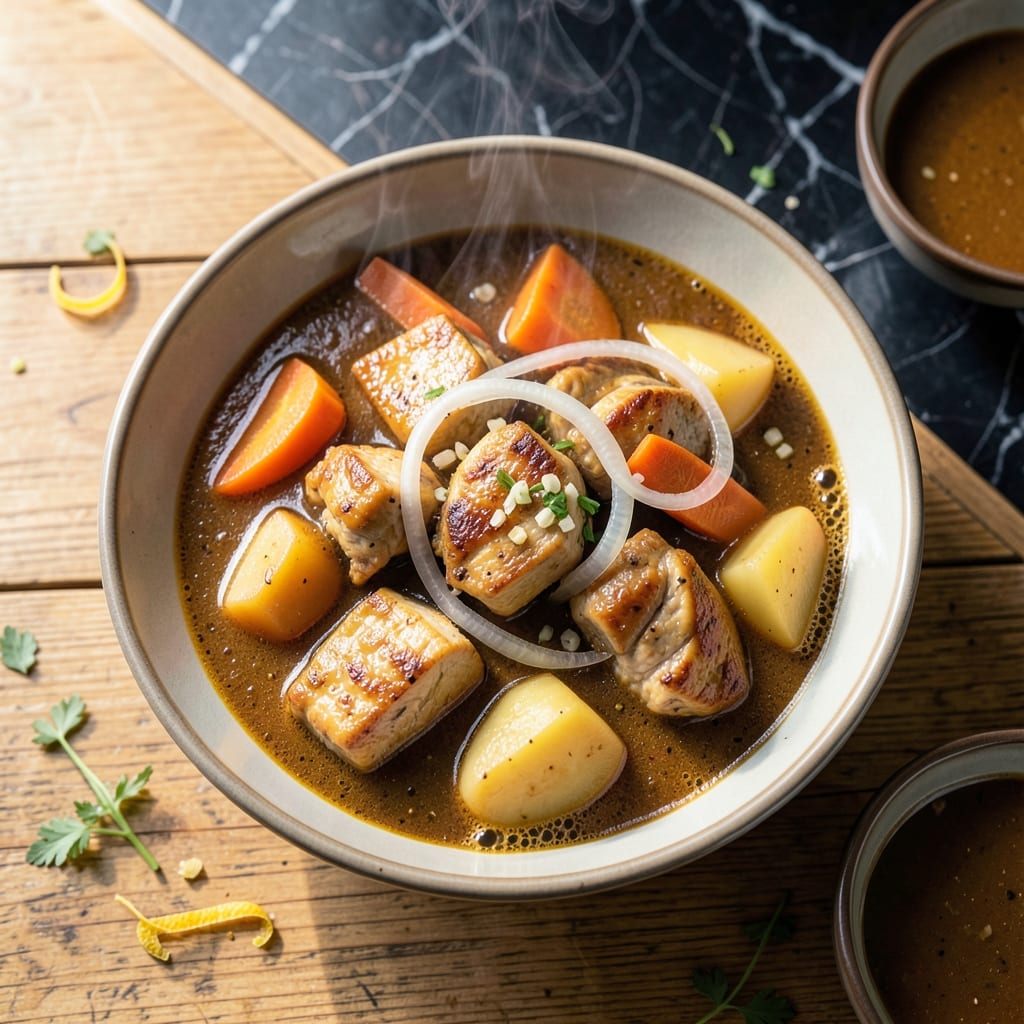
I’ve refined this approach over years of testing, creating a version that delivers all the comfort of traditional Japanese curry with a lighter touch. The key lies in balancing rich spices with fresh vegetables and lean protein.
This method uses simple ingredients and straightforward techniques to build deep flavor without excess fat. The result is a dish that’s both nourishing and deeply satisfying, proving that healthy can still mean indulgent.
You’ll find the same velvety sauce and aromatic spices as classic versions, but with a focus on wholesome components. It’s the kind of meal that warms you from the inside out.
Perfect for weeknight dinners or cozy weekends, this curry comes together efficiently while maintaining authentic taste. Let’s begin.
Ingredients for Healthy Japanese Curry
Lean protein, fresh veggies, and aromatic spices make this curry both light and deeply satisfying.
| Ingredient | Amount | Notes |
|---|---|---|
| Japanese Curry Roux 🍛 | 4 oz | Mild or medium heat blocks |
| Chicken Breast 🍗 | 1 ½ lb | Boneless, skinless, cubed |
| Carrots 🥕 | 2 whole | Peeled, sliced into chunks |
| Russet Potatoes 🥔 | 2 whole | Peeled, cubed evenly |
| Yellow Onion 🧅 | 1 whole | Thinly sliced |
| Garlic Cloves 🧄 | 3 cloves | Minced finely |
| Fresh Ginger 🌿 | 1 tbsp | Grated or minced |
| Low-Sodium Chicken Broth 🥣 | 3 cups | Use quality unsalted |
| Apple 🍎 | 1 whole | Peeled, grated for sweetness |
| Soy Sauce 🥢 | 1 tbsp | Low-sodium preferred |
| Honey 🍯 | 1 tbsp | Substitute maple syrup if needed |
| Olive Oil 🫒 | 1 tbsp | For sautéing aromatics |
| Green Bell Pepper 🌶️ | 1 whole | Diced into pieces |
| Water 💧 | 1 cup | Adjust for desired consistency |
[recipe_ingredient_scaler]
The curry roux is non-negotiable—S&B Golden Curry has the best texture and flavor balance (mild or medium heat, both work). I grab mine at Asian markets or the international aisle. For the chicken, boneless, skinless breasts keep it lean but juicy. Use organic if you can swing it. The veggies? Pick whatever’s freshest at the market. Carrots and potatoes are classic, but sweet potatoes would add a nice twist.
Need to skip chicken? Tofu or chickpeas soak up the sauce beautifully. No fresh ginger? Ground ginger at half the amount works in a pinch. The apple might seem weird, but it’s the secret to balancing the spices—use Fuji or Gala for natural sweetness. For a vegetarian version, swap chicken broth for vegetable. Low-sodium is key to controlling the salt level in the final dish.
Leftovers keep 4-5 days in the fridge and taste even better the next day. Freeze for up to 3 months (portion before freezing for easy meals). The roux blocks and broth can be stored separately if you want to prep ahead. Just don’t freeze the potatoes—they’ll turn mushy when reheated.
Why You’ll Love This Recipe
- One Pot Wonder: I just toss the chicken, potatoes, carrots, and onion into a single pot with the curry roux—minimal cleanup, maximum flavor.
- Rich Comfort: The roux creates this deep, savory-sweet sauce that coats the tender chicken and veggies in the most satisfying way.
- Meal Prep Magic: I make a big batch on Sunday and it reheats beautifully for lunches all week—still tastes fresh.
- Budget Stretcher: Chicken breast and humble veggies keep it affordable, but the curry roux makes it taste like a restaurant dish. Honestly, it’s my go-to when I want to eat well without overspending.
Step-by-Step Instructions for Japanese Curry
Here’s the method. Straightforward, tested, works every time.
Step 1: Sauté Aromatics Until Fragrant
Heat the 1 tbsp Olive Oil in a large pot over medium heat. Add the 1 whole Yellow Onion and cook for 5-6 minutes until it turns translucent and begins to soften. You’ll see the edges start to turn golden brown—that’s your signal.
Stir in the minced 3 cloves Garlic Cloves and grated 1 tbsp Fresh Ginger, cooking for 1 minute until fragrant. Don’t let the garlic brown. Now add the diced 1 whole Green Bell Pepper and cook for another 3 minutes until it softens slightly.
Step 2: Brown the Chicken and Add Liquid
Increase heat to medium-high and add the cubed 1.5 lb Chicken Breast. Sear for 4-5 minutes, stirring occasionally, until the chicken loses its pink color and begins to brown. You want a light golden crust on the pieces.
Pour in the 3 cups Low-Sodium Chicken Broth, 1 tbsp Soy Sauce, and 1 tbsp Honey. Stir to combine, scraping up any browned bits from the bottom. These bits add depth to your curry, so don’t skip this.
Step 3: Add Vegetables and Simmer
Add the peeled, chunked 2 whole Carrots, peeled, cubed 2 whole Russet Potatoes, and peeled, grated 1 whole Apple. Stir everything together, then bring to a gentle boil. This sweetness from the apple balances the curry’s richness.
Reduce heat to medium-low, cover, and simmer for 15 minutes until the potatoes and carrots begin to soften. You’ll know it’s working when you can pierce the potatoes with a fork but they still hold their shape.
Step 4: Finish with Curry Roux
Break the 4 oz Japanese Curry Roux into chunks and add to the pot. Stir constantly as it dissolves into the liquid, which takes about 2-3 minutes. The mixture will thicken noticeably as the roux melts.
Pour in the 1 cup Water and stir to combine. Bring back to a simmer, then reduce heat to low. Cook uncovered for 5-7 minutes until the sauce thickens enough to coat the back of a spoon.
Taste and adjust seasoning if needed. The curry should be rich and velvety, with tender chicken and vegetables that soak up the flavorful sauce.
Pro Tips For Making Healthy Japanese Curry
- Sear Chicken First: I learned this the hard way—cooking raw chicken directly in the curry makes it rubbery. Sear the breast in a hot pan for 3-4 minutes per side first, then slice and add back later.
- Uniform Potato Cuts: Russets cook unevenly if chopped haphazardly. Cut them into 1-inch cubes so they soften at the same rate as the carrots.
- Bloom the Roux: Sounds weird, but it works: cook the curry roux in a little oil for 1-2 minutes before adding liquid to deepen the flavor.
- Skip the Peeling: After burning my fingers peeling hot potatoes, I finally realized the skins soften in the curry and add fiber—just scrub them well first.
Essential Equipment for This Recipe
Essential Pot
I tested this in 5-quart Dutch ovens, stainless steel stockpots, and enamel-coated cast iron. A heavy-bottomed pot prevents scorching—the roux sticks if the base is too thin. My Le Creuset Dutch oven from Central Market gives even heat and cleanup is a breeze. 🔥
Wooden Spoon
You need a flat wooden spoon to scrape the bottom while dissolving the roux. Plastic can melt, and metal might scratch nonstick. I keep a 12-inch bamboo spoon dedicated to curry night—it fits perfectly into the pot’s corners.
Sharp Chef’s Knife
Uniform veggie pieces cook evenly, so a sharp 8-inch chef’s knife is non-negotiable. I use my Wüsthof for the 1.5 lb Chicken Breast and root veggies. David swears by Shun Premier for precision.
Microplane Grater
For the 1 tbsp Fresh Ginger, a microplane extracts maximum juice and flavor with minimal effort. I found mine at Austin farmers markets for $12. It’s also perfect for the apple—grate it directly into the pot.
Instant-Read Thermometer
Check chicken reaches 165°F before adding roux. My ThermoWorks Thermapen gives readings in 2-3 seconds. It’s a small investment that prevents overcooked meat every time.
Fine-Mesh Strainer
If you prefer a smoother sauce, strain it after cooking. I use a 5-inch fine-mesh strainer to catch any ginger fibers or apple bits. Just press the veggies gently—you want to keep the texture.
Nutrition Facts
Frequently Asked Questions
Can I make this with tofu instead of chicken?
Use 14 oz extra-firm tofu, pressed and cubed. Add it when you would normally add the chicken, but reduce cooking time to 10 minutes since tofu cooks faster. It soaks up the curry flavor beautifully.
What if my curry is too thick?
Thin it with additional warm water or broth, 1/4 cup at a time, until it reaches your desired consistency. Stir well after each addition to incorporate fully.
How do I store leftovers?
Let it cool completely, then store in an airtight container in the fridge for up to 4-5 days. Reheat gently on the stove with a splash of water to restore the creamy texture.

Trained in classic French technique but raised on slow-cooked ribs and spicy rubs, she blends culinary skill with smoke and soul.
- Recipe for Boneless Pork Chops in Cast Iron Skillet: Sear and Baste to Juicy Perfection - October 3, 2026
- Recipe for Boneless Cross Rib Roast: Slow-Roasted Beef with Herb Crust - October 3, 2026
- Hamburgers in Sauce Recipe Crock Pot: Slow-Cooked Savory Delight - October 3, 2026