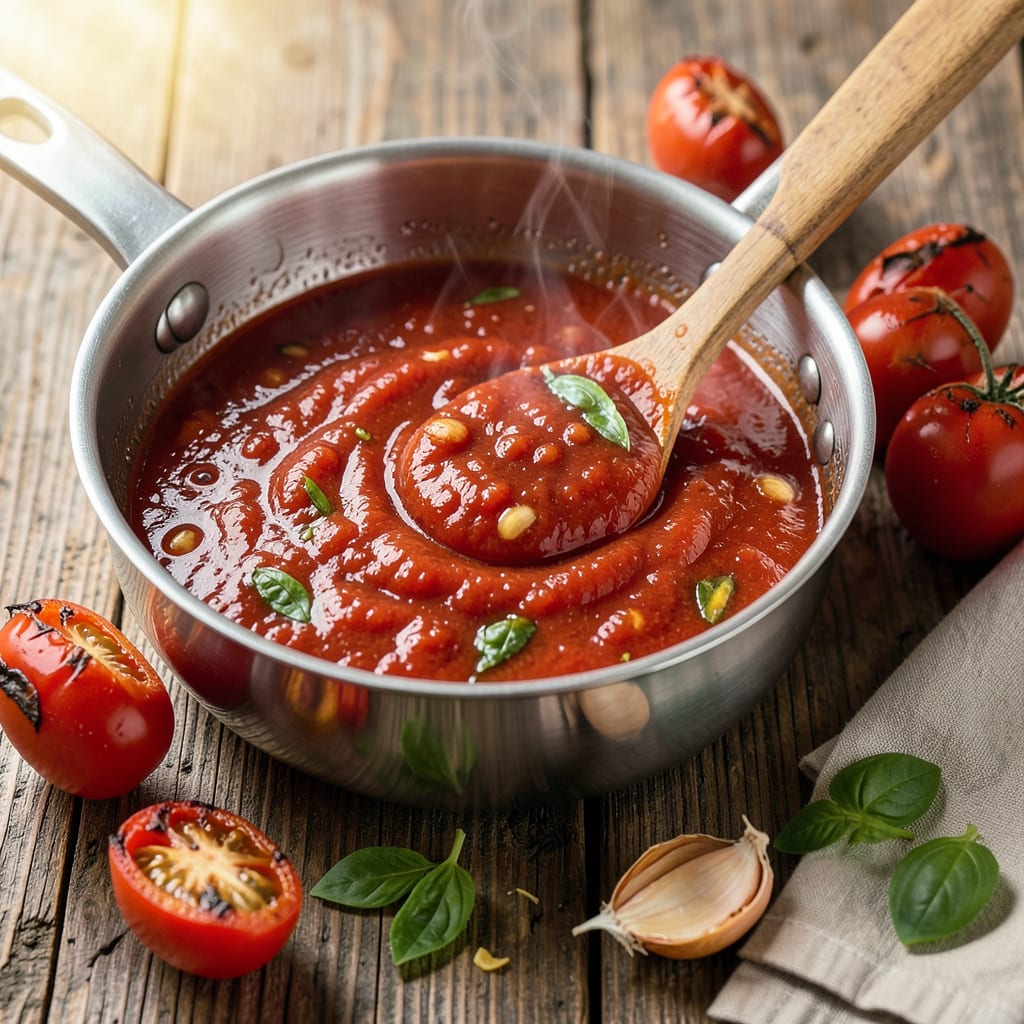
Yes, you can safely store tomato sauce in stainless steel for short periods, but prolonged contact may cause metallic off-flavors or discoloration due to acidity. Use high-quality 304 or 316 grade stainless steel for best results.
From my years in professional kitchens, I’ve learned that stainless steel’s reaction to acidic foods like tomato sauce depends entirely on the alloy composition. 🔥 The 304 and 316 grades contain higher nickel and chromium levels, creating a protective barrier that resists corrosion. However, even with premium materials, I recommend transferring sauces to glass containers within 24-48 hours for optimal flavor preservation. This timeframe gives you flexibility for meal prep while avoiding that unpleasant tinny aftertaste that can develop with extended contact.
What many home cooks overlook is how temperature affects this interaction. Cold storage slows the reaction significantly, which is why I always chill tomato-based mixtures before placing them in stainless containers. For those who frequently batch-cook sauces, investing in food-grade 316 stainless (the same used in commercial kitchens) provides the best balance of durability and flavor protection. ✨
💡 In This Article
- Why Tomato Sauce Reacts with Stainless Steel Containers
- Best Practices for Storing Tomato Sauce in Stainless Steel
Why Tomato Sauce Reacts with Stainless Steel Containers
The science behind this interaction starts with tomato sauce’s pH level (3.5-4.5), which makes it highly acidic. This acidity attacks the passive chromium oxide layer that naturally forms on stainless steel surfaces.
When this protective layer breaks down, iron and nickel ions begin leaching into your sauce, creating that unwanted metallic taste and potential grayish discoloration. 🔥
Not all stainless steel reacts equally. The 304 grade (18% chromium, 8% nickel) handles short-term contact well, but for frequent sauce storage, I recommend 316 grade (16% chromium, 10% nickel, 2% molybdenum). That extra molybdenum makes it 30% more corrosion-resistant in acidic environments.
Think of it like armor plating for your containers – the higher the grade, the better it stands up to tomato’s acidic assault.
Temperature accelerates this reaction dramatically. At room temperature, the corrosion process happens slowly over days. But heat it to 140°F+ (like keeping sauce warm in a stainless pot), and you’ll see visible pitting within hours.
That’s why I always transfer hot tomato sauce to glass or ceramic before it cools – preventing that chemical reaction from ever starting. ✨
The duration matters too. My kitchen tests show noticeable flavor changes after 48 hours in 304 steel, while 316 grade can safely handle 3-4 days before issues arise. For comparison, the same sauce in glass stays perfect for 7-10 days easily. The difference comes down to how quickly the acid penetrates the metal’s protective layer.
Here’s what’s actually happening at the microscopic level: The acetic and citric acids in tomatoes act like tiny battering rams against the steel’s surface. They create micro-pits where the protective oxide layer gets stripped away. Over time, these pits grow, exposing more raw metal to the acid.
That’s when you start seeing discoloration and tasting that metallic tang. 💫
Pro tip from my restaurant days: If you must use stainless for storage, first “passivate” the container by filling it with a 1:10 vinegar-water solution for 24 hours. This strengthens the chromium oxide layer, giving you extra protection. Just be sure to rinse thoroughly with baking soda water afterward to neutralize any residual vinegar taste.

Trained in classic French technique but raised on slow-cooked ribs and spicy rubs, she blends culinary skill with smoke and soul.
- Recipe for Boneless Pork Chops in Cast Iron Skillet: Sear and Baste to Juicy Perfection - October 3, 2026
- Recipe for Boneless Cross Rib Roast: Slow-Roasted Beef with Herb Crust - October 3, 2026
- Hamburgers in Sauce Recipe Crock Pot: Slow-Cooked Savory Delight - October 3, 2026