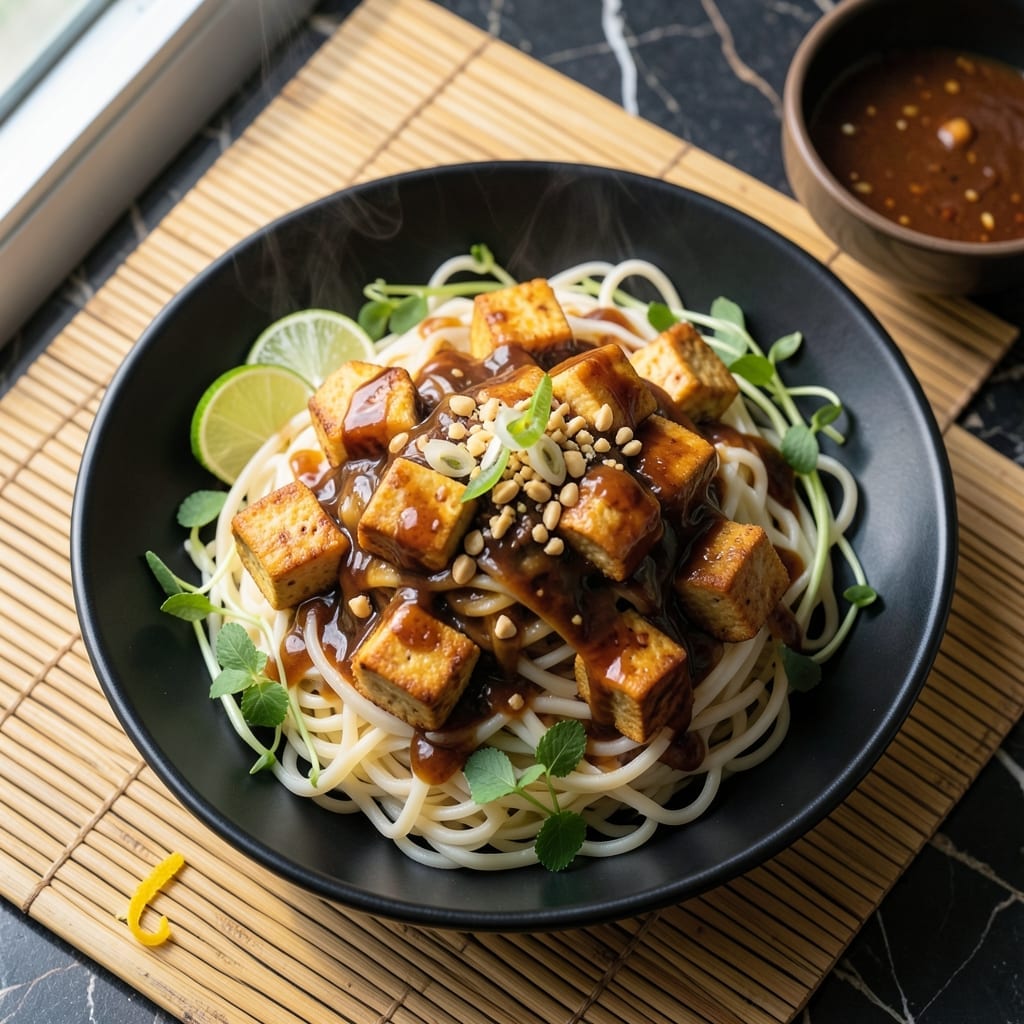
This plant-based take on Pad Thai delivers all the zesty flavors without compromising on health or tradition.
I developed this version after realizing how many store-bought sauces contain hidden animal products. The peanut-lime combination creates that signature balance of sweet, tangy, and savory that makes Pad Thai irresistible.
Rice noodles, tofu, and fresh vegetables come together in a dish that’s as nourishing as it is satisfying. The sauce clings perfectly to each noodle, while crushed peanuts add just the right amount of crunch.
Ready in under 30 minutes, this proves that vegan comfort food can be both wholesome and deeply flavorful.
Ingredients for Healthy Pad Thai Recipe Vegan
Rice noodles, tofu, fresh veggies, and a zesty sauce that ties it all together.
| Ingredient | Amount | Notes |
|---|---|---|
| Rice Noodles 🍜 | 8 oz | Flat, medium-width preferred |
| Extra-Firm Tofu 🧈 | 14 oz | Pressed and cubed |
| Tamarind Paste 🍯 | 2 tbsp | Pure, no additives |
| Soy Sauce 🥄 | 3 tbsp | Low-sodium or tamari for gluten-free |
| Maple Syrup 🍁 | 2 tbsp | Grade A or B |
| Lime Juice 🍋 | 3 tbsp | Freshly squeezed |
| Peanut Butter 🥜 | ¼ cup | Creamy, unsweetened |
| Garlic Cloves 🧄 | 4 cloves | Minced finely |
| Bean Sprouts 🌱 | 1 cup | Fresh, rinsed |
| Green Onions 🧅 | ½ cup | Thinly sliced |
| Crushed Peanuts 🥜 | ½ cup | Unsalted, dry-roasted |
| Red Bell Pepper 🌶️ | 1 whole | Thinly sliced |
| Cilantro 🌿 | ¼ cup | Fresh, chopped |
| Olive Oil 🫒 | 1 tbsp | For cooking tofu |
| Red Pepper Flakes 🔥 | ½ tsp | Adjust to taste |
[recipe_ingredient_scaler]
The tamarind paste is non-negotiable here—it gives that authentic Pad Thai tang. Asian markets or Amazon are your best bets for pure paste without additives. For the tofu, extra-firm from Nasoya or Wildwood holds up best to pressing and frying. Press it between paper towels with a heavy pan on top (worth the extra minute). The noodles should be flat and medium-width, not the super-thin rice sticks.
No tamarind? Lime juice plus a little brown sugar gets you close, but it won’t be the same. Swap soy sauce for coconut aminos if you’re gluten-free. Peanut butter can be almond butter (the flavor’s slightly different but still good). Skip the peanuts entirely if allergies are a concern—sunflower seeds add a similar crunch. The maple syrup can be agave or date syrup in a pinch.
Store tamarind paste in the fridge after opening—it’ll keep for 6 months. Tofu freezes beautifully (thaw and press before using). The sauce stays fresh in the fridge for 5 days, so make extra for leftovers (honestly, it’s better the next day).
Why You’ll Love This Recipe
- Ready in 20: I soak the rice noodles while I crisp the tofu—dinner’s on the table before the kids finish bickering over who gets the last tamarind-dipped bite.
- Sweet-Savory Balance: The maple syrup and tamarind paste create this ridiculous tangy-sweet depth that makes me sneak seconds straight from the pan.
- Meal Prep Hero: I make a double batch on Sunday and it reheats beautifully for lunches, the noodles never turning to mush.
- Budget Stretcher: A block of tofu and a handful of pantry staples feed four of us for less than the cost of one takeout box.
Step-by-Step Instructions for Zesty Vegan Pad Thai
Here’s the method. Straightforward, tested, works every time.
Step 1: Press and Cook the Tofu
Heat the 1 tbsp olive oil in a large non-stick skillet over medium-high heat. Add the 14 oz extra-firm tofu cubes and cook undisturbed for 4-5 minutes until the bottoms turn golden brown. This creates a crispy exterior that contrasts beautifully with the soft noodles.
Flip the tofu and cook for another 3-4 minutes until all sides are evenly browned. The tofu should release easily from the pan when it’s ready to turn. Remove from heat and set aside—it’ll finish cooking when combined with the hot noodles later.
Step 2: Prepare the Sauce Base
In a medium bowl, whisk together the 2 tbsp tamarind paste, 3 tbsp soy sauce, 2 tbsp maple syrup, 3 tbsp lime juice, and 0.25 cup peanut butter until smooth. The mixture will be thick at first, but keep whisking—it will loosen into a glossy, pourable sauce.
This is where the magic happens. The tamarind gives that authentic tang, the peanut butter adds richness, and the lime juice brightens everything up. Taste and adjust the balance if needed—maybe a touch more lime for acidity or maple for sweetness.
Step 3: Cook the Noodles and Aromatics
Soak the 8 oz rice noodles in hot water for 8-10 minutes until they’re pliable but still slightly firm. Drain and set aside. Meanwhile, in the same skillet used for tofu, add the 4 cloves garlic cloves and 1 whole red bell pepper slices. Sauté over medium heat for 2-3 minutes until the garlic is fragrant and the pepper softens slightly.
Add the drained noodles and 1 cup bean sprouts to the skillet. Pour the sauce over everything and toss vigorously with tongs for 2-3 minutes until the noodles are fully coated and heated through. The noodles should be tender but still have a slight chew.
Step 4: Combine and Garnish
Return the cooked tofu to the skillet and gently fold it into the noodle mixture. Cook for an additional 1-2 minutes to allow all the flavors to meld together. The tofu should absorb some of the sauce, becoming even more flavorful.
Transfer to serving plates and top with 0.5 cup green onions, 0.5 cup crushed peanuts, 0.25 cup cilantro, and a sprinkle of 0.5 tsp red pepper flakes for heat. The garnishes add freshness, crunch, and a pop of color that makes this dish as beautiful as it is delicious.
Pro Tips For Making Healthy Pad Thai Recipe Vegan
- Press the Tofu: Use a clean kitchen towel to squeeze out as much water as possible from the tofu before cooking—about 10 minutes under a heavy pan. I learned this the hard way after my first three batches turned out soggy instead of crispy.
- Soak Noodles Right: Cover rice noodles with hot water and let them sit for exactly 8-10 minutes, no longer. They should be pliable but still slightly firm—over-soaking makes them mushy when stir-fried.
- Balance the Sauce: Mix tamarind paste, soy sauce, and maple syrup in a 2:2:1 ratio for that perfect sweet-sour-salty kick. After burning a batch with too much tamarind, I finally nailed this proportion.
- Heat the Pan First: Get your wok or skillet screaming hot before adding oil and tofu—about 1 minute on high heat. Sounds obvious, but it’s the difference between golden, crispy edges and sad, pale tofu.
Make-Ahead Tips for This Dish
Prep Ahead Components
I always prep the sauce first—it keeps beautifully in the fridge for up to 5 days. Just whisk together the tamarind paste, soy sauce, maple syrup, lime juice, and peanut butter in a jar. The flavors meld overnight, making it even more delicious. 💡
Tofu Prep
Press and cube your 14 oz extra-firm tofu the night before. Store it in an airtight container in the fridge, covered with water to keep it moist. This saves 15 minutes on cooking day and ensures perfect texture.
Veggie Prep
Slice the red bell pepper and green onions, rinse the bean sprouts, and chop the cilantro ahead of time. Store them in separate containers with damp paper towels to maintain freshness for 2-3 days.
Noodle Prep
Soak the 8 oz rice noodles in cold water for 30 minutes before cooking. They’ll soften just enough to reduce the cooking time by half. Drain and keep them in a colander until ready to use.
Garnish Station
Crush the peanuts and measure out the red pepper flakes in advance. Store them in small bowls—this makes assembly a breeze and lets everyone customize their plate. 🌟
Full Meal Prep
Cook the entire dish, then cool and store in airtight containers for up to 3 days. Reheat gently in a skillet with a splash of water to restore the sauce’s creamy consistency.
Nutrition Facts
Frequently Asked Questions
What can I use if I don’t have tamarind paste?
Mix 2 tbsp lime juice with 1 tbsp brown sugar as a substitute. It won’t be identical, but it adds the needed tang and sweetness.
How do I press tofu without a press?
Wrap tofu in paper towels, place on a plate, and top with a heavy pan or books. Let sit for 15-20 minutes to remove excess water.
Can I make this gluten-free?
Yes! Swap soy sauce for tamari or coconut aminos. Also check that your rice noodles are certified gluten-free.
How long will leftovers keep?
Store in an airtight container in the fridge for up to 3 days. Reheat gently with a splash of water.

Trained in classic French technique but raised on slow-cooked ribs and spicy rubs, she blends culinary skill with smoke and soul.
- Recipe for Boneless Pork Chops in Cast Iron Skillet: Sear and Baste to Juicy Perfection - October 3, 2026
- Recipe for Boneless Cross Rib Roast: Slow-Roasted Beef with Herb Crust - October 3, 2026
- Hamburgers in Sauce Recipe Crock Pot: Slow-Cooked Savory Delight - October 3, 2026