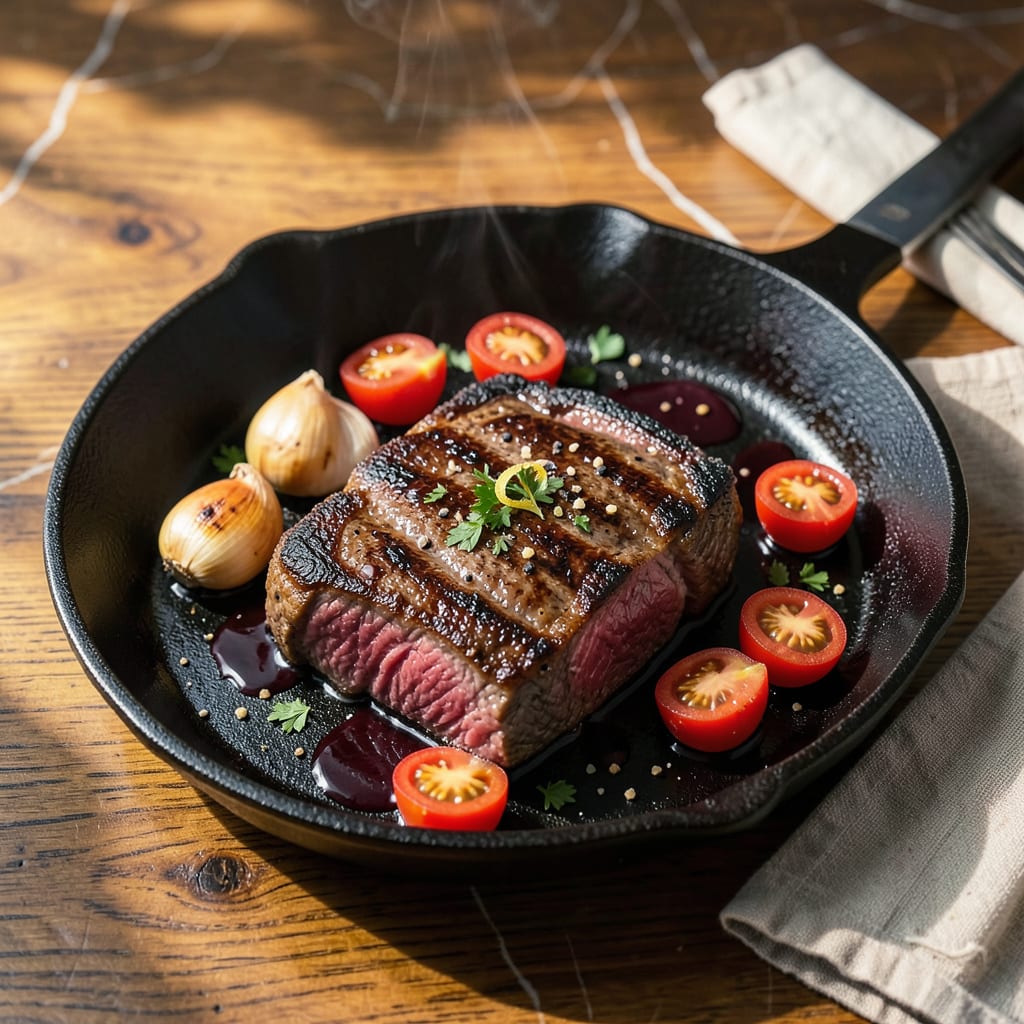
Nothing ruins a good steak faster than reheating it wrong. I’ve seen too many perfectly cooked ribeyes turn into sad, dry hockey pucks when warmed up carelessly. The oven method changed everything for me—it’s the only way to bring leftover steak back to life with that juicy, just-off-the-grill texture.
Here’s the thing—most people blast their steak in the microwave or throw it in a screaming hot pan, which guarantees overcooked edges and rubbery centers. I learned the hard way that low and slow is the secret. A gentle oven temperature and proper resting time work together to warm the steak evenly without pushing it past that perfect doneness you worked so hard to achieve originally.
The difference is night and day. Your steak will come out warm throughout with edges that haven’t turned to leather. The interior stays tender and moist, just like it was when you first sliced into it. I’ve been using this method for years, and it’s saved countless expensive cuts from the trash can.
Whether you’re dealing with last night’s filet or meal prepping steaks for the week, this technique ensures every bite tastes intentional. The oven does most of the work while you focus on quick sides—maybe some garlic butter mushrooms or a simple salad. Dinner’s back on the table in minutes, and nobody will guess it wasn’t fresh.
📚 In This Guide
- What You’ll Need
- Instructions
- Tips and Common Mistakes
What Youll Need
- ● Leftover steak: 1–2 portions (½–1 lb total), preferably ½–1 inch thick (thinner cuts dry out faster).
- ● Oven-safe skillet or baking dish: Cast iron, stainless steel, or ceramic (avoid nonstick for high heat).
- ● Aluminum foil: 1 sheet (12×12 inches), to trap moisture.
- ● Butter or oil: 1–2 tbsp, unsalted butter, ghee, or high-smoke-point oil (avocado, grapeseed).
- ○ Meat thermometer: Instant-read, for precision (optional but highly recommended).
- ● Tongs or spatula: Heat-resistant, to flip the steak safely.
- ● Salt & pepper: Pinch of each, to refresh seasoning.
- ○ Broiler pan (optional): For extra crispiness if your oven has a broil setting.
- ● Resting plate: 1, to let steak rest post-heating.
Instructions
Here’s the foolproof method I use to reheat steak while keeping it tender and delicious.
Preheat Your Oven and Prepare the Steak
Start by preheating your oven to 250°F. This low temperature is crucial—it gently warms the steak without overcooking it. While the oven heats, remove your steak from the refrigerator and let it sit at room temperature for about 10 minutes. This takes the chill off and ensures even heating.
Place a wire rack on a baking sheet. This setup allows air to circulate around the steak, preventing it from steaming and losing its crispy exterior. If you don’t have a wire rack, you can use a baking sheet lined with parchment paper, but the results won’t be quite as good.
Add Moisture to Prevent Drying Out
Here’s the thing—reheating steak can dry it out if you’re not careful. To prevent this, I like to add a splash of beef broth or water to the baking sheet. Just 2-3 tablespoons is enough to create a bit of steam in the oven, which helps keep the steak juicy.
You can also place a small oven-safe dish filled with ½ cup of water on the lower rack of the oven. This adds humidity to the environment, which further protects the steak from drying out. Don’t skip this step—it makes a noticeable difference in the final texture.
Reheat the Steak Gently
Place the steak on the wire rack and slide it into the preheated oven. Let it warm for 15-20 minutes, depending on the thickness of your steak. You’re aiming for an internal temperature of 110-120°F—just warm enough to bring it back to life without cooking it further.
I always use a meat thermometer to check the temperature. If you don’t have one, you can test doneness by gently pressing the steak with your finger. It should feel warm but still soft and yielding, not firm. Remember, the steak will continue to warm slightly after you remove it from the oven.
Sear for a Fresh, Crispy Exterior
This is the moment that matters: to restore that delicious crust, heat a skillet over high heat for 2-3 minutes until it’s smoking hot. Add a small amount of oil or butter—just enough to coat the bottom of the pan—and let it get shimmering hot.
Sear the steak for 30-60 seconds per side, just until it develops a fresh, golden-brown crust. Don’t overdo it—you’re not cooking the steak, just revitalizing the exterior. The goal is to recreate that fresh-off-the-grill texture without warming the interior too much.
Rest and Serve Immediately
Transfer the steak to a cutting board and let it rest for 5 minutes before slicing. This brief rest allows the juices to redistribute throughout the meat, ensuring every bite is moist and flavorful. If you cut into it too soon, all those precious juices will end up on your cutting board instead of in your steak.
Slice against the grain and serve immediately. The steak should be warm all the way through, with a crispy exterior and a tender, juicy interior. If you’ve followed these steps, it will taste almost as good as it did fresh off the grill—maybe even better, since the flavors have had time to meld and deepen.
Tips and Common Mistakes
Getting restaurant-quality results at home is all about the details—here’s what I’ve learned from years of perfecting this method.
Temperature Matters: That 250°F oven setting in Step 1 isn’t arbitrary. It’s low enough to warm the steak gently without pushing it past medium-rare. I’ve tried higher temps, and you lose that perfect pink center every time. The 10 minutes at room temperature before reheating is equally important—cold steak straight from the fridge reheats unevenly, leaving you with a warm exterior and chilly center.
Moisture is Your Friend: Don’t underestimate those 2-3 tablespoons of beef broth or water in Step 2. I skipped this once and ended up with a steak that was technically warm but disappointingly dry. The steam created by this small amount of liquid makes a surprising difference in texture. For thicker cuts, I sometimes add the ½ cup of water in a separate dish on the lower rack—it creates just enough humidity to keep everything juicy.
Searing Technique: When you get to Step 4, make sure your skillet is truly smoking hot before adding the steak. Those 30-60 seconds per side should be just enough to create a crisp crust without warming the interior. I like to press down gently with a spatula during searing—it ensures maximum contact with the pan for that perfect crust. And don’t walk away during this step; high heat means things can go from perfectly seared to burned in seconds.
Resting is Non-Negotiable: Those 5 minutes of resting time in Step 5 might seem unnecessary when you’re hungry, but they’re crucial. I learned this the hard way after slicing into a beautiful steak too soon and watching all the juices pool on my cutting board. The meat continues to relax during this time, making each bite more tender and flavorful.
Pro Tips for Heat Up Steak In Oven
- Getting restaurant-quality results at home is all about the details—here’s what I’ve learned from years of perfecting…
- Temperature Matters: That 250°F oven setting in Step 1 isn’t arbitrary. It’s low enough to warm the steak gently with…
- Moisture is Your Friend: Don’t underestimate those 2-3 tablespoons of beef broth or water in Step 2. I skipped this o…
Frequently Asked Questions
Can I reheat steak in the oven without drying it out?
The key is low and slow. Preheat your oven to 250°F, place the steak on a wire rack over a baking sheet, and add a splash of beef broth or butter. Cover loosely with foil to trap moisture, then heat for 10–15 minutes (or until it reaches 110–120°F internally). This keeps it juicy!
How long does it take to reheat steak in the oven at 350°F?
At 350°F, a 1-inch-thick steak typically takes 5–8 minutes. Use a meat thermometer to check for 120–130°F (medium-rare) or 135–145°F (medium). Thicker cuts may need 10–12 minutes. Avoid overcooking—pull it out just before it reaches your desired temp, as it’ll rise another 5°F while resting.
Is the oven better than a microwave for reheating steak?
Yes! Microwaves zap moisture and turn steak rubbery. The oven’s gentle, even heat preserves texture and flavor. For a quick fix, try the air fryer (3–4 mins at 350°F) or a skillet (1–2 mins per side) with butter. Save the microwave for soups, not steaks!
Why does my reheated steak taste tough or chewy?
Toughness usually means overcooking or moisture loss. To fix it:
- Slice against the grain before reheating.
- Add a drizzle of olive oil or broth to the pan.
- Avoid high heat—stick to 250–300°F.
- Let it rest 5 minutes after heating.
Can I reheat steak with sauces or toppings in the oven?
You can, but add them later! Sauces (like béarnaise or chimichurri) can burn or separate in the oven. Reheat the steak plain, then top with room-temp or warmed sauce after. For cheese (like blue cheese crumbles), broil for 1–2 minutes at the end to melt it.
Reheating steak in the oven doesn’t have to mean dry, tough meat—with the right technique, you can enjoy juicy, tender results that taste almost as good as fresh! 🥩✨ By controlling the temperature, timing, and resting process, you’ll lock in moisture and revive that restaurant-quality flavor every time.
Now that you’ve mastered the method, why not put it to the test? Try reheating a leftover steak tonight and pair it with your favorite sides—you might just fool yourself into thinking it’s straight off the grill! For more tips on keeping meats perfect, check out our guide on storing and reheating proteins like a pro.

Trained in classic French technique but raised on slow-cooked ribs and spicy rubs, she blends culinary skill with smoke and soul.
- Recipe for Boneless Pork Chops in Cast Iron Skillet: Sear and Baste to Juicy Perfection - October 3, 2026
- Recipe for Boneless Cross Rib Roast: Slow-Roasted Beef with Herb Crust - October 3, 2026
- Hamburgers in Sauce Recipe Crock Pot: Slow-Cooked Savory Delight - October 3, 2026