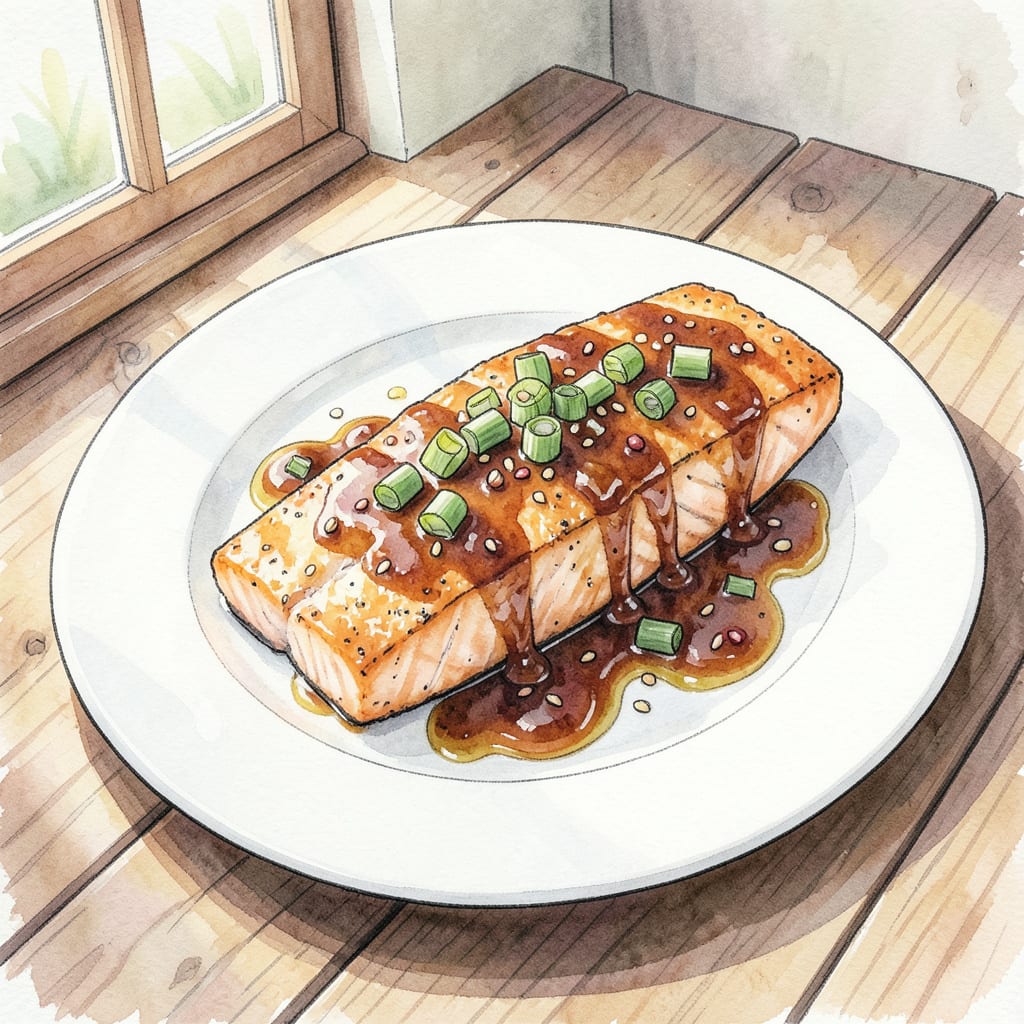
As a pitmaster with a passion for blending traditional techniques with modern flavors, I’m excited to share my hibachi salmon recipe that’s sure to impress. Grilling salmon to perfection requires precision, but the result is well worth the effort.
This perfectly grilled hibachi salmon is cooked at 400°F for 8-10 minutes, yielding a tender interior and a caramelized crust, all while infused with the savory flavors of a traditional Japanese sauce. The combination of soy sauce, garlic, and ginger creates a rich, umami taste that complements the salmon beautifully.
Ingredients for Hibachi Salmon
Gather these premium ingredients for a truly impressive hibachi experience at home.
| Ingredient | Amount | Notes |
|---|---|---|
| Salmon Fillets 🐟 | 1 ½ lb | Skin removed, wild-caught preferred |
| Soy Sauce 🧂 | ½ cup | Low-sodium for better control |
| Olive Oil 🫒 | ¼ cup | For grilling and sauce |
| Garlic Cloves 🧄 | 4 cloves | Minced for maximum flavor |
| Fresh Ginger 🌿 | 2 tbsp | Grate finely for best results |
| Brown Sugar 🍮 | 2 tbsp | For balancing savory flavors |
| Rice Vinegar 🍚 | 2 tbsp | Unseasoned for better control |
| Sesame Oil 🫒 | 1 tsp | For finishing, not for grilling |
| Green Onions 🌿 | ¼ cup | Thinly sliced for garnish |
| Sesame Seeds 🌱 | 1 tbsp | Toasted for enhanced flavor |
| Black Pepper 🌶️ | ½ tsp | Freshly ground for best results |
| Salt 🧂 | ¼ tsp | Kosher or sea salt preferred |
[recipe_ingredient_scaler]
For the salmon, wild-caught is worth the extra cost—better texture and flavor. I buy mine from Whole Foods or local fish markets. The soy sauce matters too—look for Kikkoman or Pearl River Bridge for that deep umami. Fresh ginger is a game-changer here; don’t skip grating it fresh.
No rice vinegar? Apple cider vinegar is a decent substitute, but reduce to 1 tablespoon. The sesame oil is for finishing—don’t grill with it, it burns easily. Want more heat? Crushed red pepper flakes add a nice kick. For the green onions, thin slices make all the difference—look for the freshest at your local market.
This sauce keeps for 5 days in the fridge; store in an airtight container. The salmon itself is best fresh, but you can marinate it overnight for up to 24 hours. Leftovers? Reheat gently—don’t overcook. Freeze the cooked salmon for up to 3 months.
Step-by-Step Instructions for Hibachi Salmon
Here’s the method for achieving perfectly grilled salmon with a savory hibachi sauce.
Step 1: Prepare the Hibachi Sauce
In a medium saucepan, combine the 0.5 cup Soy Sauce, 2 tbsp Brown Sugar, 2 tbsp Rice Vinegar, 2 tbsp Fresh Ginger, and 4 cloves Garlic Cloves. Bring the mixture to a simmer over medium heat. Reduce the heat to low and let it simmer for 5-7 minutes until the sauce thickens slightly. Remove from heat and whisk in the 1 tsp Sesame Oil. Set aside to cool.
The sauce will thicken further as it cools. If it becomes too thick, you can thin it out with a little water. This sauce is the backbone of the dish, providing a rich, savory flavor that complements the grilled salmon perfectly.
Step 2: Grill the Salmon
Preheat your grill to high heat (around 450°F). Brush the 1.5 lb Salmon Fillets with 0.25 cup Olive Oil and season with 0.5 tsp Black Pepper and 0.25 tsp Salt. Place the salmon on the grill, skin side down if they have skin. Grill for 4-6 minutes per side until the salmon is cooked through and flakes easily with a fork. The internal temperature should reach 145°F.
Keep an eye on the salmon as it grills. You want a nice char on the outside, but you don’t want to overcook it. The salmon is done when it flakes easily with a fork.
Step 3: Serve with Hibachi Sauce and Garnish
Once the salmon is cooked, transfer it to a serving platter. Brush the cooled hibachi sauce over the top of the salmon fillets. Sprinkle 0.25 cup Green Onions and 1 tbsp Sesame Seeds over the sauce. Serve immediately, ensuring that each serving gets a generous amount of the savory sauce and crunchy garnish.
The combination of the grilled salmon, savory hibachi sauce, and crunchy garnish creates a dish that’s both flavorful and visually appealing. This recipe serves 4 people, making it perfect for a small gathering or family dinner.
Best Sauces and Condiments for This Recipe
Classic Hibachi Sauces
The traditional hibachi sauce for salmon combines soy sauce, sake, and mirin for a rich umami flavor. I like to add 1-2 tbsp grated ginger and 2 cloves minced garlic to give it depth. Simmer the mixture until it reduces slightly, then whisk in 1 tsp sesame oil for that signature aroma. This sauce is best used fresh, but it keeps for 5 days in the fridge. 🔥
Modern Twists on Hibachi Sauce
For a contemporary take, try adding yuzu juice or fresh lime juice to brighten the flavors. Some chefs incorporate gochujang for a spicy kick—start with 1 tsp and adjust to taste. You can also mix in chopped green onions and sesame seeds for added texture and visual appeal. These variations work beautifully with grilled salmon. 🌟
Complementary Condiments
Serve your hibachi salmon with pickled ginger on the side to cleanse the palate between bites. A simple wasabi mayonnaise (mix equal parts mayonnaise and wasabi paste) adds creamy heat. For a lighter option, try a ponzu sauce made with citrus juice, soy sauce, and vinegar—it pairs beautifully with grilled fish. These condiments enhance the overall dining experience.
Regional Variations
In different regions of Japan, you’ll find variations of hibachi sauce that incorporate local ingredients. For example, some areas use miso paste to add depth, while others might include shiso leaves for a unique herbal note. Experimenting with these regional flavors can add an interesting twist to your hibachi salmon. 🌿
Storage Tips for Sauces
Most hibachi sauces keep well in airtight containers in the fridge for up to 1 week. If you’ve made a large batch, you can freeze it for up to 3 months—just thaw in the fridge overnight before using. Always check for any signs of spoilage before serving. Proper storage ensures your sauces stay fresh and flavorful.
Garnishing with Style
Garnish your hibachi salmon with thinly sliced green onions and a sprinkle of sesame seeds for a classic look. For added color, consider shredded daikon or thin slices of yuzu. These garnishes not only enhance the presentation but also complement the flavors of the dish. A well-garnished plate elevates the dining experience.
Nutrition Facts

Trained in classic French technique but raised on slow-cooked ribs and spicy rubs, she blends culinary skill with smoke and soul.
- Recipe for Boneless Pork Chops in Cast Iron Skillet: Sear and Baste to Juicy Perfection - October 3, 2026
- Recipe for Boneless Cross Rib Roast: Slow-Roasted Beef with Herb Crust - October 3, 2026
- Hamburgers in Sauce Recipe Crock Pot: Slow-Cooked Savory Delight - October 3, 2026