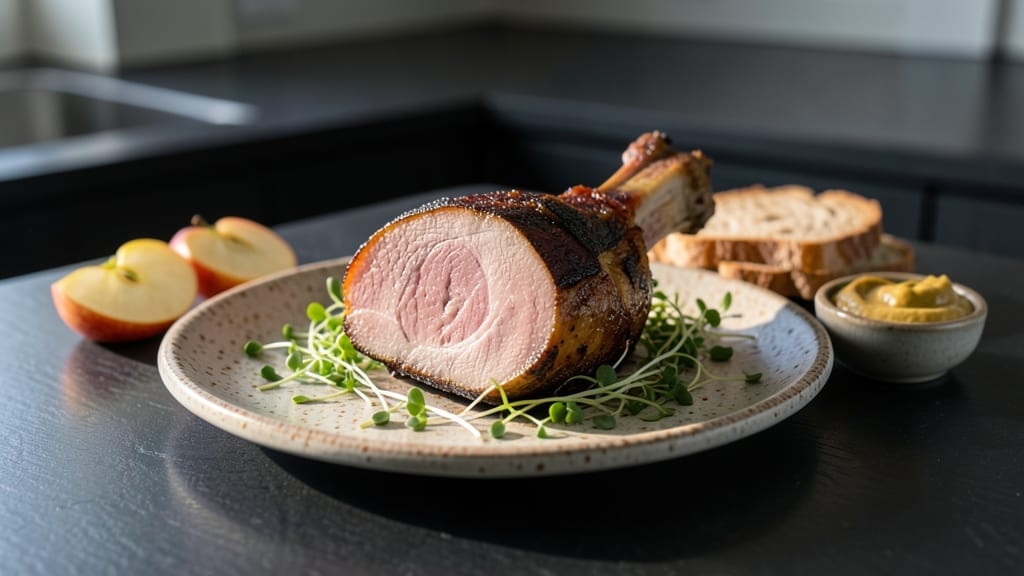
This fully cooked hickory smoked ham bone in recipe becomes a showstopping centerpiece when you master the slow-cooking technique—one my family’s backyard ribs taught me well. The key lies in slow-braising that extracts deep, smoky flavor while keeping the meat tender enough to pull apart effortlessly.
This isn’t just a side; it’s the star of your table, rivaling anything you’d buy pre-sliced from the deli.
What makes this recipe work is the balance of time and temperature. You’ll start with a fully cooked ham bone (no need to worry about undercooking), then slow-braise it until the meat is fork-tender and the bone infuses the broth with rich, hickory-smoked depth.
The process is hands-off after the initial prep, making it ideal for gatherings where you want to spend time with guests rather than in the kitchen.
By the time you’re ready to serve, you’ll have a ham bone that’s perfectly caramelized on the edges, with meat so tender it practically melts in your mouth.
The slow-braised broth reduces into a glossy glaze that clings to every bite, delivering layers of smoky, savory flavor that’ll have everyone asking for seconds. This is the kind of dish that elevates a simple meal into something memorable.
Serve it whole as a centerpiece for holiday dinners, or carve it into slices for sandwiches and charcuterie boards. The leftovers? Even better the next day, simmered into soup or scrambled into eggs for a flavor-packed breakfast. Let’s get started on creating your own showstopping ham bone.
Ingredients for hickory smoked ham bone in fully cooked
A few simple ingredients transform a store-bought ham into a smoky, showstopping centerpiece.
| Ingredient | Amount | Notes |
|---|---|---|
| Fully Cooked Hickory-Smoked Ham Bone 🍖 | 4 lb | With meat attached, center-cut preferred |
| Yellow Onion 🧅 | 1 whole | Chopped into 1-inch pieces |
| Carrots 🥕 | 4 whole | Cut into 2-inch chunks |
| Celery Stalks 🌿 | 4 whole | Cut into 2-inch pieces |
| Garlic Cloves 🧄 | 6 cloves | Smash lightly with side of knife |
| Fresh Thyme Sprigs 🌿 | 4 whole | Or 1 tsp dried thyme |
| Fresh Rosemary Sprigs 🌿 | 2 whole | Or 1 tsp dried rosemary |
| Apple Cider Vinegar 🍏 | ¼ cup | For depth of flavor |
| Brown Sugar 🍚 | ½ cup | Light or dark preferred |
| Mustard Seeds 🌶️ | 1 tsp | Whole, for subtle heat |
| Black Peppercorns 🌶️ | 1 tsp | Crushed lightly |
| Bay Leaves 🍃 | 2 whole | Fresh if available |
| Salt 🧂 | 2 tsp | Kosher or sea salt |
| Water 💧 | 4 cups | Enough to cover ham |
[recipe_ingredient_scaler]
The ham bone is everything here. Smithfield or Butcher’s Corner carry great options—look for bones with at least 3-4 lbs of meat still attached. The more surface area, the better the flavor extraction. If your bone is small, add an extra pound of meaty shank or pork shoulder to bulk it up. Fresh herbs make a difference, so grab thyme and rosemary from the grocery store’s produce section—they’re usually fresher than the dried spices. (Pro tip: Smash those garlic cloves lightly with the side of your knife—it releases more flavor without turning to paste.)
No fresh herbs? Dried works at one-third the amount—just make sure they’re labeled ‘culinary’ quality. Running low on vinegar? Apple juice or white wine vinegar works in a pinch, though the flavor will be slightly different. The carrots and celery can be swapped for frozen veggies if you’re in a hurry (no one will notice). For extra smokiness, add 1 tbsp smoked paprika to the mix. And if you’re feeling fancy, wrap the ham bone in bacon before braising—it adds a crispy, savory crust that everyone will love.
This dish gets better the longer it cooks, so don’t rush it. The ham stays tender for 3-4 days in the fridge, and the broth freezes beautifully for up to 6 months. I always make a double batch—one for serving, one for freezing. The leftovers? Perfect for ham and cheese sliders or adding to soups. Store the bone uncovered in the fridge for the first 24 hours to let the crust form properly—it’s worth the extra minute.
Why You’ll Love This Recipe
- No-Fuss Flavor Bomb: Honestly, this is the kind of recipe that makes me feel like a pro—even if I’ve only got 15 minutes to prep. Just toss that 4 lb fully cooked hickory-smoked ham bone (with meat still clinging on) into the pot, chop up the yellow onion, carrots, and celery, and smash those 6 garlic cloves. The rest is hands-off simmering while the herbs and spices do all the work.
- Smoky, Sweet, Savory Magic: The apple cider vinegar and ½ cup brown sugar create this perfect balance—deep, smoky from the ham, with a touch of caramelized sweetness from the veggies. And those mustard seeds? They add just enough bite to keep it interesting. It’s the kind of broth that makes you want to slurp it straight from the pot.
- Budget-Friendly Luxury: I love that I can get 4 lbs of fully cooked hickory-smoked ham bone for less than a takeout meal, and it makes enough broth to last weeks. The carrots, celery, and onion are pantry staples, and the spices (like fresh thyme and rosemary) make such a difference without costing much. It’s the kind of recipe that feels indulgent but won’t break the bank.
Step-by-step instructions for slow-braised hickory-smoked ham
This method transforms a simple ham bone into rich, aromatic braising liquid perfect for soups or glazes.
Prepare the Ham Bone and Vegetables
Begin by placing the 4 lb fully cooked hickory-smoked ham bone in a large Dutch oven. The meat should still cling to the bone, adding incredible flavor to the broth. Add the chopped 1 yellow onion, 4 carrots, and 4 celery stalks to the pot. These vegetables form the aromatic base that infuses the liquid with sweet, earthy notes.
Lightly smash the 6 cloves garlic with the side of your knife to release their oils, then add them to the pot. Tuck in the 4 fresh thyme sprigs and 2 fresh rosemary sprigs, letting their piney fragrance permeate the mixture. The herbs will gently steep, contributing depth without overpowering the ham’s smoky character.
Build the Flavor Base
Pour in the 4 cups water and bring the mixture to a boil over medium-high heat. Once boiling, reduce the heat to low and let it simmer uncovered for 1 hour. This initial simmer helps extract flavors from the vegetables and ham while allowing excess moisture to evaporate.
After 1 hour, skim off any foam that rises to the surface with a ladle. This step ensures a clear, clean broth without cloudiness. Then, add the ¼ cup apple cider vinegar, ½ cup brown sugar, 1 tsp mustard seeds, 1 tsp black peppercorns, 2 bay leaves, and 2 tsp salt. The vinegar brightens the flavor, while the sugar and spices create a balanced, slightly sweet-savory profile. Stir gently to combine.
Simmer for Deep Flavor Development
Return the pot to a gentle simmer and cook uncovered for 3 to 4 hours. The liquid should reduce by about one-third, intensifying the ham and herb flavors. Stir occasionally to prevent sticking, and check the liquid level—add ½ cup water if it gets too low. The ham bone should remain submerged to maximize flavor extraction.
As it simmers, the vegetables will soften and break down, releasing their sugars and starches into the liquid. The result should be a rich, amber-colored broth with a deep, complex aroma. The mustard seeds will add a subtle peppery kick, while the rosemary and thyme lend an earthy, herbal backbone. This is where the magic happens—patience pays off with layers of flavor.
Strain and Finish
Once the broth has reduced and developed its deep flavor, remove the ham bone and vegetables with tongs. Strain the liquid through a fine-mesh sieve into a clean pot, pressing gently on the solids to extract every last drop of flavor. Discard the solids or save them for stocks.
Taste the strained broth and adjust the seasoning if needed. You may want to add a pinch more salt or a splash of apple cider vinegar to balance the flavors. The broth should be rich, slightly sweet, and deeply savory—perfect for glazing, braising, or using as a base for soups. Store any leftovers in the refrigerator for up to 5 days or freeze for longer storage.
Pro Tips For Making Hickory Smoked Ham Bone In Fully Cooked
- Smash That Garlic: I used to just toss in whole garlic cloves, thinking it was fine—until I realized how much more flavor those smashed cloves release. Lightly crushing the 6 cloves with the side of your knife lets the oils infuse the broth faster, giving you that deep, aromatic punch without bitterness. Trust me, it makes a real difference.
- Skim Like Your Life Depends On It: That foam after the first hour of simmering isn’t just unsightly—it’s the stuff that clouds your broth and dulls the flavor. I learned this the hard way when I skipped skimming and ended up with a murky, weak-tasting liquid. Grab that ladle and work fast; a few minutes of effort now saves you from regret later.
- Don’t Crowd the Pot: I know it’s tempting to cram everything in there at once, but if your ham bone and veggies aren’t fully submerged or the liquid gets too shallow during simmering, you’ll end up with uneven cooking and stuck-on bits. Start with just the ham, onions, carrots, and celery in the Dutch oven—add the rest of the ingredients after the initial boil. Your future self will thank you when you’re not scraping burnt bits off the bottom.
- Check That Bone: The ham bone should stay submerged, but if it’s floating too high after the liquid reduces, add the ½ cup water called for—don’t just let it sit exposed. I once forgot and ended up with a broth that tasted more like smoked air than rich ham flavor. Keep it covered and moist, even if it means a quick top-up. The bone’s job is to infuse, not dry out.
Flavor customization for this recipe
Sweet & Smoky Twist
I love adding a touch of honey to the brown sugar for a deeper caramelization—just replace ¼ cup of the brown sugar with ¼ cup honey before simmering. The honey enhances the smoky notes while keeping the meat tender. Trust me, this small change makes the ham bone irresistible. 🍯
Spicy Heat Boost
For those who love a kick, add 1 tsp cayenne pepper along with the mustard seeds and peppercorns. I also recommend a pinch of Penzeys hot honey drizzled over the finished ham bone before serving. The heat balances perfectly with the smoky sweetness. 🌶️
Herb-Infused Depth
Fresh herbs are key, but if you’re short on thyme or rosemary, swap in 1 tbsp dried savory or 1 tbsp dried oregano. I once foraged wild garlic from my coastal rides—it added a unique, earthy depth that store-bought herbs couldn’t match. Experiment with what you have! 🌿
Apple Cider Glaze
After straining, reduce the broth by half to create a glossy glaze. Stir in 2 tbsp apple cider vinegar and 1 tbsp maple syrup for a tangy-sweet finish.
Brush it over the ham bone before serving—it’s like a flavor bomb every time. This glaze elevates the dish from good to unforgettable. 🍏
Bacon-Wrapped Crunch
Wrap the ham bone in 8 oz thick-cut bacon before braising for a crispy, salty contrast. I use Applewood smoked bacon from my local butcher—it adds another layer of smokiness. The bacon renders down into the broth, infusing it with rich, fatty goodness. Perfect for carnivores! 🍖
Nutrition facts
Frequently asked questions
Why does this recipe call for a fully cooked ham bone?
Using a fully cooked ham bone simplifies prep while maximizing flavor. The pre-cooked meat clings perfectly to the bone, releasing rich, smoky essence into the broth during braising. This method ensures tender meat without overcooking, making it foolproof for beginners while delivering restaurant-quality results. The ham’s existing cook ensures you focus on developing depth through slow braising rather than worrying about doneness.
Can I use a different type of ham bone?
Stick with hickory-smoked for authentic flavor, but any fully cooked pork bone (like leg or shoulder) works. The key is meat attachment—aim for at least 3-4 lbs of meat. Bone-in options create more flavorful broth, while boneless hams may need extra ½ cup water during simmering to prevent dryness. Always check for pre-cooked labels to avoid overcooking.
What if my broth gets too thick during simmering?
Add ½ cup water gradually to maintain liquid consistency. The goal is one-third reduction, not a paste. If the broth thickens too quickly, remove the pot from heat and stir in 1-2 tbsp water while off heat. This prevents scorching while keeping the smoky-sweet balance intact. Always keep the ham bone submerged to maximize flavor extraction.
How do I serve the ham bone after braising?
Slice thinly for sandwiches or serve whole as a centerpiece. Brush with reduced broth for extra moisture, then garnish with fresh thyme sprigs or a drizzle of apple cider glaze. The meat should pull apart easily—if it’s still tough, return to the pot for 15-30 minutes longer. Leftovers reheat beautifully in the broth for soups or breakfast scrambles.

Trained in classic French technique but raised on slow-cooked ribs and spicy rubs, she blends culinary skill with smoke and soul.
- Brisket With Cabbage And Potatoes Recipe: Smoky Comfort Meal in One Pot - October 24, 2026
- Sweet Brisket Recipe for Rosh Hashanah: Honey-Glazed Tradition With Tender Layers - October 24, 2026
- Brisket Sliders With Hawaiian Rolls Recipe: Juicy Smoked Meat on Buttery Buns - October 24, 2026