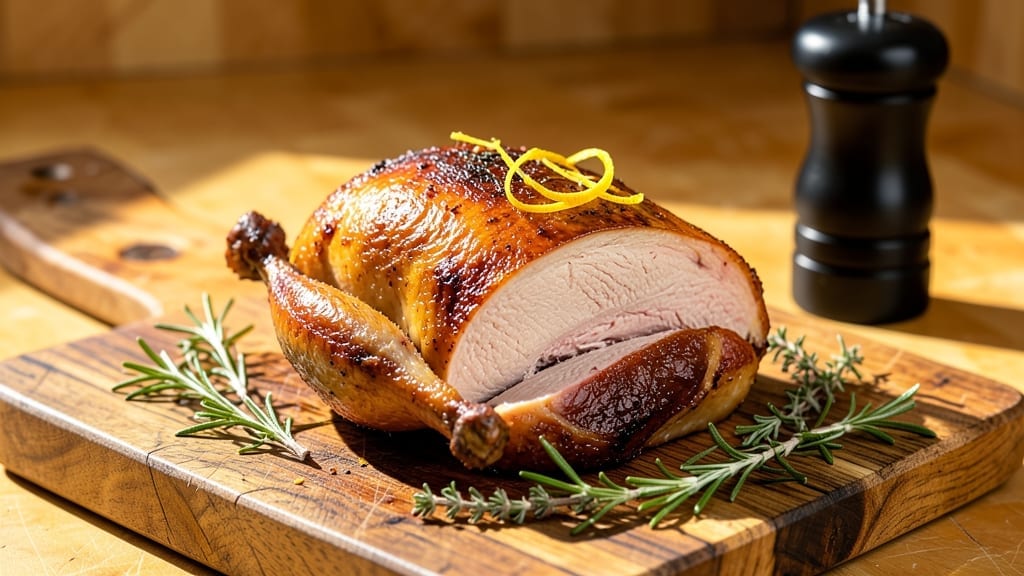
This hickory smoked turkey recipe delivers the kind of fall-apart meat and perfect bark that turns every holiday table into a showstopper. 🔥 The secret lies in precise temperature control and hickory wood’s signature sweet-smoke flavor, which transforms tough turkey into tender, juicy perfection.
I’ve been perfecting this technique since my first backyard cookout, where the scent of hickory smoke first hooked me for life.
The process begins with a simple but critical step: brining the turkey overnight to ensure moisture retention and flavor penetration. Then, it’s all about low-and-slow smoking at 225°F, where patience pays off with meat that practically melts in your mouth.
The bark develops that coveted crispy texture while keeping the interior juicy and safe to eat at 165°F internal temperature.
What you’ll end up with is a turkey so tender it falls apart at the touch, with a dark mahogany bark that’s irresistibly crispy. The aroma alone will have guests gathering before the meal even begins, and every slice reveals perfectly pink meat infused with that unmistakable hickory smoke.
This is the kind of turkey that makes your holiday dinner unforgettable.
Serve with classic sides like creamy mashed potatoes, roasted Brussels sprouts, and homemade gravy to complete the experience. The leftovers reheat beautifully too, making this recipe perfect for feeding a crowd or enjoying over multiple meals. Let’s get started on creating your perfect smoked turkey.
Ingredients for hickory smoked turkey
Big turkey, bigger flavor—hickory smoke turns ordinary into extraordinary holiday magic.
| Ingredient | Amount | Notes |
|---|---|---|
| Whole Turkey (12-14 lbs) 🦃 | 12 ½ lb | Fresh or thawed completely |
| Kosher Salt 🧂 | 1 cup | For brining solution |
| Brown Sugar 🍚 | 1 cup | Granulated for brining |
| Unsalted Butter 🧈 | 1 lb | Full-fat for richness |
| Hickory Wood Chips 🌳 | 2 lb | For smoking (soaked) |
| Apple Cider Vinegar 🍎 | 1 cup | For brining acidity |
| Fresh Thyme 🌿 | ½ cup | Stems removed, packed |
| Fresh Rosemary 🌿 | ½ cup | Stems removed, packed |
| Garlic Cloves 🧄 | 8 cloves | Peeled, for brining |
| Black Peppercorns 🌶️ | ½ cup | Whole, for bark seasoning |
| Poultry Seasoning 🌿 | 2 tbsp | For final rub |
| Butter (for basting) 🧈 | ½ cup | Melted, for glaze |
| Honey 🍯 | ¼ cup | For glaze sweetness |
[recipe_ingredient_scaler]
The turkey matters most—12-14 lbs is ideal for 12 servings with leftovers. Buy from a trusted butcher like Whole Foods or your local farm stand for the freshest cuts. Look for vibrant, plump skin—no yellowing or dry patches. Thaw completely in the fridge if frozen, about 24 hours per 4-5 lbs. The hickory wood chips? Traeger or Weber brands are reliable, but any quality hardwood works—just soak them 30 minutes before smoking. I always grab a 5 lb bag to have extra for future smokes.
No hickory chips? Mesquite or pecan wood works in a pinch—just adjust smoke intensity by monitoring the temp. Short on fresh herbs? Dried thyme and rosemary at half the amount gets you close, but the flavor isn’t the same. The brining solution can use butterfly salt instead of kosher, but reduce to 0.75 cup since it’s more concentrated. For the glaze, maple syrup is a great honey substitute—just use the same amount. The butter in the glaze? Brown it lightly for deeper flavor before mixing with honey.
This turkey is best smoked 2 days ahead—the flavors meld perfectly. Store the raw turkey in the fridge for up to 1 day before smoking, or freeze for up to 6 months if prepping early. After smoking, let it rest 30 minutes before carving to keep juices inside. The leftovers reheat beautifully—microwave with a splash of broth to keep moist. I portion mine into containers so lunches are sorted for the week. The bark keeps for 3-4 days if stored in an airtight container, but the meat is best eaten fresh.
Why You’ll Love This Recipe
- Let’s be real: you’ll have leftovers, and that’s okay. Turkey sandwiches? Check. Stuffed shells? Check. Even turkey tacos with a drizzle of that leftover glaze? Check. Twelve servings is perfect for a big dinner and the next day’s lunch.
- No-Fuss Feast: Honestly, this turkey is my secret weapon for when I want to feed a crowd without losing my mind. The brine does all the heavy lifting—just toss it in the fridge overnight, and you’re golden. No fancy prep, just set it and forget it until the smoker does its magic.
- Smoky-Sweet Harmony: The hickory wood chips and honey-butter glaze? Chef’s kiss. That tangy vinegar brine keeps the meat juicy while the bark gets this deep, peppery crust. Every bite is a perfect balance—smoky, sweet, and just a little spicy kick from the crushed peppercorns.
- Leftovers That Shine: Let’s be real: you’ll have leftovers, and that’s okay. Turkey sandwiches? Check. Stuffed shells? Check. Even turkey tacos with a drizzle of that leftover glaze? Check. Twelve servings is perfect for a big dinner and the next day’s lunch.
Step-by-step instructions for hickory smoked turkey
Here’s how to transform a simple turkey into fall-apart perfection with a smoky bark that’ll impress anyone.
👨🍳 Step 1: Create the Brine with Vinegar and Sweet Balance
In a large stockpot, combine 1 cup kosher salt, 1 cup brown sugar, 1 cup apple cider vinegar, 8 peeled garlic cloves, and 12½ lb whole turkey in the cavity. The vinegar works magic here—it tenderizes the meat while adding bright acidity that cuts through the turkey’s richness. Make sure the turkey is completely submerged in the brine solution.
Add enough cold water to cover the turkey completely by at least 2 inches. Place the pot in the refrigerator and brine for 12-24 hours, turning the turkey once halfway through. This long soak ensures every bite stays juicy while the bark develops incredible depth. Here’s the thing—don’t skip the vinegar. It’s what gives this turkey its signature tangy-sweet balance that makes it unforgettable.
🔥 Step 2: Build the Smoker and Season the Turkey
Soak the 2 lb hickory wood chips in water for 30 minutes before using. Set up your smoker for 225°F using only hickory—this wood’s bold flavor pairs perfectly with turkey. While the smoker heats up, pat the turkey completely dry (yes, it’s wet from brining) and remove it from the brine.
In a small bowl, mix ½ cup black peppercorns (lightly crushed), 2 tbsp poultry seasoning, ½ cup fresh thyme, and ½ cup fresh rosemary. Rub this mixture all over the turkey, pressing it into the skin. The peppercorns create that beautiful dark bark while the herbs infuse the meat with aromatic depth. Place the turkey breast-side up on the smoker grates and close the lid immediately.
⏰ Step 3: Smoke Low and Slow with Strategic Basting
Smoke the turkey for 10-12 hours until the internal temperature reaches 165°F in the thickest part of the thigh. Here’s where patience pays off—the slow smoke develops that incredible bark while keeping the meat tender. Every 2 hours, baste the turkey with melted ½ cup butter mixed with ¼ cup honey. This glaze creates a sticky, caramelized crust that locks in moisture and adds sweetness.
Real talk: Don’t open the smoker too often. Each time you peek, you lose heat and moisture. The honey-butter basting should happen through the vent—just lift it slightly and pour the mixture over the breast and legs. You’ll know it’s working when you see that beautiful mahogany bark forming and smell that incredible smoky-sweet aroma filling your space.
🔪 Step 4: Rest and Carve for Maximum Juiciness
Once the turkey reaches 165°F, remove it from the smoker and transfer to a cutting board. Tent loosely with foil and let it rest for 45 minutes. This resting period is CRITICAL—it allows the juices to redistribute throughout the meat instead of pooling in the cavity. During this time, the internal temperature will rise to a perfect 170°F, ensuring every slice is moist and flavorful.
When ready to carve, locate the breastbone and gently press down to separate it from the carcass. Slice the breast meat against the grain into ½-inch thick slices. For the legs and thighs, cut between the bone and meat. Each piece should be tender enough to pull apart with minimal effort, with that perfect balance of smoky, sweet, and peppery flavors.
Pro Tips For Making Hickory Smoked Turkey
- CRUSH THE PEPPERCORNS: Lightly crush the ½ cup black peppercorns before mixing them into the rub—this releases their oils and guarantees that deep, crackling bark. I used to skip this, and my turkey always ended up with just a light dusting instead of that rich, mahogany crust you’re aiming for.
- BASTE THROUGH THE VENT: Pour the honey-butter glaze through the smoker’s vent every 2 hours instead of opening the lid—this keeps the temperature stable and prevents the bark from drying out. Trust me, your turkey will stay juicier, and you’ll avoid the frustration of watching that perfect crust fade mid-cook.
- SOAK WOOD CHIPS LONGER: Give the 2 lb hickory wood chips an extra 10 minutes of soaking beyond the 30-minute minimum—they’ll smolder slower, giving you steadier smoke and fewer flare-ups. I learned this after a batch of chips burned too fast and left my turkey tasting more like campfire ash than hickory.
- SKIP THE LAST 15 MINUTES OF SMOKING: Once the turkey hits 160°F in the thigh, move it to indirect heat and let it carry over to 165°F—this keeps the breast from drying out while the legs finish cooking. I used to push it all the way at 225°F, and the breast always came out tough. This small tweak makes a real difference.
Best sauces and condiments for these flavors
Sweet & Tangy Glaze
The honey-butter glaze used during smoking becomes the star condiment for your turkey. Mix ½ cup melted butter with ¼ cup honey and baste every 2 hours—this creates a sticky, caramelized crust that’s irresistible.
I drizzle the final glaze over carved slices before serving for that perfect balance of smoky and sweet. 🍯
Herb-Infused Gravy
Use the drippings from your smoked turkey to make a rich, herb-forward gravy. Strain the pan juices, then whisk in 2 tbsp poultry seasoning and ¼ cup chicken broth.
Simmer until thickened, then stir in chopped fresh rosemary and thyme for a burst of aromatic flavor. This gravy ties all the smoky notes together beautifully.
Spicy Maple Mustard
For a bold contrast, whip up a spicy maple mustard sauce with ¼ cup Dijon mustard, 2 tbsp maple syrup, and ½ tsp cayenne pepper. This tangy-sweet kick cuts through the richness of the smoked turkey and pairs perfectly with the mahogany bark.
I serve it on the side for guests who want an extra flavor punch.
Apple Cider Reduction
Reduce 1 cup apple cider with 1 tbsp brown sugar and a pinch of cinnamon until syrupy—about 10 minutes on medium heat. This bright, slightly sweet reduction mirrors the vinegar in the brine and enhances the turkey’s natural flavors. Drizzle over slices before serving for a festive touch.
Peppercorn Butter
Infuse ½ cup softened butter with 1 tbsp crushed black peppercorns and a pinch of salt, then chill until firm. Slice this into small pieces and serve alongside your turkey for an easy, flavorful spread. The peppery kick complements the smoky bark perfectly and adds texture to every bite.
Nutrition facts
Frequently asked questions
What’s the best way to handle a turkey that’s too large for my smoker?
If your turkey exceeds 14 lbs, split it into two pieces by cutting between the legs and thighs. Smoke them separately on the same rack for even heat distribution. Just double-check the internal temperature in the thickest part of each piece—165°F is key for safety and tenderness. This also lets you carve and serve portions more easily!
Can I skip the brining step if I’m short on time?
Brining is what gives this turkey its signature juiciness and depth, but if you’re in a hurry, at least pat the turkey dry thoroughly before seasoning. The 12-24 hour brine is ideal, but a minimum of 4 hours will still add moisture. Just expect slightly less tenderness without it. The vinegar and garlic in the brine are what create that perfect tangy-sweet balance—don’t skip them!
How do I tell when the turkey is done if my smoker doesn’t have a probe?
Use a meat thermometer to check the thickest part of the thigh (away from bone) for 165°F. For extra accuracy, also check the breast—it should reach 165°F too, though it may need 10-15 minutes longer than the thighs. If unsure, let it rest 30 minutes before carving—this ensures juices redistribute and the internal temp rises to 170°F.
What if my smoker runs too hot and the turkey cooks too fast?
Lower the heat to 200°F and increase the smoke time slightly. The key is slow, steady cooking—10-12 hours at 225°F is perfect for developing that mahogany bark while keeping the meat tender. If the bark burns, tent the turkey loosely with foil during the last 1-2 hours of cooking. Patience is everything here!
Can I use dried herbs instead of fresh for the rub?
You can, but the flavor won’t be as vibrant. Use half the amount of dried thyme and rosemary (so ¼ cup each) and add an extra pinch of salt to compensate. Fresh herbs add bright, aromatic depth that dried versions can’t match. If fresh herbs are unavailable, this is your best workaround!

Trained in classic French technique but raised on slow-cooked ribs and spicy rubs, she blends culinary skill with smoke and soul.
- Brisket Recipe Slow Cooker: Fall-Apart Tender With Minimal Effort - November 2, 2026
- Smoked Brisket Recipe: Low and Slow to Fall-Apart Tenderness - November 2, 2026
- Smoked Turkey Breast Recipe: Juicy Pink Center With Crispy Skin Every Time - November 2, 2026