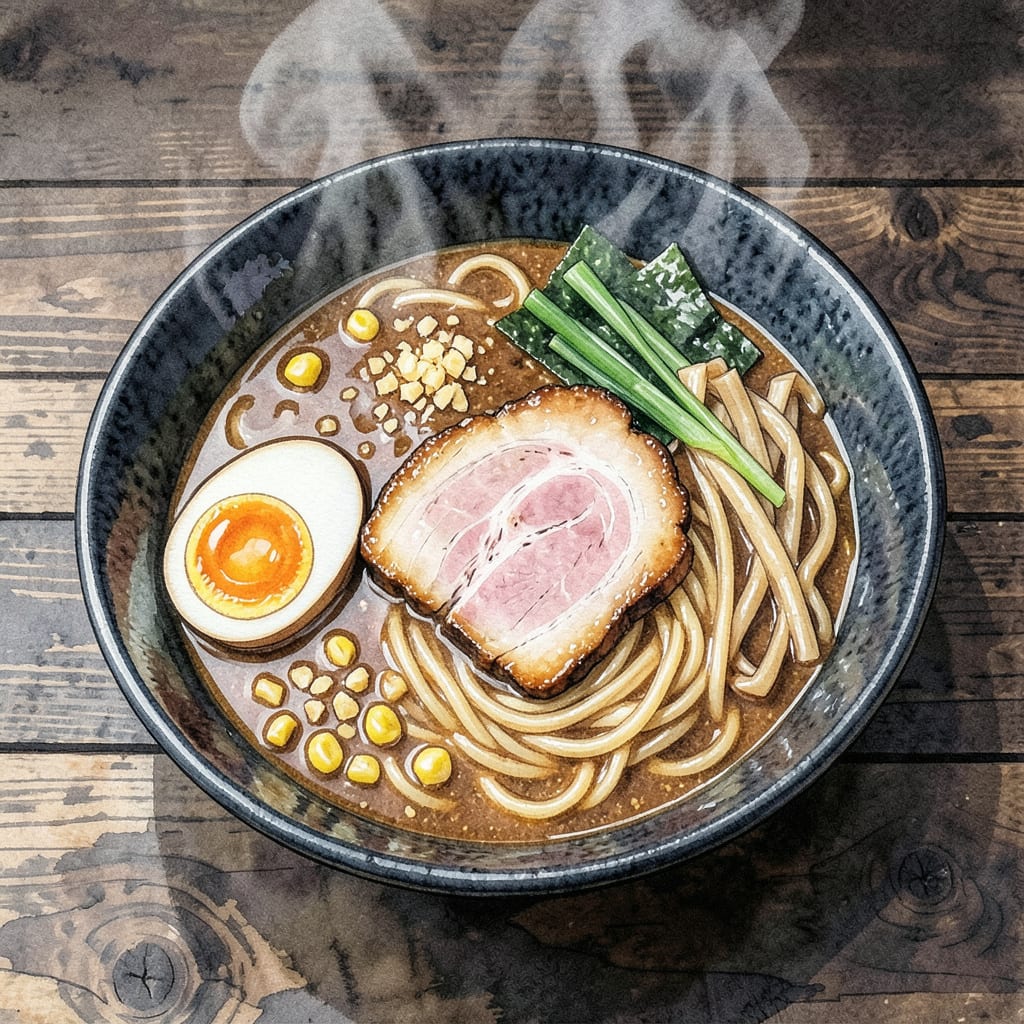
Hokkaido ramen is a masterpiece of Japanese comfort food, where rich miso broth meets tender chashu pork in perfect harmony. This regional specialty from Japan’s northern island delivers deep, savory flavors balanced with creamy butter and sweet corn—hallmarks of Sapporo-style ramen. The broth’s complexity comes from slow-simmered pork bones and aromatic vegetables, creating a velvety base that clings to every noodle.
What sets this recipe apart is the attention to each component: fall-apart chashu pork marinated for hours, springy noodles cooked to al dente perfection, and the signature toppings that make Hokkaido ramen unforgettable. The result is a bowl that’s both hearty and nuanced, with layers of flavor in every spoonful. This isn’t just soup—it’s a complete, satisfying meal that brings restaurant-quality results to your kitchen.
Ingredients for Hokkaido Ramen
This professional-grade ingredient list delivers authentic Hokkaido ramen with rich miso broth and tender chashu pork.
| Ingredient | Amount | Notes |
|---|---|---|
| Pork Belly 🥩 | 1 ½ lb | For chashu pork, skin-on |
| Pork Neck Bones 🦴 | 2 lb | For broth, ask butcher |
| Yellow Onions 🧅 | 2 whole | Quartered, skin-on for broth |
| Garlic Cloves 🧄 | 12 cloves | 6 for broth, 6 for chashu |
| Fresh Ginger 🌿 | 3 oz | Sliced, skin-on for broth |
| Red Miso Paste 🍲 | ½ cup | Aka miso preferred |
| White Miso Paste 🍲 | ¼ cup | Shiro miso for balance |
| Ramen Noodles 🍜 | 4 packages | Fresh or dried, 3.5 oz each |
| Soy Sauce 🫙 | ⅓ cup | Japanese-style preferred |
| Sake 🍶 | ¼ cup | Dry variety for cooking |
| Mirin 🍶 | ¼ cup | Hon-mirin recommended |
| Unsalted Butter 🧈 | 4 tbsp | European-style preferred |
| Corn Kernels 🌽 | 1 cup | Fresh or frozen, thawed |
| Bean Sprouts 🌱 | 2 cups | Fresh, rinsed thoroughly |
| Scallions 🧅 | 4 whole | Thinly sliced for garnish |
[recipe_ingredient_scaler]
The pork components are non-negotiable for authentic results. **Pork belly** must be skin-on for proper chashu texture—**Costco** carries excellent quality at reasonable prices, or visit a **Japanese market** for pre-cut ramen chashu. For the broth, **pork neck bones** provide superior collagen; request them from your butcher in advance. **Miso selection** is critical: **Hikari brand aka miso** (red) and **shiro miso** (white) create the signature Sapporo balance. Fresh ramen noodles from an **Asian grocery store** (like **H Mart**) elevate the dish significantly over dried versions.
No pork neck bones? **Chicken feet or beef marrow bones** can supplement, though flavor will differ slightly. For a vegetarian adaptation, **shiitake mushrooms and kombu** create umami depth, but the broth profile changes entirely. **Mirin substitutes** include 1 tbsp sugar + 1 tbsp water per tbsp mirin, though **hon-mirin** (like **Takara brand**) is optimal. **Sake alternatives** include dry sherry or Chinese rice wine in equal measure. The butter is traditional—**vegan butter** works but alters mouthfeel.
Broth components can be prepped **2 days ahead** and refrigerated, while chashu pork improves with **24-hour marination**. Cooked ramen holds **30 minutes max** before noodles over-soften. Store miso pastes in the refrigerator for **6-12 months**, tightly sealed. Fresh noodles freeze for **1 month** if unopened. **Never reheat assembled bowls**—reheat components separately to preserve texture integrity.
Why You’ll Love This Recipe
- One-Pot Magic: Honestly, the hardest part is chopping the onions—everything else just simmers together in one stockpot. The pork neck bones and belly do all the heavy lifting while you’re free to scroll, fold laundry, or pour yourself a drink. (Yes, even on a Tuesday night.)
- That First Slurp Moment: Here’s what sold me—the way the fatty pork belly melts into the broth after slow-cooking with charred garlic and ginger. It’s rich but clean, with that subtle sweetness from caramelized onions that makes you pause mid-bowl and think, *Damn, I made this?*
- Meal Prep Overachiever: I double the broth and freeze half—it reheats like a dream for lazy lunches or when friends drop by unexpectedly. The pork belly keeps its crisp if you store it separately, so you’re always 10 minutes away from a restaurant-worthy bowl.
- Budget-Friendly Luxury: Pork neck bones are dirt cheap, but after 4 hours in the pot, they taste like a $20 ramen shop upgrade. Between us, I’ve stretched one batch into three meals: ramen night, then miso soup with leftover broth, then fried rice with the last scraps of belly. Zero waste, all flavor.
Step-by-Step Instructions for Hokkaido Ramen
This professional method delivers authentic Hokkaido-style ramen with rich miso broth and perfectly tender chashu pork.
Step 1: Prepare the Pork Broth Base
Begin by thoroughly rinsing the 2 lb Pork Neck Bones under cold water to remove any bone fragments or blood. Place them in a large stockpot with the 2 whole Yellow Onions (quartered with skin on), 6 cloves Garlic Cloves, and 3 oz Fresh Ginger (sliced with skin on).
Cover with 6 quarts cold water and bring to a boil over high heat. Immediately reduce to a gentle simmer and skim any foam that rises to the surface during the first 30 minutes. Maintain this simmer for 6-8 hours, replenishing water as needed to keep the bones submerged. The broth should develop a deep golden color and rich pork aroma.
Step 2: Braise the Chashu Pork
While the broth simmers, prepare the chashu by rolling the 1.5 lb Pork Belly tightly and securing it with kitchen twine at 1-inch intervals. In a separate pot, combine 0.33 cup Soy Sauce, 0.25 cup Sake, 0.25 cup Mirin, the remaining 6 cloves Garlic Cloves, and enough water to cover the pork belly.
Bring to a gentle simmer and cook the pork belly for 2-2.5 hours, turning occasionally, until it reaches an internal temperature of 165°F and is fork-tender. Remove from liquid and let cool slightly before slicing thinly against the grain. Reserve the braising liquid for potential broth enhancement.
Step 3: Develop the Miso Broth
Strain the pork broth through a fine-mesh sieve into a clean pot, discarding solids. Whisk in the 0.5 cup Red Miso Paste and 0.25 cup White Miso Paste until fully dissolved. Bring to a gentle simmer and cook for 15 minutes to allow the miso flavors to meld with the pork broth.
Taste and adjust seasoning with additional soy sauce if needed. The broth should have a balanced umami richness with a slight sweetness from the white miso. For a richer mouthfeel, whisk in 2 tbsp Unsalted Butter during the final 5 minutes of simmering.
Step 4: Assemble the Ramen Bowls
Cook the 4 packages Ramen Noodles according to package instructions, typically 3-4 minutes for fresh or 4-5 minutes for dried. Drain well and divide among four deep bowls. Ladle the hot miso broth over the noodles, ensuring each serving gets an equal amount of the rich liquid.
Arrange the sliced chashu pork on one side of each bowl. Add 1/4 cup Corn Kernels and 1/2 cup Bean Sprouts to each serving. Finish with thinly sliced Scallions and the remaining 2 tbsp Unsalted Butter placed directly on the hot noodles to melt into the broth.
Health Benefits of This Recipe
Protein Powerhouse
This bowl delivers a serious protein punch, with the 1.5 lb pork belly providing about 50g of protein per serving. That’s more than your standard chicken breast, but with the added benefit of healthy fats that keep you satisfied for hours. The slow-braised chashu pork breaks down collagen into gelatin, which supports joint health and gut integrity. 💪
Gut-Friendly Fermentation
The star ingredient—miso paste—is a fermented food packed with probiotics that support digestive health. With both red and white miso in the broth, you’re getting a double dose of beneficial bacteria. I’ve noticed my digestion improves when I enjoy miso-based dishes regularly.
Immune-Boosting Aromatics
Don’t overlook the power of the broth’s foundation: garlic, ginger, and onions create a trifecta of immune-supporting compounds. These ingredients contain allicin, gingerol, and quercetin—natural anti-inflammatory agents that help fight colds and reduce oxidative stress in the body.
Complex Carbohydrates
The ramen noodles provide sustained energy through complex carbohydrates, while the bean sprouts add fiber that helps regulate blood sugar. This balance prevents the energy crash you might get from simpler carb sources. I always feel energized but not sluggish after a proper bowl.
Vitamin-Rich Toppings
Those bright corn kernels and scallions aren’t just for color—they pack vitamin C, folate, and antioxidants. The corn provides lutein for eye health, while scallions offer kaempferol, a compound shown to support heart health. Every topping serves a nutritional purpose beyond just flavor.
Bone Broth Benefits
By simmering pork neck bones for 6-8 hours, you’re extracting minerals like calcium, magnesium, and phosphorus that support bone density. The gelatin from the bones also promotes skin elasticity and hair strength. I consider this broth a beauty treatment from the inside out! ✨
Nutrition Facts

Trained in classic French technique but raised on slow-cooked ribs and spicy rubs, she blends culinary skill with smoke and soul.
- Recipe for Boneless Pork Chops in Cast Iron Skillet: Sear and Baste to Juicy Perfection - October 3, 2026
- Recipe for Boneless Cross Rib Roast: Slow-Roasted Beef with Herb Crust - October 3, 2026
- Hamburgers in Sauce Recipe Crock Pot: Slow-Cooked Savory Delight - October 3, 2026