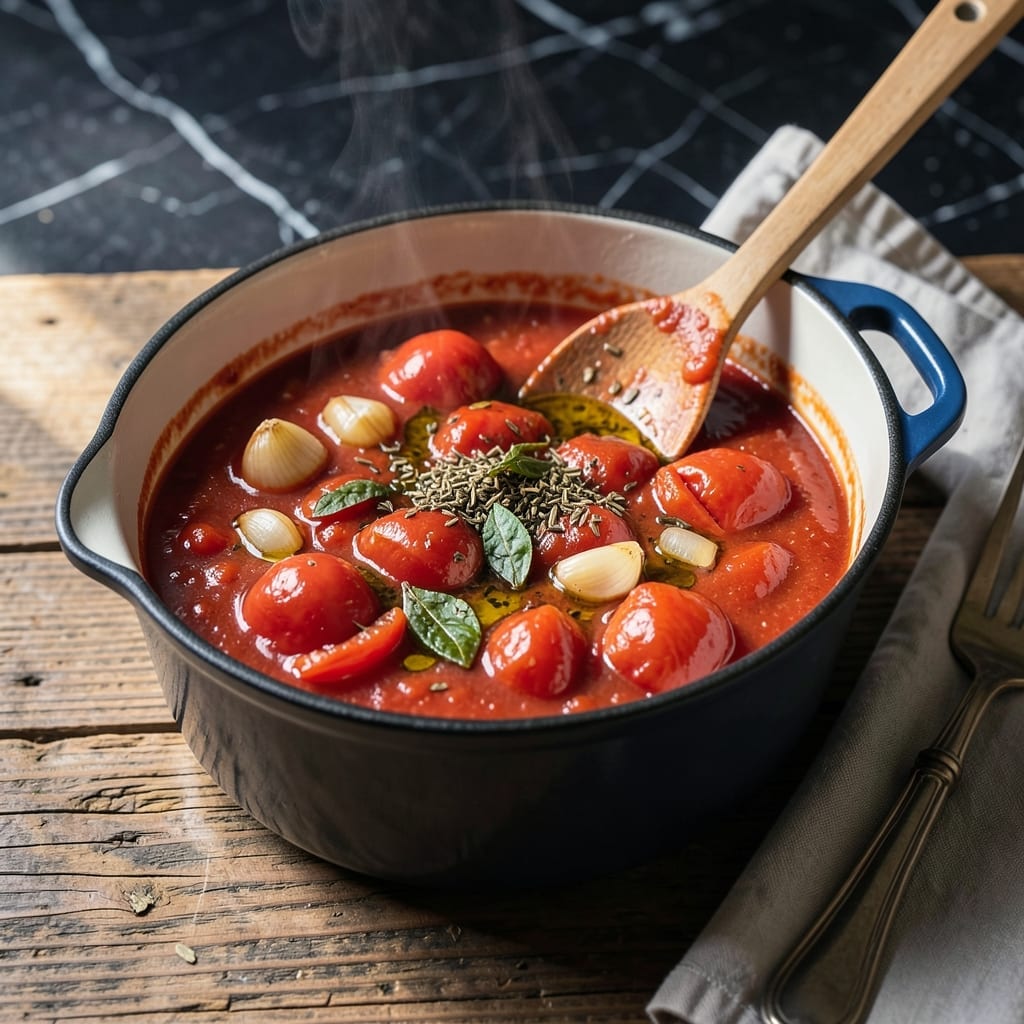
There’s an art to crafting tomato sauce from scratch, where simplicity meets depth of flavor in every spoonful. This method transforms San Marzano tomatoes into a rich, velvety base that elevates any pasta dish.
Slow-simmered with garlic, herbs, and a touch of olive oil, it develops a natural sweetness and complexity that store-bought versions can’t match. The result is a sauce so smooth and balanced, it tastes like it’s been cooking for hours.
Ingredients for Tomato Pasta Sauce Recipe from Scratch
Ten ingredients transform into a velvety sauce with San Marzano richness in every bite.
| Ingredient | Amount | Notes |
|---|---|---|
| San Marzano Whole Peeled Tomatoes 🍅 | 2 cans | 28 oz cans, hand-crushed |
| Extra-Virgin Olive Oil 🫒 | ¼ cup | High quality, fruity |
| Garlic Cloves 🧄 | 6 cloves | Thinly sliced for sweetness |
| Yellow Onion 🧅 | 1 whole | Finely diced for depth |
| Dried Oregano 🍃 | 1 tsp | Crushed between fingers |
| Dried Basil 🌿 | 1 tsp | Rubbed to release oils |
| Red Pepper Flakes 🌶️ | ½ tsp | Adjust to heat preference |
| Sea Salt 🧂 | 1 ½ tsp | Fine grain for even distribution |
| Freshly Ground Black Pepper 🌶️ | ½ tsp | Coarse grind preferred |
| Tomato Paste 🍅 | 2 tbsp | For concentrated umami depth |
[recipe_ingredient_scaler]
The tomatoes are non-negotiable here. San Marzano DOP from Italy offers the perfect balance of sweetness and acidity—look for the certification on the can. Whole Foods and Eataly carry authentic imports, but most supermarkets stock decent alternatives. Avoid pre-crushed tomatoes; the whole peeled variety maintains texture better during the long simmer.
No San Marzano? High-quality canned tomatoes work in a pinch, but reduce the cooking time slightly. Fresh herbs can replace dried at triple the amount—add them at the end to preserve their brightness. The olive oil should be extra-virgin and robust; this isn’t the place for light or neutral oils. For a deeper flavor, toast the garlic in the oil before adding other ingredients (worth the extra minute).
This sauce freezes beautifully for up to 6 months. Cool completely before transferring to airtight containers. For fridge storage, use within 5 days. The flavors actually improve overnight, so consider making it a day ahead (don’t skip this part).
Why You’ll Love This Recipe
- Minimal Chopping: I just dice one onion and mince a few garlic cloves—no fancy knife skills needed.
- Sun-Kissed Flavor: San Marzano tomatoes with that slow-simmered garlic and oregano taste like summer in a jar.
- Freezer Friendly: I double the batch and freeze half for those nights I’m too tired to cook.
- Pantry Staples: Honestly, I always have these five ingredients on hand, so dinner’s never far away.
Step-by-Step Instructions for Tomato Pasta Sauce From Scratch
Here’s the method. Straightforward, tested, works every time.
Step 1: Sauté Aromatics in Olive Oil
Heat the 0.25 cup Extra-Virgin Olive Oil in a heavy-bottomed pot over medium heat. Add the finely diced Yellow Onion and cook for 5-6 minutes until translucent and just beginning to caramelize at the edges. The onion should soften without taking on color too quickly.
Add the thinly sliced Garlic Cloves and cook for 1-2 minutes until fragrant but not browned. Garlic burns easily, so keep it moving. Stir in the 2 tbsp Tomato Paste and cook for 2 minutes to deepen its flavor and remove any raw taste.
Step 2: Bloom the Herbs and Spices
Add the 1 tsp Dried Oregano (crushed between your fingers), 1 tsp Dried Basil (rubbed to release oils), and 0.5 tsp Red Pepper Flakes. Toast these in the oil for 30 seconds until they become aromatic. This step wakes up the dried herbs and ensures maximum flavor extraction.
Season with the 1.5 tsp Sea Salt and 0.5 tsp Freshly Ground Black Pepper, stirring to distribute evenly. The salt will help draw out moisture from the onion and garlic, creating a flavorful base for your sauce.
Step 3: Incorporate and Simmer the Tomatoes
Add the 2 cans San Marzano Whole Peeled Tomatoes, hand-crushing them as they go into the pot. This breaks them down while preserving some texture. Stir well to combine with the aromatic base, scraping up any browned bits from the bottom of the pot.
Increase the heat to medium-high and bring the mixture to a gentle simmer. Once simmering, reduce the heat to low to maintain a steady, gentle bubble. Partially cover the pot with a lid and let it simmer for 45-60 minutes, stirring occasionally.
Step 4: Adjust and Finish the Sauce
After 45 minutes, check the consistency. The sauce should have thickened slightly but still coat the back of a spoon. If it’s too thin, continue simmering uncovered for another 10-15 minutes. If it’s too thick, add a splash of water to loosen it.
Taste and adjust seasoning if needed, though the initial measurements should provide perfect balance. The sauce should have a rich, deep red color with a sweet, tangy flavor from the San Marzano tomatoes. Remove from heat and let it rest for 5 minutes before serving. This allows the flavors to meld together beautifully.
Pro Tips For Making Tomato Pasta Sauce Recipe From Scratch
- Crush the Tomatoes: Use your hands to crush the San Marzano tomatoes as you add them to the pot—this breaks them down faster and releases their juices for a richer sauce. I learned this the hard way after too many chunky, uneven sauces.
- Bloom the Oregano: Toast the dried oregano in the warm olive oil for 10-15 seconds before adding the onion—it wakes up the flavor and makes a real difference in the final taste.
- Skip the Garlic Press: Slice the garlic cloves thin instead of pressing them. Pressed garlic can burn too quickly in the oil, turning bitter, while slices infuse the sauce gently.
- Simmer Uncovered: Let the sauce reduce uncovered for at least 20 minutes. Sounds obvious, but covering it traps too much moisture, and you’ll end up with a watery sauce that clings poorly to pasta.
Common Mistakes When Making Great tomato pasta sauce recipe from scratch
🔥 Overcooking the Tomatoes
Cooking tomatoes for too long can turn your sauce bitter and mushy. San Marzano tomatoes are delicate, and over-simmering breaks down their natural sweetness.
Fix: Simmer the sauce for 20-30 minutes max on low heat. Stir occasionally to prevent sticking.
🧂 Skimping on Salt
Tomatoes need salt to enhance their flavor. Adding it too late or not enough can leave your sauce tasting flat and dull.
Fix: Season in layers—start with a pinch when sautéing onions, then adjust to taste as the sauce reduces.
🍅 Using Low-Quality Tomatoes
Not all canned tomatoes are equal. Cheap brands often contain added preservatives or lower-quality fruit, affecting flavor and texture.
Fix: Stick to high-quality San Marzano tomatoes (DOP certified if possible) for the best sweetness and consistency.
🌡️ Boiling Instead of Simmering
A rolling boil can cause the sauce to splatter and cook unevenly, leading to a thin, watery texture. It also risks burning the base.
Fix: Keep the heat at a gentle simmer—small bubbles should barely break the surface. This ensures even cooking and rich flavor development.
Nutrition Facts

Trained in classic French technique but raised on slow-cooked ribs and spicy rubs, she blends culinary skill with smoke and soul.
- Recipe for Boneless Pork Chops in Cast Iron Skillet: Sear and Baste to Juicy Perfection - October 3, 2026
- Recipe for Boneless Cross Rib Roast: Slow-Roasted Beef with Herb Crust - October 3, 2026
- Hamburgers in Sauce Recipe Crock Pot: Slow-Cooked Savory Delight - October 3, 2026