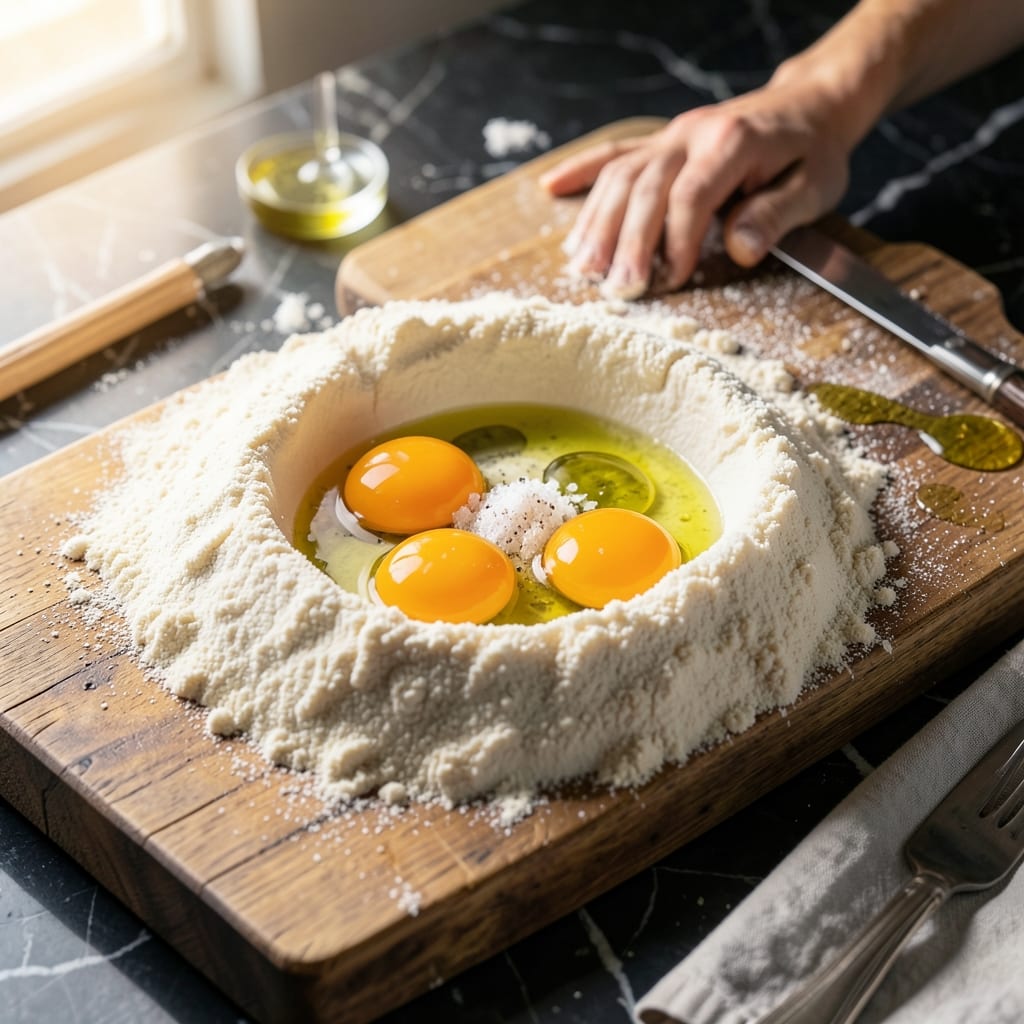
There’s nothing quite like the texture of fresh pasta, and making it by hand is simpler than most realize. I learned this method in my Nonna’s tiny kitchen, where space was limited but flavor never was.
This technique requires just flour, eggs, and a bit of patience. The dough comes together quickly, then rests to develop the perfect elasticity for rolling and cutting into delicate ribbons.
What emerges is tender, silky pasta that cooks in minutes and absorbs sauces beautifully. The process is meditative, connecting you to generations of home cooks who’ve done the same.
No machine needed—just your hands, a rolling pin, and the satisfaction of creating something extraordinary from scratch.
Ingredients for Home Made Pasta Recipe by Hand
Six humble ingredients transform into silky ribbons with just your hands and patience.
| Ingredient | Amount | Notes |
|---|---|---|
| All-Purpose Flour 🌾 | 3 cups | 00 flour preferred for authenticity |
| Large Eggs 🥚 | 4 whole | Room temperature for best results |
| Semolina Flour 🌾 | ½ cup | For texture and dusting |
| Olive Oil 🫒 | 1 tbsp | Extra-virgin for richness |
| Salt 🧂 | 1 tsp | Fine sea salt preferred |
| Water 💧 | 2 tsp | As needed for dough consistency |
[recipe_ingredient_scaler]
The flour is everything here. 00 flour (the Italian kind, usually labeled as tipo 00) gives you that authentic Nonna-approved texture, but all-purpose works in a pinch. Look for it at Eataly or well-stocked grocery stores near the pasta aisle. Semolina adds that perfect bite—Bob’s Red Mill is a solid brand if you’re restocking your pantry. Always check the expiration date on flour; stale flour makes dough brittle.
No 00 flour? All-purpose is your backup, though the pasta might be slightly denser. Out of semolina? Just use more all-purpose (but don’t skip it entirely—it’s worth hunting down). The eggs should be fresh, but room temperature is key—cold eggs make dough fight back. If your dough feels too dry, add water a teaspoon at a time (it’s easier to add than subtract).
Fresh pasta doesn’t keep like dried—cook it within 24 hours or freeze it (dusted with semolina) for up to 1 month. If freezing, thaw in the fridge overnight before cooking. The dough itself can rest in the fridge for 1 day if wrapped tightly.
Why You’ll Love This Recipe
- No Fuss Kneading: I just mix flour, eggs, and a drizzle of olive oil right on the counter—no fancy tools, no stress.
- Rich, Eggy Bite: The fresh eggs and semolina give it that deep, buttery flavor store-bought can’t touch.
- Weeknight Hero: Honestly, I roll it out while dinner simmers and it’s ready before the sauce is.
- Pocket-Friendly Luxury: A few cents of flour and eggs make a meal that feels like a restaurant splurge.
Step-by-Step Instructions for Home Made Pasta
Here’s the method. Straightforward, tested, works every time.
Step 1: Form the Dough Mound and Create the Well
On a clean work surface, mound the 3 cups All-Purpose Flour and 0.5 cup Semolina Flour. I use a wooden cutting board, but any smooth surface will work. Create a deep well in the center—this is where your wet ingredients will live.
Add the 4 whole Large Eggs, 1 tbsp Olive Oil, and 1 tsp Salt directly into the well. Here’s the thing—crack the eggs one at a time into a small bowl first to avoid shell fragments. The salt enhances the egg flavor, so don’t skip it.
Step 2: Gradually Incorporate the Flours
Using a fork, gently beat the wet ingredients in the well until barely combined. Then, begin pulling in the flour from the inner rim of the well, a little at a time. I like to work in a circular motion, gradually widening the circle as the dough thickens.
Once the mixture becomes too thick for the fork, switch to your hands. Fold and press the dough, incorporating more flour as you go. Real talk: this gets messy. Keep a bench scraper handy to contain the spread.
Step 3: Knead to Silky Perfection
When all the flour is incorporated, start kneading. Push the dough away with the heel of your hand, then fold it back over itself. Rotate the dough 90 degrees between each push. You’ll notice the texture change from shaggy to smooth in about 8-10 minutes.
If the dough feels too dry, add the 2 tsp Water by sprinkling ½ tsp at a time. If it’s sticky, dust with a bit more Semolina Flour. You’re aiming for a dough that’s elastic but not tough—it should spring back when pressed gently.
Step 4: Rest and Roll the Dough
Shape the dough into a ball, wrap it tightly in plastic wrap, and let it rest at room temperature for 30 minutes. This relaxation period allows the gluten to unwind, making the dough easier to roll out.
After resting, divide the dough into 4 equal portions. Working with one portion at a time (keep the others covered), flatten it with your palm and begin rolling. I start with a rolling pin, then switch to the traditional method of stretching the dough with my hands until it’s nearly translucent.
Step 5: Cut and Dry the Ribbons
Dust the rolled sheet generously with Semolina Flour to prevent sticking. Loosely roll the sheet lengthwise, then slice it into ¼-inch wide ribbons. Unfurl each ribbon and lay them flat on a floured surface.
Let the ribbons dry for 15-20 minutes before cooking. They’re ready when the edges feel slightly leathery to the touch. This prevents them from sticking together when boiled. Fresh pasta cooks in 2-3 minutes in boiling salted water—watch for the ribbons to rise to the surface.
Pro Tips For Making Home Made Pasta Recipe By Hand
- Knead Longer: I used to rush this part and ended up with tough pasta—work the dough for at least 8-10 minutes until it’s smooth and elastic.
- Use Room Temp Eggs: Cold eggs make the dough seize up, so pull them out of the fridge 30 minutes before mixing.
- Skip the Over-Flouring: Too much flour on your work surface can dry out the pasta—dust lightly and re-flour only as needed.
- Rest the Dough: After kneading, wrap it in plastic and let it sit for 30 minutes—this relaxes the gluten so it rolls out thin without springing back.
Storing and Reheating This Dish
Refrigerator Storage
Fresh pasta is best cooked immediately, but you can store it in the fridge for up to 24 hours. I lay the ribbons flat on a baking sheet dusted with Semolina Flour, cover with plastic wrap, and chill. This keeps them from sticking together. ❄️
Freezer Storage
For longer storage, freeze the pasta on a baking sheet first, then transfer to a freezer bag. It’ll keep for up to 1 month. When ready to cook, boil from frozen—no need to thaw. Just add 30-60 seconds to the cooking time.
Room Temperature Drying
If you’re prepping ahead, dry the ribbons at room temperature for up to 2 hours. Spread them on a floured surface, uncovered. This method works well if you’re making pasta for a dinner party.
Reheating Cooked Pasta
Leftover cooked pasta should be stored in an airtight container in the fridge for up to 3 days. To reheat, drop it into boiling water for 30 seconds to revive the texture. Avoid microwaving—it makes the pasta gummy.
I’ve tested this multiple times in my tiny Boston kitchen, and the water method always wins. Trust me, it’s worth the extra step. 💡
Nutrition Facts
Frequently Asked Questions
Can I use all-purpose flour instead of 00?
Yes, all-purpose works fine as a substitute. The pasta may be slightly denser, but still delicious. For best results, sift the flour first to mimic the finer texture of 00 flour.
Why does the dough need to rest?
Resting for 30 minutes relaxes the gluten, making the dough easier to roll thin. Skipping this step results in tough, springy pasta that resists stretching.
How thin should I roll the pasta?
Aim for about 1-2mm thick—nearly translucent. If it tears when cutting, it’s likely too thin. Use Semolina Flour generously to prevent sticking.
Can I make this without semolina?
Semolina adds texture, but you can use extra all-purpose flour. The pasta may be slightly softer, but still perfectly edible.

Trained in classic French technique but raised on slow-cooked ribs and spicy rubs, she blends culinary skill with smoke and soul.
- Recipe for Boneless Pork Chops in Cast Iron Skillet: Sear and Baste to Juicy Perfection - October 3, 2026
- Recipe for Boneless Cross Rib Roast: Slow-Roasted Beef with Herb Crust - October 3, 2026
- Hamburgers in Sauce Recipe Crock Pot: Slow-Cooked Savory Delight - October 3, 2026