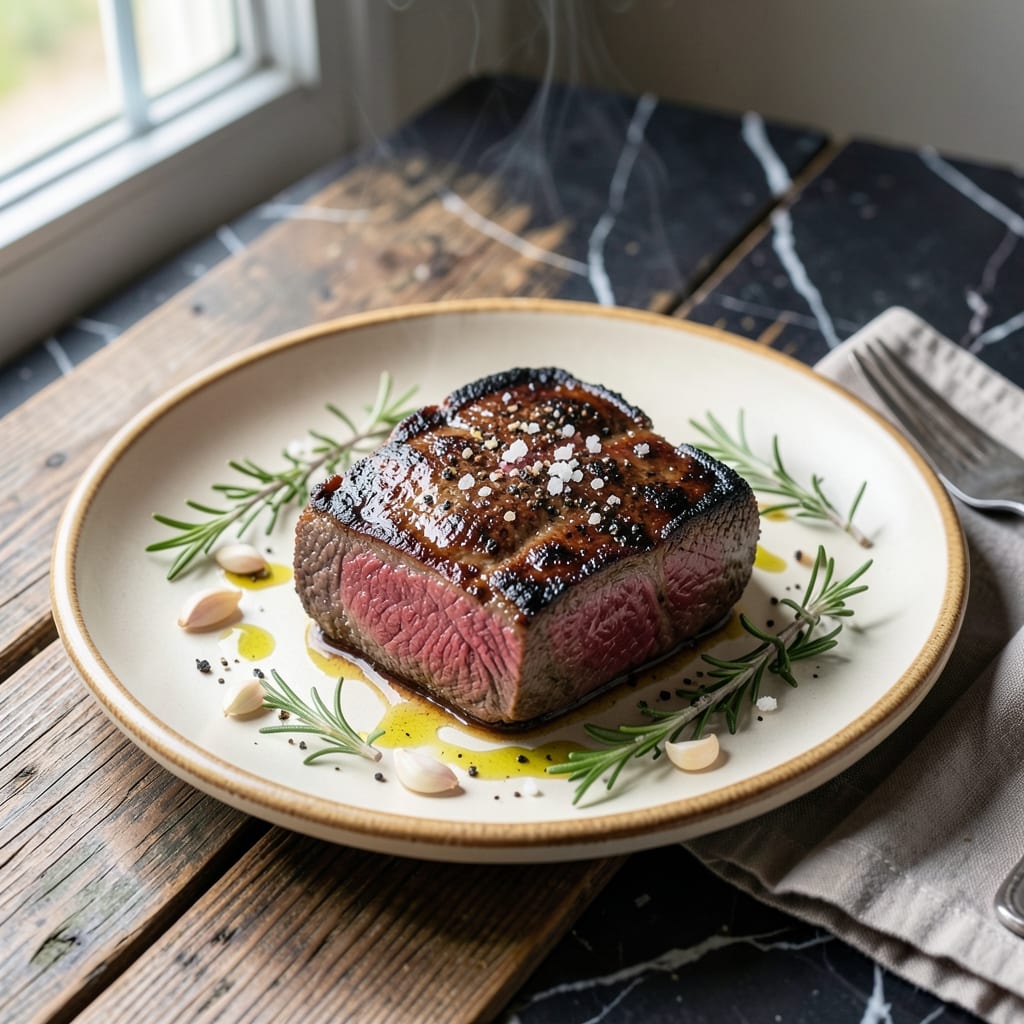
Mastering steak at home begins with understanding your cut and perfecting the technique. I developed this method after countless trials, refining the approach to work with any beef steak you bring home from the butcher.
The process is straightforward: proper seasoning, precise heat control, and perfect timing. Whether you prefer ribeye, sirloin, or filet, these techniques ensure consistent results every time you cook.
You will achieve a beautiful crust outside with tender, juicy meat inside. The key lies in letting the steak rest after cooking, allowing the juices to redistribute for maximum flavor.
Serve with your favorite sides for a restaurant-quality meal without leaving your kitchen. These methods transform any cut into something extraordinary.
Ingredients for Homemade Beef Steak Recipe Ideas
A handful of quality ingredients transforms any cut into a masterpiece on your plate.
| Ingredient | Amount | Notes |
|---|---|---|
| Ribeye Steak 🥩 | 2 lb | 1.5 inches thick, bone-in preferred |
| Kosher Salt 🧂 | 2 tsp | Diamond Crystal preferred for even seasoning |
| Freshly Ground Black Pepper 🌶️ | 1 ½ tsp | Coarse grind for best texture |
| Garlic Cloves 🧄 | 4 cloves | Smashed but left whole for aroma |
| Fresh Rosemary Sprigs 🌿 | 2 whole | Woody stems removed before serving |
| Fresh Thyme Sprigs 🍃 | 4 whole | Tough stems discarded after cooking |
| Unsalted Butter 🧈 | 4 tbsp | European-style for richer flavor |
| Extra-Virgin Olive Oil 🫒 | 2 tbsp | High smoke point variety preferred |
| Shallot 🧅 | 1 whole | Finely minced for basting butter |
| Red Wine 🍷 | ½ cup | Dry bold variety like Cabernet Sauvignon |
| Beef Stock 🥣 | ½ cup | Low-sodium preferred for reduction control |
| Dijon Mustard 🟡 | 1 tbsp | Whole-grain works as substitute |
[recipe_ingredient_scaler]
The steak itself is non-negotiable. Ribeye from a trusted butcher—look for bright red color with good marbling. I always go to Whole Foods or my local butcher shop for cuts that are at least 1.5 inches thick. Bone-in adds flavor but boneless works fine (just adjust cooking time). The Diamond Crystal kosher salt makes a difference—its larger flakes adhere better to the meat surface.
No ribeye? New York strip or filet mignon work great too—just adjust cooking times (thinner cuts need less time). Fresh herbs can be swapped: sage or tarragon instead of rosemary and thyme. Out of red wine? Port or even beef broth can stand in for deglazing. The butter is essential though—don’t substitute margarine. For the stock, Better Than Bouillon paste is my go-to for depth of flavor.
Steaks can rest at room temperature for up to 2 hours before cooking. Leftovers (if any) keep 3-4 days in the fridge. The compound butter can be made ahead and frozen for up to 3 months—just thaw before using (worth the extra minute).
Why You’ll Love This Recipe
- I’ll be real: the leftovers sliced thin over a salad or in a sandwich taste even better the second day.
- 5-Minute Prep: I just pat the ribeye dry, season with kosher salt and cracked pepper, and let the garlic and rosemary do their magic while the pan heats.
- That Crispy Crust: Honestly, the way the salt and pepper form that perfect crust with the ribeye’s fat? It’s the reason I make this every other week.
- Date Night Ready: Between us, this is my go-to when I want to impress without stressing—elegant enough for company but simple enough for a Tuesday.
Step-by-Step Instructions for Homemade Beef Steak
This method delivers restaurant-quality results with techniques that work for any steak cut.
Step 1: Season and Prepare the Ribeye
Pat the 2 lb ribeye steak completely dry with paper towels—this ensures a perfect sear. Season generously with the 2 tsp kosher salt and 1.5 tsp freshly ground black pepper on all sides, pressing the seasonings into the meat so they adhere.
Let the steak sit at room temperature for 30-45 minutes. This step is crucial for even cooking. While waiting, lightly crush the 4 garlic cloves (leave the skins on for now) and prepare the 2 fresh rosemary sprigs and 4 fresh thyme sprigs by tying them together with kitchen twine.
Step 2: Sear the Steak to Perfection
Heat a heavy skillet (cast iron works best) over medium-high heat until very hot. Add the 2 tbsp extra-virgin olive oil and swirl to coat the pan. When the oil shimmers, carefully place the ribeye in the pan.
Sear undisturbed for 3-4 minutes per side until a deep, golden-brown crust forms. For a 1.5-inch thick steak, also sear the edges by holding it with tongs for 30 seconds each. Add the 4 tbsp unsalted butter, garlic, and herb bundle to the pan during the last minute of cooking.
Step 3: Baste and Finish Cooking
Tilt the pan slightly and use a spoon to baste the steak with the melted butter, garlic, and herbs continuously for 1-2 minutes. This infuses the meat with incredible aroma and flavor.
For medium-rare, cook until the internal temperature reaches 130-135°F. The steak will continue cooking during the resting period. If using a meat thermometer, insert it sideways into the thickest part for the most accurate reading.
Step 4: Create the Red Wine Pan Sauce
Transfer the steak to a cutting board and tent loosely with foil. Place the skillet back over medium heat and add the finely minced 1 whole shallot. Cook for 1 minute until softened.
Deglaze the pan with the 0.5 cup red wine, scraping up all the browned bits with a wooden spoon. Add the 0.5 cup beef stock and 1 tbsp Dijon mustard, then simmer for 3-4 minutes until the sauce reduces by half and coats the back of a spoon.
Step 5: Rest, Slice, and Serve
Let the steak rest for 10-15 minutes before slicing. This allows the juices to redistribute, ensuring every bite is tender and flavorful. Remove the herb sprigs and discard the garlic skins before serving.
Slice the ribeye against the grain into ½-inch thick pieces. Spoon the warm red wine pan sauce over the steak or serve it on the side. The sauce pairs beautifully with the rich, buttery flavor of the ribeye, creating a perfect balance of bold and savory notes.
Pro Tips For Making Homemade Beef Steak Recipe Ideas
- Dry the Steak: Pat the ribeye completely dry with paper towels before seasoning—this guarantees a proper sear instead of steaming the meat.
- Hot Pan Only: I learned this the hard way—don’t add the steak until the pan is smoking hot, otherwise you’ll get a sad, gray crust.
- Crush the Garlic: Lightly crush the garlic cloves with the flat of your knife before adding them to the pan—this releases more flavor without burning them to bits.
- Rest Before Slicing: Give the steak a solid 5-10 minutes under foil after cooking, or all those juices will end up on the cutting board instead of in the meat.
Flavor Customization for homemade beef steak recipe ideas
Herb Variations
Swap the rosemary and thyme for fresh sage and tarragon to create a more earthy, slightly anise-forward profile. I love this combination with filet mignon. Try 3 sage leaves and 2 tarragon sprigs for a 2 lb steak. 🌿
Garlic Infusions
For a more intense garlic flavor, mince the 4 cloves instead of leaving them whole. Add them to the pan with the butter during basting. Be careful not to burn the minced garlic—keep the heat at medium to prevent bitterness.
Spice Crust
Create a dry rub by mixing 1 tsp smoked paprika, 1 tsp cumin, and ½ tsp cayenne with the salt and pepper. This works especially well with sirloin. Press the mixture firmly into the meat before searing for a robust, smoky crust.
Wine Swaps
If you don’t have dry red wine, use ½ cup port for a sweeter, richer pan sauce, or substitute ½ cup beef broth with 1 tsp balsamic vinegar for acidity. I often grab Cabernet Sauvignon from New Seasons Market for this.
Butter Upgrades
For extra decadence, make a compound butter with 2 tbsp softened butter, 1 tsp Dijon mustard, and 1 tbsp chopped parsley. Add a dollop to the steak during the final minute of cooking. It melts beautifully into the crust. 🧈
Heat Adjustments
For a thicker crust, increase the heat to high during searing, but watch closely to avoid burning the butter. With thinner cuts under 1 inch, reduce the searing time to 2-3 minutes per side to prevent overcooking.
Nutrition Facts
Frequently Asked Questions
What’s the best way to season a steak?
Generously coat all sides with kosher salt and freshly ground black pepper at least 30 minutes before cooking. Press the seasonings into the meat for better adherence.
How do I know when my steak is done?
Use a meat thermometer: 130-135°F for medium-rare, 140-145°F for medium. The steak will continue cooking while resting, so remove it just before reaching your desired temperature.
Can I use a different cut of beef?
New York strip or filet mignon work well. Adjust cooking times: thicker cuts need more time, while thinner ones cook faster.
Why should I let my steak rest?
Resting for 10-15 minutes allows juices to redistribute, ensuring a tender, flavorful bite. Skipping this step can lead to a dry steak.

Trained in classic French technique but raised on slow-cooked ribs and spicy rubs, she blends culinary skill with smoke and soul.
- Recipe for Boneless Pork Chops in Cast Iron Skillet: Sear and Baste to Juicy Perfection - October 3, 2026
- Recipe for Boneless Cross Rib Roast: Slow-Roasted Beef with Herb Crust - October 3, 2026
- Hamburgers in Sauce Recipe Crock Pot: Slow-Cooked Savory Delight - October 3, 2026