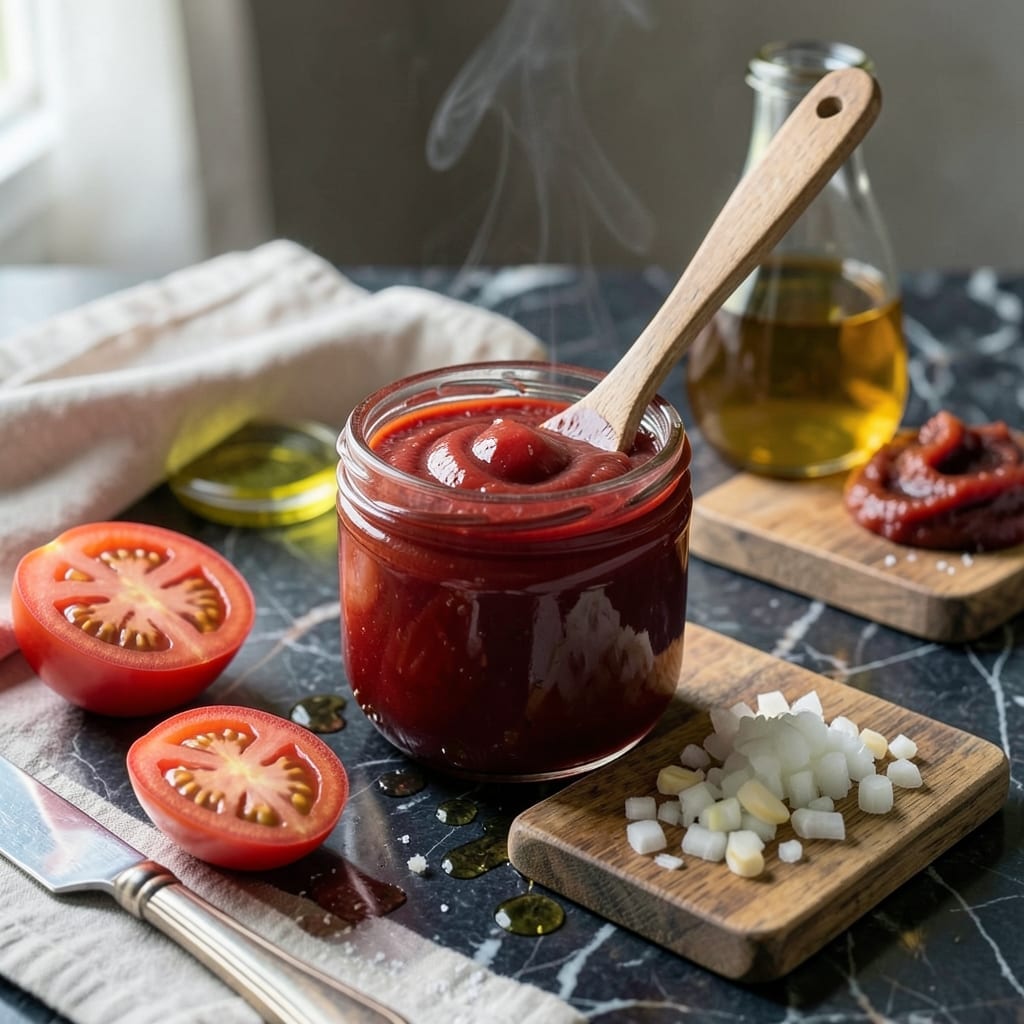
There’s nothing quite like the taste of ketchup made from scratch with ripe, fresh tomatoes. This recipe transforms garden picks into a vibrant, tangy condiment that outshines any store-bought version.
With simple ingredients and a straightforward process, you’ll create a homemade sauce that’s rich, flavorful, and perfectly balanced. It’s the ideal way to preserve summer’s bounty in a jar.
Ingredients for Homemade Ketchup Recipe Using Fresh Tomatoes
Transform garden tomatoes into vibrant condiment with these pantry staples. Simple yet precise.
| Ingredient | Amount | Notes |
|---|---|---|
| Fresh Ripe Tomatoes 🍅 | 4 lb | Cored and quartered |
| White Onion 🧅 | 1 whole | Finely diced |
| Garlic Cloves 🧄 | 4 cloves | Minced for depth |
| Apple Cider Vinegar 🍏 | 1 cup | For signature tang |
| Granulated Sugar 🍚 | ¾ cup | Adjust to taste |
| Tomato Paste 🍅 | 2 tbsp | Deepens tomato flavor |
| Salt 🧂 | 1 ½ tsp | Diamond Crystal preferred |
| Ground Allspice 🌿 | ¼ tsp | Warm spice backbone |
| Ground Cloves 🌿 | ¼ tsp | Sparingly for complexity |
| Ground Black Pepper 🌶️ | ½ tsp | Freshly ground preferred |
[recipe_ingredient_scaler]
The tomatoes are non-negotiable—heirloom or vine-ripened varieties from your farmers market yield the sweetest, most flavorful base. Roma tomatoes work well too, with their meaty texture and low water content. For the vinegar, organic apple cider vinegar (like Bragg) adds the right bright acidity. Avoid white vinegar—it’s too harsh for this application.
No fresh tomatoes? Canned whole San Marzano tomatoes (packed in juice, not puree) can substitute in a pinch—drain and use 3 28-oz cans. Out of apple cider vinegar? White wine vinegar at equal volume works, though the flavor profile shifts slightly. For sugar, coconut sugar or maple syrup can replace granulated, but expect a darker color and molasses notes.
This keeps in a sterilized jar in the fridge for 2-3 weeks, or process in a water bath for 1 year shelf stability. The flavor deepens after 24 hours, so make it a day ahead if possible. Always use a clean spoon to prevent contamination.
Why You’ll Love This Recipe
- One-Pot Wonder: I just dump everything in a single pot—tomatoes, onion, garlic—and let it simmer down.
- Sweet-Tangy Magic: The apple cider vinegar and sugar balance into that classic ketchup taste without any weird additives.
- Pantry Starter: I make a double batch and jar it so we’ve got homemade ketchup ready for burgers, fries, or even meatloaf.
Step-by-Step Instructions for Homemade Ketchup Using Fresh Tomatoes
This method transforms garden-fresh ingredients into rich, tangy ketchup with professional precision.
Step 1: Prepare and Cook the Tomato Base
Core and quarter the 4 lb Fresh Ripe Tomatoes, then place them in a large pot. Finely dice the 1 whole White Onion and mince the 4 cloves Garlic Cloves, adding both to the tomatoes. Stir in the 2 tbsp Tomato Paste to deepen the tomato flavor from the start.
Cook over medium heat for 30-40 minutes, stirring occasionally, until the tomatoes break down completely and the mixture reduces by about half. The texture should be thick and pulpy, with the onions and garlic fully softened. This slow cooking concentrates the natural sweetness of the tomatoes.
Step 2: Purée and Strain for Smooth Consistency
Once the tomato mixture has cooked down, remove it from the heat and let it cool slightly. Using an immersion blender, purée the mixture until smooth. For the silkiest ketchup, pass the purée through a fine-mesh sieve to remove any remaining skins or seeds.
This step ensures a velvety texture that’s essential for authentic ketchup. I’ve found that pressing the purée through the sieve with a wooden spoon captures every bit of flavor while leaving behind any unwanted bits. The result should be a thick, uniform liquid.
Step 3: Add Vinegar, Sugar, and Spices
Return the purée to the pot and place it over medium-low heat. Stir in the 1 cup Apple Cider Vinegar, 0.75 cup Granulated Sugar, 1.5 tsp Salt, 0.25 tsp Ground Allspice, 0.25 tsp Ground Cloves, and 0.5 tsp Ground Black Pepper. The vinegar adds the signature tang, while the spices build depth.
Cook for another 20-25 minutes, stirring frequently, until the mixture thickens to the consistency of commercial ketchup. You’ll know it’s ready when it coats the back of a spoon and leaves a clear trail when you run your finger through it.
Step 4: Cool and Adjust Seasoning
Remove the ketchup from the heat and let it cool to room temperature. As it cools, the flavors will meld and mellow. Taste and adjust the seasoning if needed—though the initial measurements should yield a balanced, vibrant ketchup.
Once cooled, transfer the ketchup to a clean, airtight jar. It will continue to thicken slightly as it chills in the refrigerator. For the best flavor, let it sit for at least 24 hours before using. This resting period allows the spices to fully infuse the ketchup.
Pro Tips For Making Homemade Ketchup Recipe Using Fresh Tomatoes
- Simmer Low and Slow: Keep the heat at medium-low and let it reduce for 45-60 minutes—rushing this step leaves you with watery ketchup that lacks depth. I learned this the hard way after ending up with tomato soup instead of condiment.
- Peel Your Tomatoes: Sounds tedious, but blanching and peeling the tomatoes first gives you a smoother texture. My grandmother swore by this, and she was right: no one wants chewy skins in their ketchup.
- Balance the Vinegar: Start with 1/2 cup apple cider vinegar, then adjust to taste. After overdoing it once, I now add it gradually—too much makes it sharp enough to strip paint.
- Strain for Silkiness: Press the cooked mixture through a fine-mesh sieve to remove seeds and pulp. This isn’t the prettiest method, but it’s the only way to get that classic smooth ketchup consistency.
Troubleshooting Perfect Results
🥘 Too Thin or Watery?
If your ketchup is runny, it likely needs more cooking time to reduce the liquid. Tomatoes naturally release water, especially if they’re very ripe.
Quick Fix: Simmer uncovered on low heat, stirring often, until it thickens to your desired consistency. A splash of tomato paste can also help.
🔥 Too Sweet or Bland?
Over-sweetening or under-seasoning can make your ketchup taste flat. Fresh tomatoes vary in acidity, so balance is key.
Quick Fix: Add a teaspoon of apple cider vinegar or lemon juice for tang. For depth, a pinch of salt or smoked paprika works wonders.
👨🍳 Lumpy Texture?
Uneven blending or skin remnants can cause lumps. If you didn’t peel the tomatoes or strain the mixture, bits may remain.
Quick Fix: Use an immersion blender for a smooth finish, or press the mixture through a fine-mesh sieve for silky ketchup.
⏰ Spoiling Too Quickly?
Homemade ketchup lacks preservatives, so improper storage shortens its shelf life. Exposure to air or moisture speeds up spoilage.
Quick Fix: Store in a sterilized, airtight glass jar in the fridge. For longer shelf life, process in a water bath for canning.
Nutrition Facts

Trained in classic French technique but raised on slow-cooked ribs and spicy rubs, she blends culinary skill with smoke and soul.
- Recipe for Boneless Pork Chops in Cast Iron Skillet: Sear and Baste to Juicy Perfection - October 3, 2026
- Recipe for Boneless Cross Rib Roast: Slow-Roasted Beef with Herb Crust - October 3, 2026
- Hamburgers in Sauce Recipe Crock Pot: Slow-Cooked Savory Delight - October 3, 2026