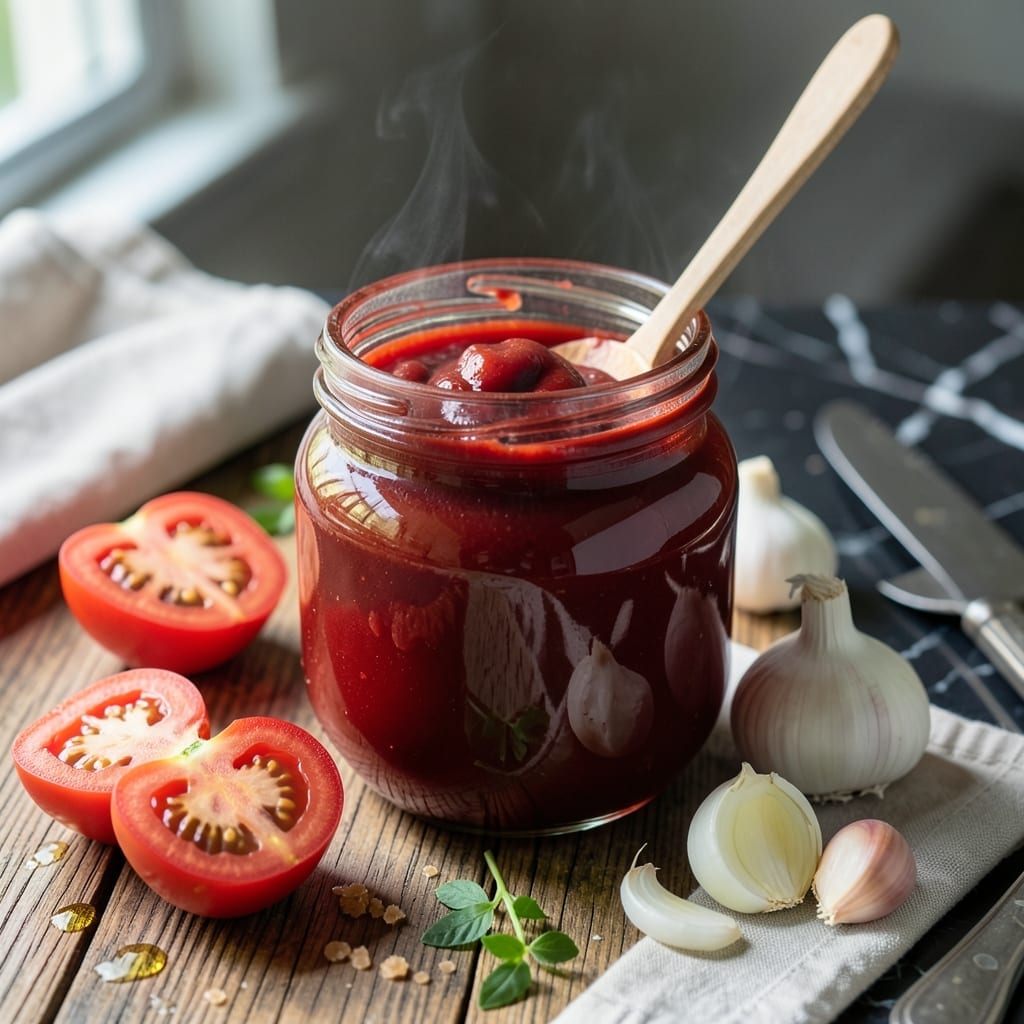
There’s nothing like the bold, fresh flavor of homemade ketchup made from garden-ripened tomatoes. This recipe transforms simple ingredients into a tangy, rich condiment that outshines any store-bought version.
With patience and a few key techniques, you’ll create a smooth, perfectly balanced ketchup that captures the homemade essence of summer in every bottle. It’s worth the effort.
Ingredients for Ketchup Recipe Using Fresh Tomatoes
Transform garden tomatoes into rich, tangy condiment with these essential ingredients.
| Ingredient | Amount | Notes |
|---|---|---|
| Ripe Tomatoes 🍅 | 4 lb | Garden-ripened, cored and chopped |
| White Onion 🧅 | 1 whole | Medium, finely diced |
| Garlic Cloves 🧄 | 4 cloves | Peeled and minced |
| Apple Cider Vinegar 🍏 | 1 cup | For tangy acidity |
| Light Brown Sugar 🍚 | ¾ cup | Packed for sweetness |
| Tomato Paste 🍅 | ½ cup | For concentrated tomato flavor |
| Sea Salt 🧂 | 2 tsp | Fine grain preferred |
| Ground Black Pepper 🌶️ | 1 tsp | Freshly ground preferred |
| Ground Allspice 🌿 | ½ tsp | Key spice for depth |
| Ground Cloves 🌿 | ¼ tsp | Adds warm complexity |
[recipe_ingredient_scaler]
The tomatoes are everything here—farmers market or homegrown with vibrant color and deep aroma. Avoid mealy or underripe varieties. San Marzano tomatoes are ideal if you’re using canned as a backup, but fresh is non-negotiable for this version. The vinegar should be high-quality; Bragg or Heinz apple cider vinegar work well. Don’t skip the tomato paste—it intensifies the flavor without thinning the mixture.
Short on tomatoes? Canned crushed tomatoes at half the volume can supplement, but fresh is best. No brown sugar? Coconut sugar or maple syrup work in a pinch (adjust to taste). The allspice and cloves are traditional—one-third the amount if using fresh-ground. For a smoother finish, strain the cooked mixture before blending, though this step is optional.
This keeps beautifully. Store in a sterilized glass jar in the fridge for up to 3 weeks, or process in a water bath for 6-12 months shelf stability. The flavor deepens after a day or two, so resist the urge to dive in immediately.
Why You’ll Love This Recipe
- One-Pot Simplicity: I just toss everything in a single pot—tomatoes, onion, garlic—and let it simmer down. No fancy gadgets, just a spoon and 20 minutes of occasional stirring.
- Sweet-Tangy Magic: The brown sugar caramelizes with the vinegar while the garlic mellows into the tomatoes. Honestly, it tastes like the ketchup I remember from childhood, but better.
- Pantry Stapel Upgrade: I make a double batch and jar it for sandwiches, burgers, or even as a base for BBQ sauce. My kids slather it on everything.
- Budget-Friendly Harvest: Ripe tomatoes are cheap in summer, and this uses just a handful of affordable staples. I’ll be real: it costs pennies compared to store-bought.
Step-by-Step Instructions for Homemade Tomato Ketchup
This professional method ensures a smooth, rich ketchup with balanced sweetness and tang.
Step 1: Prepare and Simmer the Tomato Base
Combine the 4 lb Ripe Tomatoes, 1 whole White Onion, and 4 cloves Garlic Cloves in a large heavy-bottomed pot. I prefer using a Dutch oven for even heat distribution.
Cook over medium heat for 20-25 minutes, stirring occasionally, until the tomatoes have completely broken down and the mixture thickens slightly. You’ll notice the raw tomato aroma transform into a deeper, cooked scent.
Step 2: Purée and Add Remaining Ingredients
Using an immersion blender, purée the tomato mixture until completely smooth. If you don’t have an immersion blender, carefully transfer the mixture to a standard blender in batches.
Return the purée to the pot and stir in the 1 cup Apple Cider Vinegar, 0.75 cup Light Brown Sugar, 0.5 cup Tomato Paste, 2 tsp Sea Salt, 1 tsp Ground Black Pepper, 0.5 tsp Ground Allspice, and 0.25 tsp Ground Cloves. The vinegar will create a noticeable tang that balances the sweetness.
Step 3: Reduce to Perfect Consistency
Reduce the heat to medium-low and let the mixture simmer uncovered for 60-90 minutes. Stir frequently, especially as it thickens, to prevent scorching on the bottom.
You’ll know it’s ready when the ketchup has reduced by about half and coats the back of a spoon thickly. At this stage, it should have a deep red color and the flavors will have melded into that classic ketchup profile.
Step 4: Cool and Adjust Seasoning
Remove the pot from heat and let the ketchup cool to room temperature. As it cools, it will thicken further. This is the perfect time to taste and adjust the seasoning if needed.
If it’s too thick after cooling, you can thin it with a small amount of water. For a smoother texture, strain it through a fine-mesh sieve to remove any remaining seeds or skins. Transfer to sterilized jars for storage.
Pro Tips For Making Ketchup Recipe Using Fresh Tomatoes
- Simmer Low and Slow: Cook the tomato mixture on low heat for at least 1 hour, stirring often—rushing it with high heat leaves the ketchup thin and raw-tasting.
- Peel the Tomatoes: I learned this the hard way: blanching and peeling the tomatoes first prevents bitter skins from ruining the smooth texture.
- Skip the Water: Resist the urge to thin the mixture with water while cooking; the tomatoes will break down and release enough liquid on their own.
- Add Vinegar Last: Stir in the apple cider vinegar during the final 10 minutes of cooking to preserve its bright tang instead of letting it evaporate away.
Dietary Considerations for This Recipe
Keto-Friendly Options
Traditional ketchup is high in sugar, but you can make a keto-friendly version by replacing sugar with a low-carb sweetener like erythritol or allulose. Use 1-2 tablespoons of sweetener per batch and adjust to taste. Tomato naturally contains carbs, so monitor your portion sizes to stay within your daily macros.
Gluten-Free
This homemade ketchup is naturally gluten-free if you use vinegar and spices that are certified gluten-free. Always check labels on ingredients like vinegar or Worcestershire sauce, as some brands may contain gluten. For extra safety, opt for apple cider vinegar and ensure all seasonings are pure and free from additives.
Allergens
This recipe is free from common allergens like dairy, nuts, and soy. However, if you have a nightshade sensitivity, tomatoes may not be suitable for you. For those avoiding vinegar, you can substitute it with lemon juice for a milder flavor.
Vegetarian Modifications
This ketchup recipe is inherently vegetarian, but if you’re vegan, ensure your sugar is not processed with bone char. Opt for organic or raw sugar to keep it plant-based. No other modifications are needed for a delicious, vegetarian-friendly condiment.
Low-Sodium
To reduce sodium, skip added salt and use no-salt-added tomato paste if available. Boost flavor with herbs like basil or oregano, or add a splash of balsamic vinegar for depth. Taste as you go to ensure the seasoning is balanced without excess sodium.
Nutrition Facts

Trained in classic French technique but raised on slow-cooked ribs and spicy rubs, she blends culinary skill with smoke and soul.
- Recipe for Boneless Pork Chops in Cast Iron Skillet: Sear and Baste to Juicy Perfection - October 3, 2026
- Recipe for Boneless Cross Rib Roast: Slow-Roasted Beef with Herb Crust - October 3, 2026
- Hamburgers in Sauce Recipe Crock Pot: Slow-Cooked Savory Delight - October 3, 2026