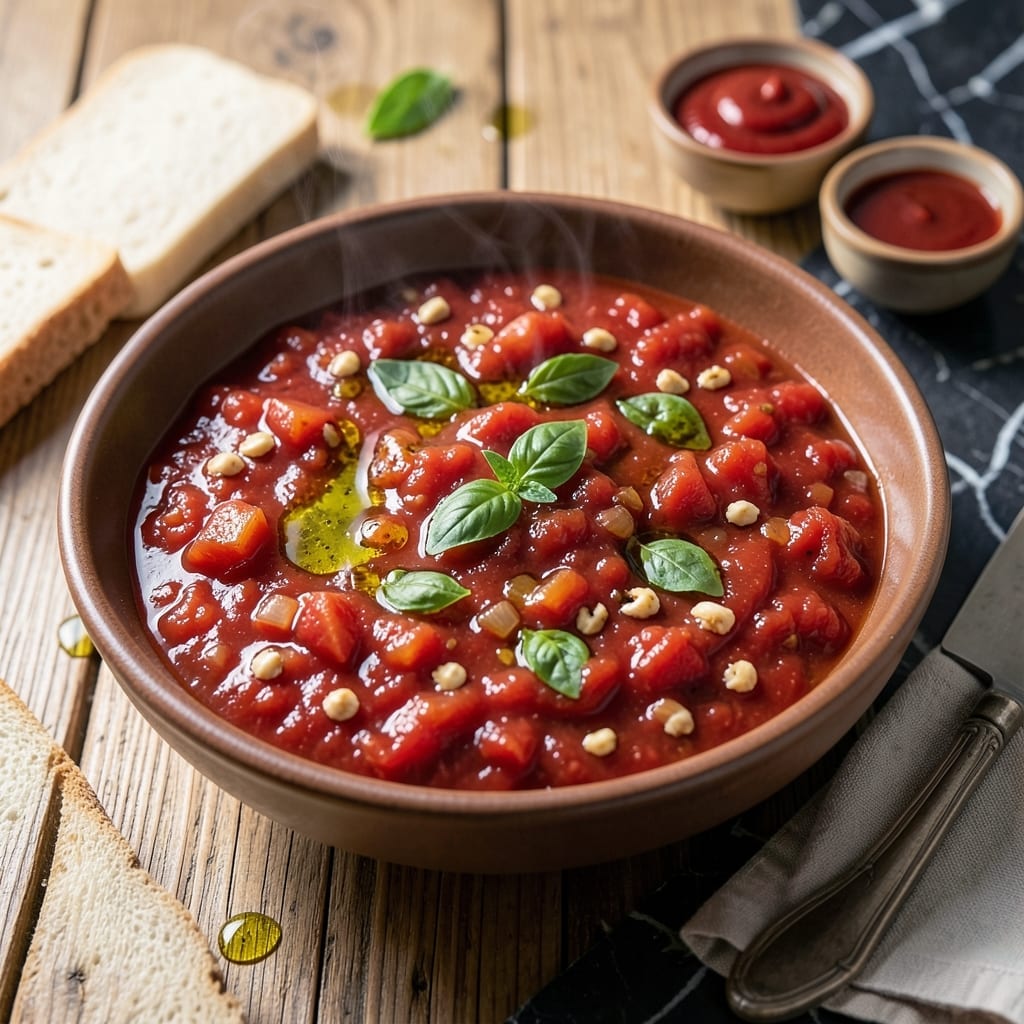
There’s nothing quite like the vibrant flavor of marinara made from fresh tomatoes at their peak ripeness.
This homemade version simmers bright basil and garlic into a rich, velvety sauce that captures summer in every spoonful.
Ingredients for Homemade Marinara Sauce Recipe Fresh Tomatoes
Peak-season tomatoes, aromatic herbs, and a slow simmer create this vibrant sauce.
| Ingredient | Amount | Notes |
|---|---|---|
| Fresh Tomatoes 🍅 | 8 lb | Ripe, cored and quartered |
| Extra-Virgin Olive Oil 🫒 | ¼ cup | High quality, fruity |
| Garlic Cloves 🧄 | 8 cloves | Peeled and minced |
| Fresh Basil Leaves 🌿 | 1 cup | Loosely packed, chopped |
| Yellow Onion 🧅 | 1 whole | Medium, finely diced |
| Tomato Paste 🍅 | 2 tbsp | For depth of flavor |
| Red Wine Vinegar 🍷 | 2 tbsp | Balances sweetness |
| Sea Salt 🧂 | 2 tsp | Fine grain, adjust to taste |
| Black Pepper 🌶️ | 1 tsp | Freshly ground preferred |
| Crushed Red Pepper Flakes 🔥 | ½ tsp | Adjust for heat preference |
[recipe_ingredient_scaler]
The tomatoes are everything here. Heirloom varieties from a farmers market offer the best flavor, but any ripe, in-season tomatoes will work beautifully. San Marzano canned tomatoes can substitute in a pinch (though fresh is ideal). Look for bright red, fragrant tomatoes—avoid pale or mealy ones. For the olive oil, a high-quality extra-virgin from a specialty grocer like Whole Foods or Eataly elevates the sauce significantly.
No fresh basil? Dried basil at one-third the amount, but add it later in cooking to preserve flavor. Short on tomatoes? Canned crushed tomatoes can supplement—just drain excess liquid first. The red wine vinegar can be swapped with balsamic vinegar for depth or lemon juice for brightness. For a smoother sauce, peel tomatoes first (blanch in boiling water, then ice bath).
Sauce keeps in an airtight container for 1 week in the fridge. For longer storage, freeze in portions for up to 3 months. The flavor deepens over time, making leftovers even more delicious. Always store in glass to avoid absorbing odors.
Why You’ll Love This Recipe
- One Pot Magic: I toss in the tomatoes, garlic, and basil, let it simmer, and that’s it—minimal cleanup, maximum flavor.
- Sunshine in a Jar: Honestly, the fresh tomatoes and basil make it taste like summer, even in the middle of winter.
- Pasta Night Hero: I use it for spaghetti one night, then pizza sauce the next—so versatile.
- Budget-Friendly Batch: A few fresh ingredients and 20 minutes give me enough sauce for three meals.
Step-by-Step Instructions for Homemade Marinara Sauce
This method transforms peak-season produce into a vibrant, restaurant-quality sauce with minimal effort.
Step 1: Prepare and Sauté the Aromatic Base
Heat the 0.25 cup Extra-Virgin Olive Oil in a large, heavy-bottomed pot over medium heat. Add the finely diced Yellow Onion and cook for 5-6 minutes, stirring frequently, until translucent and just beginning to caramelize at the edges.
Add the 8 cloves Garlic Cloves and 0.5 tsp Crushed Red Pepper Flakes, stirring constantly for 30-45 seconds until the garlic releases its fragrance but doesn’t brown. This careful control prevents bitterness from developing in the finished sauce.
Immediately add the 2 tbsp Tomato Paste and cook for 1-2 minutes, stirring to coat the aromatics. The paste should darken slightly and develop a rich, brick-red hue—this deepens the umami foundation of your sauce.
Step 2: Incorporate and Break Down the Fresh Tomatoes
Add all 8 lb Fresh Tomatoes (cored and quartered) to the pot, along with the 2 tsp Sea Salt and 1 tsp Black Pepper. Increase heat to medium-high and bring to a gentle boil, stirring occasionally to prevent sticking.
Once boiling, reduce heat to maintain a steady simmer. Using a wooden spoon or potato masher, crush the tomatoes against the sides of the pot to release their juices and break them into smaller pieces. This manual breakdown ensures a rustic texture without the need for blending.
Simmer uncovered for 20-25 minutes, stirring every 5 minutes, until the tomatoes have completely collapsed and the mixture reduces slightly. You’ll notice the sauce thickening and the raw tomato smell giving way to a deeper, sweeter aroma.
Step 3: Balance Flavors and Finish with Fresh Basil
Stir in the 2 tbsp Red Wine Vinegar and taste. The vinegar should brighten the sauce without making it sour—if needed, adjust with a pinch more Sea Salt. This is the moment to fine-tune your seasoning to perfection.
Remove the pot from heat and stir in the 1 cup Fresh Basil Leaves. The residual heat will wilt the basil just enough to infuse its aromatic oils without turning it bitter. Reserve a few leaves for garnish if desired.
Step 4: Rest and Serve
Allow the sauce to rest off heat for 10-15 minutes before serving. This brief pause lets the flavors meld completely and the sauce reach its ideal consistency. The finished marinara should coat the back of a spoon but still have a loose, pourable texture.
Serve immediately over pasta, or cool and store in airtight containers. For best results, use within 5 days or freeze for up to 3 months. The sauce will continue to develop complexity as it sits.
Pro Tips For Making Homemade Marinara Sauce Recipe Fresh Tomatoes
- Score the Tomatoes: Before blanching, cut a shallow X on the bottom of each tomato—I learned this the hard way after peeling whole tomatoes and ending up with slippery, half-bare fruit.
- Sweat the Onions: Cook the yellow onion in olive oil over medium-low heat for at least 8-10 minutes until translucent; rushing this step leaves a harsh raw taste in the sauce.
- Skip the Garlic Burn: Add minced garlic only after the onions soften, and keep the heat at medium—garlic turns bitter in seconds if it hits high heat too early.
- Basil at the End: Stir in fresh basil leaves during the last 5 minutes of cooking; adding it sooner turns the herb dark and muddles its bright flavor.
Regional Styles of This Dish
🥘 Italian Style
In Italy, marinara sauce is all about simplicity and freshness. The classic Neapolitan version, or “salsa di pomodoro”, uses just San Marzano tomatoes, garlic, olive oil, fresh basil, and a pinch of salt. It’s cooked quickly to retain the bright, acidic flavor of the tomatoes. Some regions add a splash of red wine or a pinch of oregano for depth, but the focus remains on letting the tomatoes shine.
🍅 Sicilian Style
Sicilian marinara often incorporates bold, local flavors like olives, caper, and anchovies for a briny, umami-rich twist. The sauce may also include eggplant or pine nuts, reflecting the island’s love for layered, textured dishes. Historically, Sicilian marinara was a way to preserve the summer tomato harvest, often sun-dried or slow-cooked for a deeper, more concentrated flavor.
🔥 Calabrian Style
Calabria brings the heat with its spicy marinara, thanks to the region’s famous ‘nduja (a spreadable, spicy pork salami) or Calabrian chili paste. The sauce is robust and fiery, often balanced with sweet roasted red peppers or a touch of honey. This style highlights the region’s love for bold, intense flavors and is perfect for those who enjoy a little kick in their pasta.
🌿 Roman Style
Roman marinara, or “salsa al pomodoro”, often includes onions and carrots for a slightly sweeter, more complex base. It’s typically simmered longer than its Neapolitan counterpart, creating a richer, smoother sauce. Romans also love adding Pecorino Romano cheese to their pasta dishes, which pairs beautifully with the tangy tomato sauce.
Nutrition Facts

Trained in classic French technique but raised on slow-cooked ribs and spicy rubs, she blends culinary skill with smoke and soul.
- Recipe for Boneless Pork Chops in Cast Iron Skillet: Sear and Baste to Juicy Perfection - October 3, 2026
- Recipe for Boneless Cross Rib Roast: Slow-Roasted Beef with Herb Crust - October 3, 2026
- Hamburgers in Sauce Recipe Crock Pot: Slow-Cooked Savory Delight - October 3, 2026