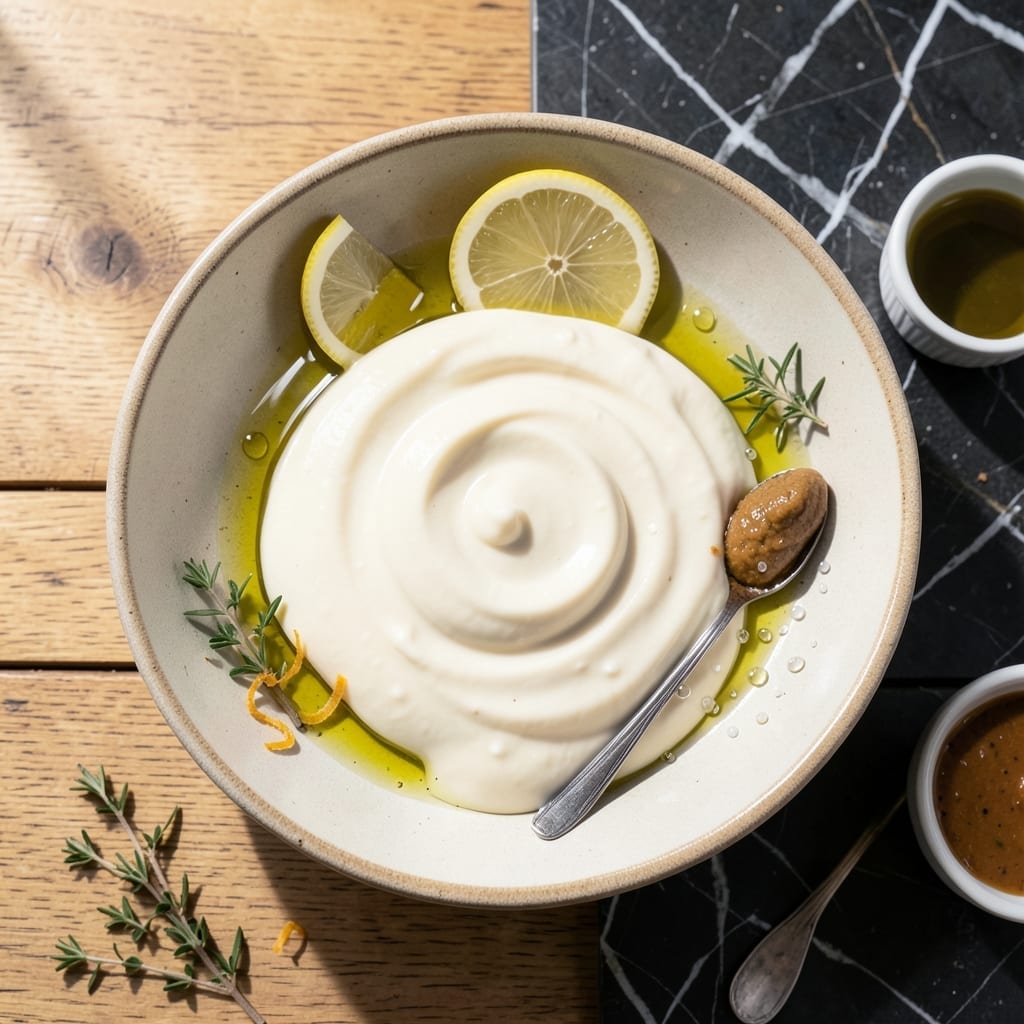
There’s nothing quite like the satisfaction of making homemade mayonnaise from scratch. This recipe delivers a rich, velvety emulsion that puts store-bought versions to shame.
With just a few simple ingredients and a bit of patience, you’ll create a creamy, tangy condiment that elevates sandwiches, salads, and dips to new heights.
Ingredients for Homemade Mayonnaise Recipe with Olive Oil
A handful of pantry staples transforms into the creamiest, most luxurious condiment you’ve ever tasted.
| Ingredient | Amount | Notes |
|---|---|---|
| Large Egg Yolks 🥚 | 2 whole | Room temperature for best emulsion |
| Dijon Mustard 🟡 | 1 tbsp | Smooth variety preferred |
| White Wine Vinegar 💧 | 1 tbsp | Or apple cider vinegar |
| Extra-Virgin Olive Oil 🫒 | 1 cup | Light or mild variety works best |
| Neutral-Flavored Oil 🫒 | ½ cup | Like avocado or light olive oil |
| Lemon Juice 🍋 | 1 tsp | Freshly squeezed preferred |
| Salt 🧂 | ½ tsp | Fine sea salt or kosher salt |
| Sugar 🥄 | ¼ tsp | Optional, balances acidity |
[recipe_ingredient_scaler]
The oil selection is crucial for both flavor and stability. Extra-virgin olive oil adds depth, but use a mild variety to avoid bitterness. For the neutral oil, avocado oil or refined light olive oil from California Olive Ranch works perfectly. Room temperature eggs are non-negotiable—cold yolks won’t emulsify properly. Pasture-raised eggs from Whole Foods yield the richest, most vibrant color.
No white wine vinegar? Apple cider vinegar or fresh lemon juice at the same amount works well. Out of Dijon? Yellow mustard at half the quantity gets you close. Want to skip the sugar? A pinch of honey (though not strictly vegetarian) or omit entirely. The neutral oil can be any mild oil—grapeseed or sunflower oil are great alternatives.
Fresh mayonnaise keeps 5-7 days in the fridge in a sealed jar. The emulsion may separate slightly—just whisk before using. For longer storage, freeze in ice cube trays for up to 3 months, though texture changes slightly after thawing.
Why You’ll Love This Recipe
- Five-Minute Mastery: I can make this between stirring dinner and answering a text—just a whisk and a slow drizzle of oil.
- Rich, Tangy Depth: The Dijon and white wine vinegar give it a zing that store-bought can’t touch.
- Endless Meal Prep: It keeps for a week in the fridge, so I slather it on sandwiches, dress salads, even dip fries.
- Pantry Friendly: I only need five ingredients I already have, and it costs less than half a jar of fancy mayo.
Step-by-Step Instructions for Homemade Mayonnaise With Olive Oil
Master the emulsion technique and you’ll have silky, rich mayonnaise with a perfect balance of flavors.
Step 1: Combine Yolks and Acidic Components
In a medium bowl, whisk together the 2 whole Large Egg Yolks, 1 tbsp Dijon Mustard, 1 tbsp White Wine Vinegar, 1 tsp Lemon Juice, 0.5 tsp Salt, and 0.25 tsp Sugar until smooth. The mustard acts as an emulsifier, while the vinegar and lemon juice provide the necessary acidity to stabilize the mixture.
I always ensure the egg yolks are at room temperature—this helps create a stronger emulsion. Whisk vigorously for about 30 seconds until the mixture becomes pale and slightly thickened. You’re building the foundation for your mayonnaise here, so don’t rush this step.
Step 2: Begin Emulsifying with Neutral-Flavored Oil
Start by very slowly drizzling in the 0.5 cup Neutral-Flavored Oil while whisking constantly. I mean drop by drop at first—this is critical for creating a stable emulsion. As the mixture begins to thicken and you see it start to come together, you can increase the drizzle to a thin, steady stream.
Watch for the moment when the mixture turns from a thin liquid to a creamy, pale base. This is the sign your emulsion is forming. If it looks like it’s breaking or separating, stop adding oil and whisk vigorously until it comes back together before continuing. This step should take about 3-4 minutes of active whisking.
Step 3: Incorporate the Extra-Virgin Olive Oil
Once the neutral oil is fully incorporated and you have a thick, creamy base, begin adding the 1 cup Extra-Virgin Olive Oil in the same slow, steady drizzle. The reason we use neutral oil first is that extra-virgin olive oil has a stronger flavor and can be more challenging to emulsify due to its density.
Continue whisking constantly as you add the oil. You’ll notice the mayonnaise becoming thicker and more luxurious with each addition. The color will deepen to a beautiful pale yellow. If the mixture becomes too thick to whisk easily, you can add a teaspoon of warm water to loosen it slightly before continuing with the oil.
Step 4: Adjust Consistency and Seasoning
After all the oil is incorporated, give the mayonnaise a final whisk to ensure everything is fully combined. Taste and adjust the seasoning if needed—you might want to add a pinch more salt or a few drops of lemon juice to brighten the flavor.
The finished mayonnaise should be thick, creamy, and hold its shape when you scoop it with a spoon. If it’s too thick, whisk in warm water 1 teaspoon at a time until you reach your desired consistency. If it’s too thin, you can whisk in another egg yolk to thicken it, though this shouldn’t be necessary if the emulsion was properly formed.
Transfer to an airtight container and store in the refrigerator for up to 1 week.
Pro Tips For Making Homemade Mayonnaise Recipe With Olive Oil
- Use Room Temp Eggs: I learned this the hard way—cold yolks seize up when you start whisking in oil, and suddenly you’ve got a broken mess. Pull them out 30 minutes before you start.
- Start With Neutral Oil: Extra-virgin olive oil can overpower the mayo if used alone. Begin with a neutral oil like avocado or grapeseed for the first half, then switch to olive oil for flavor.
- Drip, Don’t Pour: Resist the urge to rush the oil in. A slow, steady drizzle—especially at the beginning—gives the emulsion time to form and stay stable.
- Acid Last: After the mayo thickens, whisk in the white wine vinegar at the end. Adding it too early can thin out the mixture before the emulsion sets properly.
Dietary Considerations for This homemade mayonnaise recipe with olive oil
Egg-Free Alternative
For a vegan version, replace the 2 egg yolks with 3 tbsp aquafaba—the liquid from canned chickpeas. It whips up beautifully and creates a stable emulsion. I was skeptical at first, but it works surprisingly well. The texture is slightly lighter but still creamy. 💪
Pasteurized Egg Option
If you’re concerned about raw eggs, use pasteurized egg yolks from brands like Davidson’s or Safe Eggs. They’re available at most grocery stores and work identically to fresh yolks. The flavor and texture remain the same, giving you peace of mind.
Gluten-Free Friendly
This recipe is naturally gluten-free as written. Just ensure your Dijon mustard is certified gluten-free—some brands add wheat flour as a thickener. I recommend Annie’s or Maille for guaranteed gluten-free options.
Oil Variations
For those avoiding certain oils, you can use sunflower oil or avocado oil for both the neutral and flavored portions. The extra-virgin olive oil can be swapped for mild avocado oil if you prefer a more neutral taste.
Sugar-Free Adaptation
Simply omit the 0.25 tsp sugar or replace it with 1 tsp honey or maple syrup for a touch of sweetness. The acidity from the vinegar and lemon juice will still balance the flavors beautifully. 💛
Allergen Note
This recipe contains eggs and may not be suitable for those with egg allergies. Always check with guests before serving. If you’re making the vegan version, ensure no cross-contamination with egg-containing products.
Nutrition Facts
Frequently Asked Questions
Why use two types of oil?
Neutral oil starts the emulsion easily, while extra-virgin olive oil adds rich flavor. Using only olive oil can overpower the taste and make emulsifying harder.
Can I use a blender instead of whisking?
A blender or food processor works perfectly. Drizzle the oil very slowly through the lid opening while blending on low. This creates a stable emulsion in 2-3 minutes.
What if my mayonnaise breaks?
Don’t panic! Place 1 tsp of the broken mixture in a clean bowl with 1 egg yolk. Whisk while slowly adding the rest. It will re-emulsify beautifully.
How long does it last in the fridge?
Fresh mayonnaise stays good for 5-7 days in an airtight container. If separation occurs, just whisk before using. For longer storage, freeze in ice cube trays for up to 3 months.

Trained in classic French technique but raised on slow-cooked ribs and spicy rubs, she blends culinary skill with smoke and soul.
- Recipe for Boneless Pork Chops in Cast Iron Skillet: Sear and Baste to Juicy Perfection - October 3, 2026
- Recipe for Boneless Cross Rib Roast: Slow-Roasted Beef with Herb Crust - October 3, 2026
- Hamburgers in Sauce Recipe Crock Pot: Slow-Cooked Savory Delight - October 3, 2026