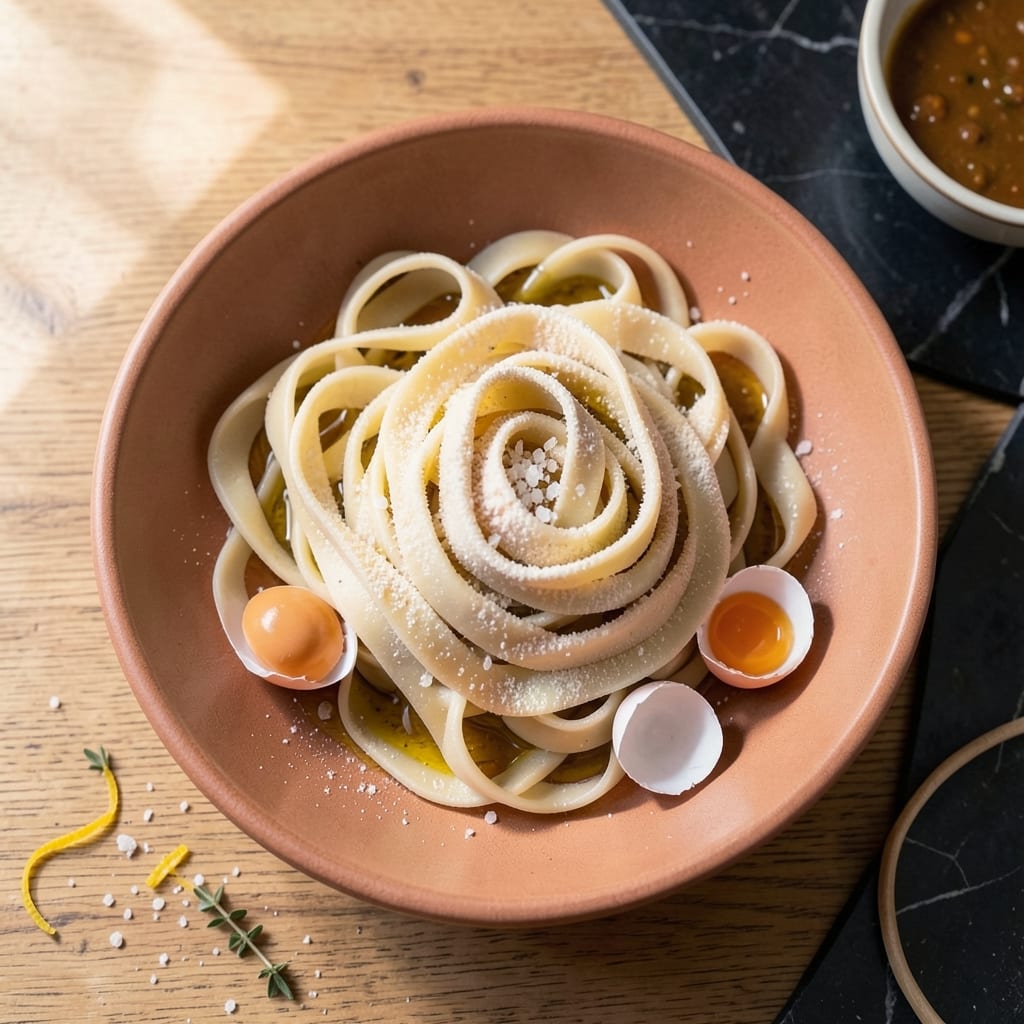
There’s nothing quite like the satisfaction of rolling out silky sheets of fresh pasta from scratch. This method transforms simple flour and eggs into tender, delicate ribbons that elevate any meal.
I developed this technique after years of trial and error, perfecting the ratio of finely milled 00 flour to eggs for the ideal texture. The dough comes together quickly with minimal kneading, then rests briefly before rolling.
The result is pasta with a subtle bite that holds sauce beautifully. Whether you cut it into fettuccine, tagliatelle, or farfalle, the flavor and texture will outshine any store-bought version. The process becomes meditative once you find your rhythm.
For those avoiding eggs, a simple water substitution works perfectly. Let’s begin with the foundation that makes this dish extraordinary.
Ingredients for Homemade Pasta Recipe 00 Flour
Simple flour, eggs, and patience create something extraordinary from scratch.
| Ingredient | Amount | Notes |
|---|---|---|
| 00 Flour 🌾 | 3 ½ cups | Finely milled, all-purpose works too |
| Large Eggs 🥚 | 4 whole | Room temperature preferred |
| Olive Oil 🫒 | 1 tbsp | Extra-virgin, for elasticity |
| Sea Salt 🧂 | 1 tsp | Fine grain for even distribution |
| All-Purpose Flour 🌾 | ½ cup | For dusting work surface |
| Semolina Flour 🌾 | ¼ cup | Optional, for texture variation |
[recipe_ingredient_scaler]
The 00 flour is non-negotiable for that silky texture—Eataly or Italian markets usually carry it, but King Arthur’s all-purpose is a solid backup. Look for the fine, almost powdery grind (that’s the 00). Room temperature eggs incorporate better, so pull them out an hour before starting. The olive oil adds stretch without toughness—use something good, like California Olive Ranch.
No eggs? Water at a 1:1 ratio by weight works—about 7-8 tbsp for this amount of flour. Short on 00 flour? All-purpose plus a tablespoon of cornstarch mimics the texture. Skip the semolina if you don’t have it (the pasta will just be slightly less rustic). For a richer flavor, replace the olive oil with melted unsalted butter.
Fresh pasta doesn’t keep long. Cook within 24 hours or freeze it—dust with flour first to prevent sticking. Freezes beautifully for 1 month. No need to thaw before cooking, just add a minute to the boiling time.
Why You’ll Love This Recipe
- No Fuss Mixing: I just dump the 00 flour, eggs, and olive oil on the counter and mix—no fancy tools, no stress.
- Silky Rich Flavor: The 00 flour gives it this velvety texture that soaks up sauce like a dream. Honestly, store-bought can’t compete.
- Endless Meal Options: I use it for lasagna sheets one night, fettuccine the next, or even quick weeknight ravioli.
- Budget Stretcher: A bag of 00 flour and a few eggs make enough pasta for four, and leftovers freeze beautifully. I’ll be real: my grocery bill thanks me.
Step-by-Step Instructions for Homemade Pasta
Here’s the method I’ve perfected for creating silky, restaurant-quality pasta at home.
Step 1: Form the Dough on a Clean Surface
On a clean work surface, create a mound with the 3.5 cups 00 Flour and make a well in the center. This traditional method gives you better control over the texture than mixing in a bowl. I’ve found that using 00 flour creates a silkier final product than regular flour.
Crack the 4 whole Large Eggs into the well, add the 1 tbsp Olive Oil and 1 tsp Sea Salt, then gradually incorporate the flour using a fork. Start from the inner rim of the well and work outward, pulling in a bit more flour with each stroke until the mixture becomes too thick to stir.
Step 2: Knead Until Smooth and Elastic
Once the dough starts coming together, switch to using your hands. Knead for 8-10 minutes until the dough is smooth, elastic, and slightly tacky but not sticky. If it’s too wet, add a small amount of 00 flour from your reserve; if too dry, dip your fingers in water.
Here’s the thing—this isn’t a workout, but it does require patience. Push the dough away with the heel of your hand, then fold it back over itself, rotating a quarter turn after each fold. You’ll know it’s ready when you can press your finger into the dough and it springs back slowly, leaving only a slight indentation.
Step 3: Rest the Dough for Workability
Shape the dough into a ball, wrap it tightly in plastic wrap, and let it rest at room temperature for 30 minutes. This relaxation period allows the gluten to unwind, making the dough much easier to roll out thinly. Without this rest, the dough will resist stretching and may spring back as you work with it.
I always set a timer for this step. While it rests, I like to clean my workspace and dust it lightly with 0.5 cup All-Purpose Flour for rolling. If you’re using 0.25 cup Semolina Flour for extra texture, mix it with the all-purpose flour for dusting.
Step 4: Roll and Cut the Pasta
Divide the dough into 4 equal portions (since this recipe serves 4). Working with one portion at a time (keep the others covered), flatten it with your hands and begin rolling it through a pasta machine at its widest setting. Fold the sheet in thirds like a letter and repeat this process 3-4 times at the widest setting.
Now comes the satisfying part. Gradually decrease the setting and roll the dough through once at each level, without folding, until you reach your desired thickness. For fettuccine or tagliatelle, I stop at setting #5 or #6. Feed the sheet through the cutter attachment, or cut by hand into ¼-inch wide ribbons. Dust the cut pasta lightly with flour to prevent sticking.
Step 5: Cook Immediately or Dry Briefly
Bring a large pot of salted water to a rolling boil. Add the fresh pasta and cook for 2-3 minutes until it floats to the surface and is al dente. Fresh pasta cooks much faster than dried, so keep an eye on it. The pasta should be tender with a slight bite, not mushy.
If you’re not cooking it immediately, you can let the pasta dry on a floured surface for up to 1 hour before cooking. For longer storage, dust the pasta thoroughly with flour, shape into nests, and freeze for up to 1 month. This homemade pasta freezes beautifully and cooks straight from frozen—just add 1 minute to the cooking time.
Pro Tips For Making Homemade Pasta Recipe 00 Flour
- Knead Until Smooth: Work the dough for at least 8-10 minutes by hand—00 flour needs more time to develop that silky elasticity than all-purpose. I learned this the hard way after my first batch crumbled when rolled thin.
- Room Temp Eggs: Pull your large eggs out of the fridge 30 minutes before mixing. Cold eggs make the dough seize up, and you’ll fight it the whole time.
- Skip the Over-Flouring: Resist the urge to dump extra 00 flour on the counter when rolling—it dries the pasta out. A light dusting is enough, even if it sticks a little at first.
- Rest Before Rolling: Wrap the dough in plastic and let it sit for 20 minutes at room temp. My grandmother swore by this, and she was right: it relaxes the gluten so it doesn’t spring back when you roll it thin.
Troubleshooting Perfect Results
Dough Too Dry
If your dough feels crumbly, add 1 tsp water at a time and knead until smooth. I often keep a small bowl of water nearby. The dough should feel slightly tacky but not sticky. Remember, 00 flour absorbs moisture differently than all-purpose.
Dough Too Sticky
When dough sticks to your hands, dust with 1-2 tbsp all-purpose flour and continue kneading. I’ve found that adding too much flour at once can make the dough tough. Work in small increments until it reaches the right consistency. 💡
Pasta Tears When Rolling
If sheets tear during rolling, the dough likely needs more rest. Wrap it in plastic and let it sit for another 15-20 minutes. Also, ensure your pasta machine is clean and properly adjusted—uneven settings can cause tearing.
Uneven Thickness
For consistent sheets, fold the dough in thirds after the first few passes through the machine. This technique, called “laminating,” helps even out the thickness. I fold mine 3-4 times at the widest setting before thinning it out.
Pasta Sticks Together
To prevent clumping, dust cut pasta generously with all-purpose flour or semolina. Spread it out on a floured surface or hang it on a drying rack. I like to use a cooling rack for air circulation. ❄️
Pasta Cooks Unevenly
If some pieces are undercooked while others are mushy, your water may not be at a full rolling boil before adding the pasta. Use a large pot with plenty of water—at least 4 quarts—and keep the heat high to maintain a vigorous boil.
Nutrition Facts
Frequently Asked Questions
Why use 00 flour instead of regular flour?
00 flour is finely ground, creating a smoother, silkier texture. It absorbs moisture differently, resulting in more tender pasta. Regular flour works, but the texture won’t be as delicate.
Can I make this without a pasta machine?
Yes! Roll the dough thinly with a rolling pin, then cut into strips. It takes more effort, but the results are just as delicious. Aim for 1-2mm thickness for best texture.
How do I store fresh pasta?
Dust with flour, shape into nests, and refrigerate for up to 24 hours. For longer storage, freeze for up to 1 month. Cook straight from frozen, adding 1 minute to boiling time.

Trained in classic French technique but raised on slow-cooked ribs and spicy rubs, she blends culinary skill with smoke and soul.
- Recipe for Boneless Pork Chops in Cast Iron Skillet: Sear and Baste to Juicy Perfection - October 3, 2026
- Recipe for Boneless Cross Rib Roast: Slow-Roasted Beef with Herb Crust - October 3, 2026
- Hamburgers in Sauce Recipe Crock Pot: Slow-Cooked Savory Delight - October 3, 2026