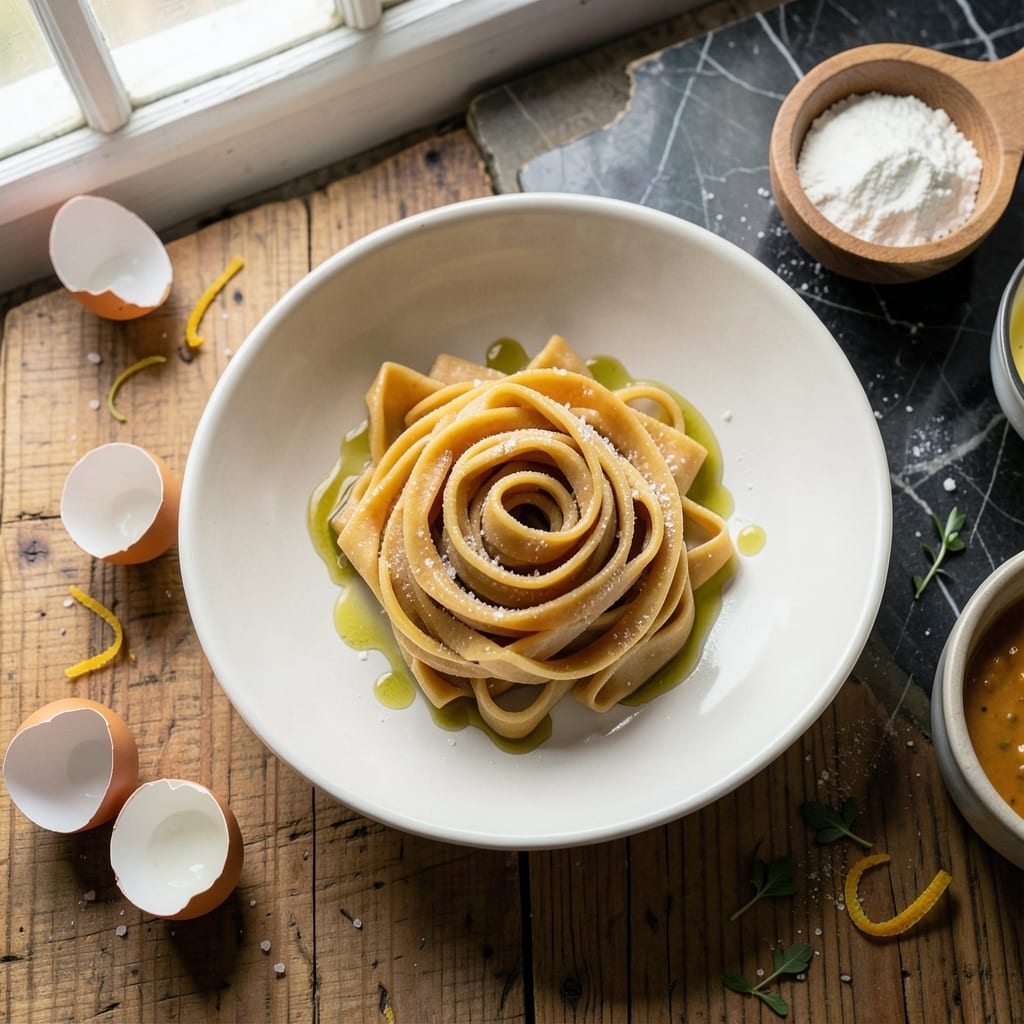
There’s nothing quite like the satisfaction of rolling out your own pasta dough and watching it transform into silky ribbons. I remember my first attempt ended in a sticky, uneven mess, but with practice, I discovered the precise method that works every time.
This approach requires just 4 basic ingredients and a bit of elbow grease. The key lies in proper flour-to-egg ratios and kneading until the dough becomes smooth and elastic. Resting the dough is crucial—it relaxes the gluten for easier rolling.
You’ll be rewarded with pasta that cooks up tender yet firm, with a texture that store-bought versions simply can’t match. The process is surprisingly therapeutic, turning a simple mixture into something extraordinary.
Once you master this technique, you’ll never want to go back to boxed pasta again.
Ingredients for Homemade Pasta Recipe by Hand
Four simple ingredients transform into tender, silky ribbons of homemade pasta by hand.
| Ingredient | Amount | Notes |
|---|---|---|
| All-Purpose Flour 🌾 | 2 cups | Plus extra for dusting |
| Large Eggs 🥚 | 3 whole | Room temperature preferred |
| Olive Oil 🫒 | 1 tbsp | Extra-virgin for richness |
| Fine Sea Salt 🧂 | ½ tsp | Dissolved in egg mixture |
[recipe_ingredient_scaler]
The flour is the foundation—King Arthur or Bob’s Red Mill are my go-tos. Their all-purpose has the right protein content (around 11%) for that perfect bite. Room temperature eggs incorporate better, so take them out 30 minutes before starting. The salt enhances flavor, but don’t overdo it—the pasta water will add more. I always keep a 5-pound bag of flour on hand for spontaneous pasta nights.
No all-purpose flour? 00 flour (the Italian kind) makes it even silkier, but it’s pricier. Out of eggs? You’d need to pivot to a different recipe—eggs are non-negotiable here. The olive oil adds elasticity, but you can skip it in a pinch (just add a teaspoon of water to the eggs). For gluten-free, swap in a 1:1 GF blend, but expect a different texture.
Fresh pasta cooks in 2-3 minutes, so have your sauce ready. Store uncooked dough wrapped in plastic for 24 hours in the fridge, or freeze for 1 month. Dust with extra flour before freezing to prevent sticking. Always bring dough to room temp before rolling.
Why You’ll Love This Recipe
- No Fancy Tools: I just need flour, eggs, olive oil, and my hands—no pasta machine required.
- Rich Egg Flavor: The fresh eggs and olive oil give it a depth store-bought can’t touch.
- Endless Meal Options: I toss it with pesto one night, butter and cheese the next, or freeze for later.
- Pennies Per Serving: A bag of flour and a few eggs feed my family for less than takeout.
Step-by-Step Instructions for Homemade Pasta by Hand
Here’s the method I’ve perfected for creating silky pasta ribbons without any special equipment.
Step 1: Create the Egg Mixture with Precision
In a medium bowl, whisk together the 3 whole Large Eggs with the 1 tbsp Olive Oil and 0.5 tsp Fine Sea Salt. I always use room temperature eggs because they incorporate better into the flour.
Whisk vigorously until the mixture is completely homogenous and the salt is fully dissolved—this ensures even seasoning throughout your dough. The oil adds richness and makes the dough more pliable, so don’t skip it.
You’ll notice the mixture becomes slightly frothy on top, which is exactly what you want. This step takes about 1-2 minutes of steady whisking by hand.
Step 2: Form and Knead the Dough
On a clean work surface, mound the 2 cups All-Purpose Flour and create a well in the center. Pour your egg mixture into this well. Using a fork, gradually incorporate the flour into the wet ingredients, starting from the inner rim of the well.
Once the mixture becomes too stiff for the fork, switch to your hands. The dough will be shaggy at first, but keep working it. I find that pressing and folding the dough repeatedly for about 8-10 minutes develops the gluten properly.
You’ll know it’s ready when the dough becomes smooth, elastic, and slightly tacky but not sticky. It should spring back when pressed lightly with your finger.
Step 3: Rest the Dough for Optimal Texture
Wrap the dough tightly in plastic wrap and let it rest at room temperature for at least 30 minutes. This resting period allows the gluten to relax, making the dough much easier to roll out.
I’ve found that during this time, the dough also absorbs any remaining moisture evenly, which prevents cracking when you roll it thin. Don’t skip this step—it’s the difference between struggling with your dough and working with it effortlessly.
While waiting, I like to clean my work surface and gather my rolling pin, ready for the next step.
Step 4: Roll and Cut the Pasta
Divide the rested dough into 4 equal portions. Working with one portion at a time (keep the others covered), flatten it with your hands and begin rolling it out on a lightly floured surface.
Roll from the center outward, turning the dough a quarter turn after each pass to maintain an even thickness. Continue until the sheet is nearly translucent—about 1-2 millimeters thick. You’ll see the texture change from opaque to slightly see-through as you approach the right thinness.
Lightly dust the rolled sheet with flour, then loosely roll it up and slice it into ¼-inch wide ribbons. Unfurl the ribbons and let them dry on a floured surface for 10-15 minutes before cooking.
The pasta is ready when the edges look slightly dry to the touch but the centers are still pliable.
Pro Tips For Making Homemade Pasta Recipe By Hand
- Knead Thoroughly: Work the dough for at least 8-10 minutes until smooth and elastic—I learned this the hard way when my first few batches were tough and chewy.
- Use Room Temp Eggs: Take the eggs out of the fridge 30 minutes before starting, or they’ll make the dough seize up and crack when you try to roll it.
- Skip Extra Flour: Resist the urge to dust the counter heavily while kneading; too much extra flour makes the pasta dense, and you’ll regret it when it turns out gummy.
- Rest the Dough: After kneading, let it sit wrapped in plastic for at least 30 minutes—this relaxes the gluten so it rolls out thin without springing back.
Perfect Pairings for This Recipe
Sauce Pairings
Fresh pasta deserves a sauce that clings beautifully to its silky surface. I love a classic brown butter sage sauce—melt ½ cup butter with 10 fresh sage leaves until nutty and golden. The simplicity lets the pasta shine. 💛
Protein Additions
For a heartier meal, toss your ribbons with seared shrimp or chicken breast. Sauté ½ pound shrimp in 2 tbsp olive oil with garlic and red pepper flakes for 2-3 minutes per side. The pasta absorbs the garlicky oil beautifully.
Vegetable Companions
A light asparagus and pea combination works wonders. Blanch 1 cup peas and 1 pound asparagus (cut into 2-inch pieces) for 2 minutes, then toss with your cooked pasta and a drizzle of extra-virgin olive oil.
Wine Pairings
An Italian white like Pinot Grigio from Friuli complements the delicate flavor. For red lovers, a light Chianti cuts through the richness. I always serve wine slightly chilled—about 50°F for whites, 60°F for reds. 🍷
Bread Options
Serve with crusty garlic bread to soak up every last bit of sauce. I make mine with a baguette, ½ cup butter, and 3 minced garlic cloves, broiled for 2-3 minutes until golden.
Cheese Finishes
Freshly grated Parmigiano-Reggiano is non-negotiable for me. Use a microplane for the finest texture—about ¼ cup per serving. For extra indulgence, add shavings of Pecorino Romano for its sharper bite.
Nutrition Facts
Frequently Asked Questions
How thin should I roll the dough?
Roll until nearly translucent, about 1-2 millimeters thick. You’ll see the texture change from opaque to slightly see-through as you approach the right thinness.
What if my dough is too sticky?
Add 1 tablespoon of flour at a time while kneading until it becomes smooth and elastic. Avoid adding too much, or the pasta will become tough.
Can I use whole wheat flour?
Yes, but replace only 50% of the all-purpose flour with whole wheat. The pasta will be denser and nuttier in flavor.
How long does fresh pasta last?
Uncooked dough keeps in the fridge for 24 hours or in the freezer for 1 month. Cooked pasta stays fresh in the fridge for 3-4 days.

Trained in classic French technique but raised on slow-cooked ribs and spicy rubs, she blends culinary skill with smoke and soul.
- Recipe for Boneless Pork Chops in Cast Iron Skillet: Sear and Baste to Juicy Perfection - October 3, 2026
- Recipe for Boneless Cross Rib Roast: Slow-Roasted Beef with Herb Crust - October 3, 2026
- Hamburgers in Sauce Recipe Crock Pot: Slow-Cooked Savory Delight - October 3, 2026