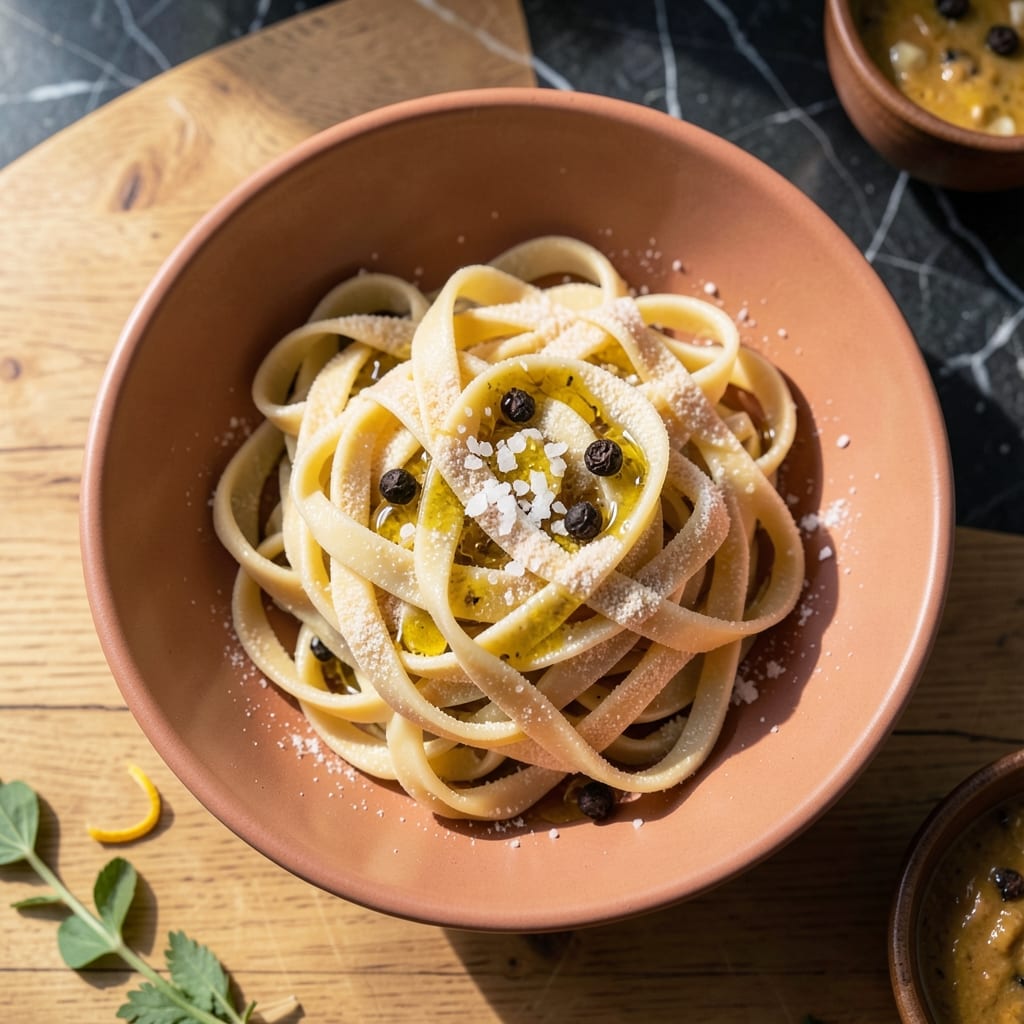
There’s nothing quite like the satisfaction of making pasta from scratch, especially when it comes together in 15 minutes for two. I developed this method after countless attempts, perfecting the ratio of eggs to flour for the ideal texture.
The process is simpler than you might think—just flour, eggs, and a bit of patience. Rolling the dough thin ensures those delicate ribbons that cook evenly and absorb sauce beautifully. The freshness of homemade pasta elevates any meal.
You’ll end up with tender, silky strands that taste far superior to store-bought. Pair with a light butter sauce or your favorite marinara for a restaurant-quality experience at home.
This recipe proves that homemade pasta doesn’t require special equipment or hours of effort. Just a little practice and the right technique.
Ingredients for Homemade Pasta Recipe for 2
Just five simple ingredients transform into silky fresh egg ribbons for two.
| Ingredient | Amount | Notes |
|---|---|---|
| All-Purpose Flour 🌾 | 2 cups | Plus extra for dusting |
| Large Eggs 🥚 | 3 whole | Room temperature preferred |
| Sea Salt 🧂 | ½ tsp | Fine grain for even distribution |
| Olive Oil 🫒 | 1 tbsp | Extra-virgin for richness |
| Semolina Flour 🌾 | ¼ cup | For texture variation |
[recipe_ingredient_scaler]
The flour is doing the heavy lifting here. King Arthur all-purpose is my go-to—consistent protein content, no surprises. Semolina adds that restaurant-quality bite (find it in the baking aisle or Italian markets). Eggs at room temp incorporate better into the dough, so pull them out 30 minutes before starting (or soak in warm water for 10).
No semolina? Bread flour at half the amount gets you close. Short on eggs? One extra yolk plus water to hit 3 whole eggs equivalent. The olive oil can be swapped for any neutral oil, but extra-virgin adds depth. Salt amount is flexible—taste the dough and adjust. For gluten-free, Caputo Fioreglut is the only blend I trust for pasta.
Fresh pasta cooks in 2-3 minutes, so make it right before serving. Dough rests 30 minutes at room temp—don’t skip this. Leftovers? Toss with oil, refrigerate 2 days max, or freeze immediately. Thaw in fridge, cook from frozen adding 60 seconds.
Why You’ll Love This Recipe
- No Fuss Mixing: I just dump the flour, eggs, and a pinch of sea salt on the counter and knead—no fancy tools, no mess.
- Rich, Silky Bite: The olive oil and eggs give it this luxurious texture that store-bought can’t touch.
- Date Night Ready: Honestly, it’s impressive but takes less time than waiting for delivery.
- Budget Stretcher: A handful of pantry staples makes two generous servings for the cost of one restaurant portion.
Step-by-Step Instructions for Homemade Pasta
Here’s my trusted method for creating fresh pasta that tastes like it came from a Roman trattoria.
Step 1: Create the Dough on a Clean Surface
On a clean work surface, mound the 2 cups all-purpose flour and 0.25 cup semolina flour together. Use your fingers to create a well in the center large enough to hold the wet ingredients. This traditional method gives you better control over the texture than using a bowl.
Add the 3 whole large eggs, 0.5 tsp sea salt, and 1 tbsp olive oil into the well. The salt enhances the wheat flavor, while the olive oil adds a subtle richness to the dough. Begin incorporating the flour into the wet ingredients using a fork, working from the inner rim outward.
Step 2: Knead Until Smooth and Elastic
Once the dough starts to come together, switch to using your hands. The mixture will be shaggy at first—this is normal. Continue kneading for 8-10 minutes until the dough becomes smooth and elastic. You’ll know it’s ready when it springs back when pressed with your finger.
If the dough feels too sticky, dust your work surface with a bit of extra all-purpose flour. Conversely, if it’s too dry, dip your fingers in water and continue kneading. The key is achieving a dough that’s firm yet pliable. Wrap the finished dough in plastic wrap and let it rest at room temperature for 30 minutes.
Step 3: Roll and Cut the Pasta Ribbons
Divide the rested dough into 4 equal pieces to make it easier to work with. Flatten one piece with your hands and pass it through a pasta machine on the widest setting. Fold the dough in half and repeat this process 2-3 times to create a smooth sheet.
Gradually decrease the setting and pass the dough through once at each level, without folding, until you reach the desired thickness (about 1/16 inch for ribbons). Dust the sheets with semolina flour to prevent sticking. Feed each sheet through the machine’s cutting attachment to create ribbons of your preferred width.
Step 4: Cook the Fresh Pasta Immediately
Bring a large pot of salted water to a rolling boil. The water should be as salty as the Mediterranean Sea. Add the fresh pasta and cook for 2-3 minutes until it floats to the surface. Fresh pasta cooks much faster than dried, so keep a close eye on it.
You’ll know it’s done when the ribbons are tender but still have a slight bite. Drain immediately and toss with your favorite sauce. The pasta will continue to cook slightly from the residual heat, so have your sauce ready to go before you start boiling the water.
Pro Tips For Making Homemade Pasta Recipe For 2
- Knead It Longer: I used to rush this step and ended up with tough pasta—work the dough for at least 8-10 minutes until it’s smooth and elastic.
- Use Room-Temp Eggs: Cold eggs make the dough seize up. Pull them out of the fridge 30 minutes before mixing for a silkier texture.
- Skip Over-Flouring: Too much flour while rolling makes pasta dry and dense. Dust lightly with semolina only to prevent sticking.
- Rest the Dough: After kneading, let it sit covered for 30 minutes—this relaxes the gluten so it rolls out thin without springing back.
Regional Styles of This homemade pasta recipe for 2
Northern Italian Style
In Emilia-Romagna, they make tagliatelle with just eggs and flour, rolled paper-thin. Their secret? A 1:1 ratio of eggs to flour by weight—about 200g each for 2 servings. The dough rests longer here, often 1-2 hours, for ultra-silky texture. 💛
Southern Italian Tradition
Puglia’s orecchiette uses semolina flour and water, hand-pressed into little ears. For two, mix 1.5 cups semolina with ½ cup warm water and ½ tsp salt. The rough texture holds sauce better than smooth Northern styles.
French Influence
Alsace borders Italy, and their pasta shows it. Try adding 1 tbsp crème fraîche to your dough for tender spätzle-like noodles. Roll thin, cut into squares, and cook in simmering broth instead of water for extra flavor.
Asian Fusion Twist
Inspired by my neighborhood in San Francisco, swap 1 cup all-purpose flour for rice flour. The result is chewier, like udon. Adds a fun texture contrast that pairs wonderfully with soy-ginger sauces. 🔥
American South Style
Down home, we make egg noodles with extra yolks—try 4 yolks + 1 whole egg with your flour. The richer dough stands up to hearty stews. My grandmother taught me this trick during those Sunday dinners I perfected.
Nutrition Facts
Frequently Asked Questions
Can I make this without a pasta machine?
Use a rolling pin to flatten the dough as thin as possible on a well-floured surface. Cut into ribbons with a sharp knife. It takes more effort but the result is just as delicious.
Why do I need to let the dough rest?
The 30-minute rest allows the gluten to relax, making the dough easier to roll out thinly. Skipping this step can result in tough, springy pasta that’s hard to work with.
Can I use this dough for shapes like ravioli?
Yes! Roll the dough slightly thicker (about 1/8 inch) for shapes. Use a round cutter or glass for circles, then fill and seal the edges tightly.
How do I know when the pasta is done cooking?
Fresh pasta cooks quickly—it’s ready when it floats to the surface in 2-3 minutes. Taste a strand to confirm it’s tender but still has a slight bite.

Trained in classic French technique but raised on slow-cooked ribs and spicy rubs, she blends culinary skill with smoke and soul.
- Recipe for Boneless Pork Chops in Cast Iron Skillet: Sear and Baste to Juicy Perfection - October 3, 2026
- Recipe for Boneless Cross Rib Roast: Slow-Roasted Beef with Herb Crust - October 3, 2026
- Hamburgers in Sauce Recipe Crock Pot: Slow-Cooked Savory Delight - October 3, 2026