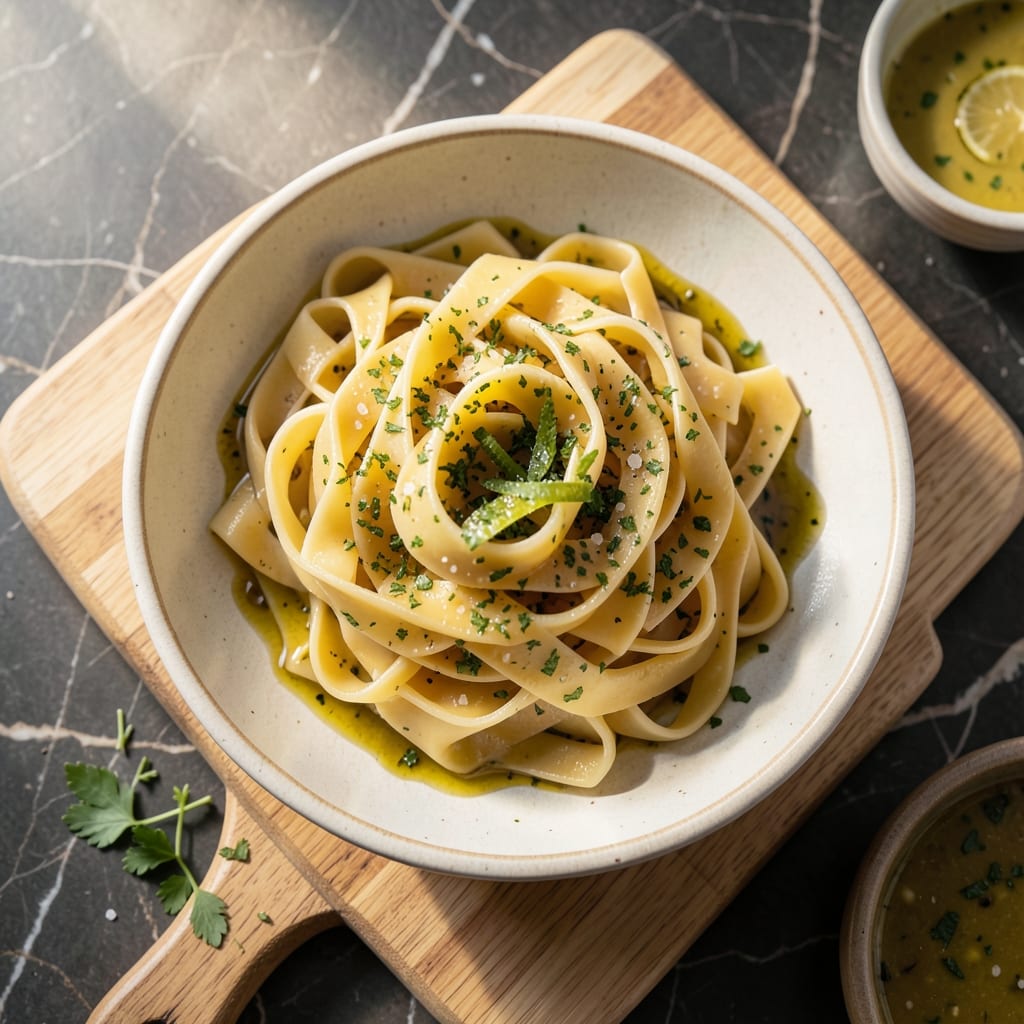
There’s magic in making pasta from scratch, and this version with citrus zest takes it to another level. Homemade egg ribbons taste nothing like the dried stuff—fresh, tender, and full of personality.
My grandmother never measured flour, just knew by feel when the dough was right. This recipe honors her intuition while giving you exact measurements. The lemon zest adds a bright pop that makes every bite special.
The process is simpler than you think: mix, knead, rest, roll. No fancy equipment required, just a little patience and a rolling pin. You’ll end up with silky ribbons that cook in 2-3 minutes.
Serve with butter and parmesan or your favorite sauce. Between you and me, this might ruin store-bought pasta for you forever.
Ingredients for Homemade Pasta Recipe Love and Lemons
Fresh eggs, bright lemon, and flour come together for silky homemade ribbons you’ll crave forever.
| Ingredient | Amount | Notes |
|---|---|---|
| All-Purpose Flour 🌾 | 2 ½ cups | Plus extra for dusting |
| Large Eggs 🥚 | 4 whole | Room temperature preferred |
| Lemon Zest 🍋 | 1 tbsp | Finely grated, from 1-2 lemons |
| Olive Oil 🫒 | 1 tbsp | Extra-virgin for richness |
| Salt 🧂 | ½ tsp | Fine sea salt or kosher |
| Egg Yolks 🥚 | 2 whole | For richer texture (optional) |
| Water 💧 | 1 tbsp | As needed for dough consistency |
| Parmesan Cheese 🧀 | ½ cup | Freshly grated for serving |
| Unsalted Butter 🧈 | ¼ cup | Melted, for serving |
| Black Pepper 🌶️ | ¼ tsp | Freshly ground preferred |
| Fresh Basil 🌿 | ¼ cup | Chopped, for garnish |
[recipe_ingredient_scaler]
Flour is the foundation here. I always use King Arthur all-purpose (the unbleached one)—consistent results every time. For the eggs, local farm-fresh if you can swing it, but any large eggs work. The lemon zest is non-negotiable (it’s the star of this version), so grab organic lemons since you’re using the peel. A microplane makes zesting effortless and gives you that fine, fluffy texture you want.
No lemons? Lime or orange zest works in a pinch (same amount). If you’re out of all-purpose flour, 00 flour makes it even silkier, but it’s not required. For an egg-free version, use 1/4 cup water plus 1 tbsp oil per egg. The Parmesan can be Pecorino Romano if you want a sharper bite. Fresh herbs are great for garnish—parsley or chives if you don’t have basil.
The dough rests best covered at room temp for 30 minutes. Fresh pasta cooks in 2-3 minutes—watch it closely. Store uncooked dough wrapped tightly in the fridge for 1 day, or freeze for up to 1 month (thaw before rolling).
Why You’ll Love This Recipe
- One Bowl Wonder: I just dump the flour, eggs, lemon zest, and olive oil in a bowl—no fancy equipment, no mess.
- Bright and Zesty: That lemon zest cuts through the richness, giving every bite a fresh, sunny pop.
- Dinner or Lunch: It’s my go-to for quick weeknight dinners but fancy enough for a lazy Sunday with friends.
- Pocket-Friendly Feast: A handful of pantry staples makes a meal that feels indulgent without the takeout price.
Step-by-Step Instructions for Fresh Egg Pasta With Lemon
Here’s the method. Straightforward, tested, works every time.
Step 1: Make the Dough on a Clean Surface
On a clean work surface, mound the 2.5 cups all-purpose flour and create a well in the center. This traditional method gives you better control over the texture than mixing in a bowl. I like to use a wooden cutting board—it provides just enough grip for kneading.
Crack the 4 whole large eggs and 2 whole egg yolks into the well, then add the 1 tbsp olive oil, 1 tbsp lemon zest, and 0.5 tsp salt. Here’s the thing—don’t add all the flour at once. Start with about half and gradually incorporate more as you whisk the wet ingredients with a fork.
Step 2: Knead Until Smooth and Elastic
Once the dough starts to come together, use your hands to bring it all into a shaggy mass. Dust your surface with extra all-purpose flour as needed to prevent sticking, but don’t overdo it—too much flour makes tough pasta. The dough should feel slightly tacky but not wet.
Knead for 8-10 minutes until the dough is smooth, elastic, and springs back when you press it with your finger. If it’s too dry, add the 1 tbsp water a few drops at a time. If it’s too sticky, dust with a bit more flour. This step develops the gluten that gives your pasta its perfect texture.
Step 3: Rest the Dough for Tenderness
Shape the dough into a ball, wrap it tightly in plastic wrap, and let it rest at room temperature for 30 minutes. This resting period relaxes the gluten strands, making the dough easier to roll out and preventing it from shrinking back as you work with it.
I know it seems weird, but this step makes a huge difference. While it rests, the flour fully hydrates and the dough becomes more pliable. Don’t skip this (I learned the hard way)—your pasta will be tough and difficult to shape without this rest.
Step 4: Roll and Cut the Pasta Ribbons
Divide the rested dough into 4 equal pieces. Working with one piece at a time (keep the others covered), flatten it slightly with your hands and run it through a pasta machine on the widest setting. Fold the sheet in thirds and repeat 2-3 times to create a smooth, even sheet.
Gradually decrease the setting and roll the dough through once at each thickness until you reach the second-to-last setting for thin ribbons. Then, cut the sheet into your desired width—about ¼-inch for classic fettuccine. Dust the cut pasta lightly with all-purpose flour to prevent sticking as you work.
Step 5: Cook and Serve Immediately
Bring a large pot of salted water to a rolling boil. Add the fresh pasta and cook for 2-3 minutes until it floats to the surface and is al dente. Fresh pasta cooks much faster than dried, so keep an eye on it.
Drain the pasta, reserving some pasta water. Toss immediately with the 0.25 cup melted unsalted butter, 0.5 cup freshly grated Parmesan cheese, 0.25 tsp black pepper, and 0.25 cup chopped fresh basil. Add a splash of pasta water as needed to create a silky sauce that clings to every ribbon. Serve immediately while hot.
Pro Tips For Making Homemade Pasta Recipe Love And Lemons
- Knead Longer: I used to stop at 5 minutes, but 8-10 minutes of kneading by hand makes the dough silky—you’ll feel the difference when rolling it out.
- Zest First: Rub the lemon zest into the flour with your fingers before adding eggs; this releases the oils and distributes the citrus flavor evenly.
- Skip Cold Eggs: After cracking a few cold eggs into dough, I learned room-temperature eggs incorporate better and prevent tough pasta.
- Rest the Dough: Give it a solid 30 minutes wrapped in plastic on the counter—I skip this when rushed, but the texture suffers every time.
Flavor Customization for This Dish
Herb Infusions
Swap the lemon zest for 1 tbsp finely chopped fresh rosemary or thyme leaves for an earthy twist. I love rosemary with brown butter sauce—it reminds me of my grandmother’s Sunday dinners. The herbs release their oils during kneading, infusing every bite. 🌿
Spicy Kick
Add ½ tsp red pepper flakes or 1 tsp grated fresh ginger to the dough for subtle heat. For serious spice lovers, 1 tbsp sriracha powder creates a vibrant orange pasta that pairs perfectly with creamy Alfredo. The heat builds beautifully as you cook.
Cheese Lovers
Mix ¼ cup finely grated Parmesan or Pecorino Romano directly into the dough. This creates a richer, more savory base. I use King Arthur flour for this variation—it handles the extra moisture from the cheese better. The result is pasta that tastes like it’s already sauced.
Citrus Variations
Try lime or orange zest instead of lemon for a different bright note. Lime works especially well with Asian-inspired dishes, while orange adds a sweet, floral quality. I’ve found Meyer lemon zest (when in season) gives the most complex citrus flavor. 🍋
Whole Wheat Boost
Replace 1 cup of all-purpose flour with whole wheat flour for nuttier flavor and extra fiber. The dough will be slightly denser, so add 1 extra tbsp water. I learned this trick after my grandmother’s vague “add flour until it feels right” left me with bricks.
Colorful Additions
Blend ¼ cup cooked spinach puree or roasted red pepper puree into the wet ingredients for vibrant green or orange pasta. Strain the purees first to remove excess moisture. These look stunning on the plate and taste as good as they appear. ✨
Nutrition Facts
Frequently Asked Questions
Can I make this without a pasta machine?
Roll the dough by hand with a rolling pin to 1-2mm thickness. It takes more effort but works. Cut ribbons with a sharp knife or pizza cutter for even shapes.
Why does my dough feel tough?
Overworking or too much flour causes this. Knead just until smooth, and add flour sparingly. If tough, let it rest 10 minutes longer before rolling.
How do I store fresh pasta?
Dust with flour, place on a baking sheet, and refrigerate uncovered for 1 hour. Then transfer to an airtight container for up to 2 days. Freeze for longer storage.
Can I use a different citrus zest?
Yes! Try lime or orange zest in the same amount. Meyer lemon adds extra floral notes. Adjust to taste—citrus brightens the flavor beautifully.

Trained in classic French technique but raised on slow-cooked ribs and spicy rubs, she blends culinary skill with smoke and soul.
- Recipe for Boneless Pork Chops in Cast Iron Skillet: Sear and Baste to Juicy Perfection - October 3, 2026
- Recipe for Boneless Cross Rib Roast: Slow-Roasted Beef with Herb Crust - October 3, 2026
- Hamburgers in Sauce Recipe Crock Pot: Slow-Cooked Savory Delight - October 3, 2026