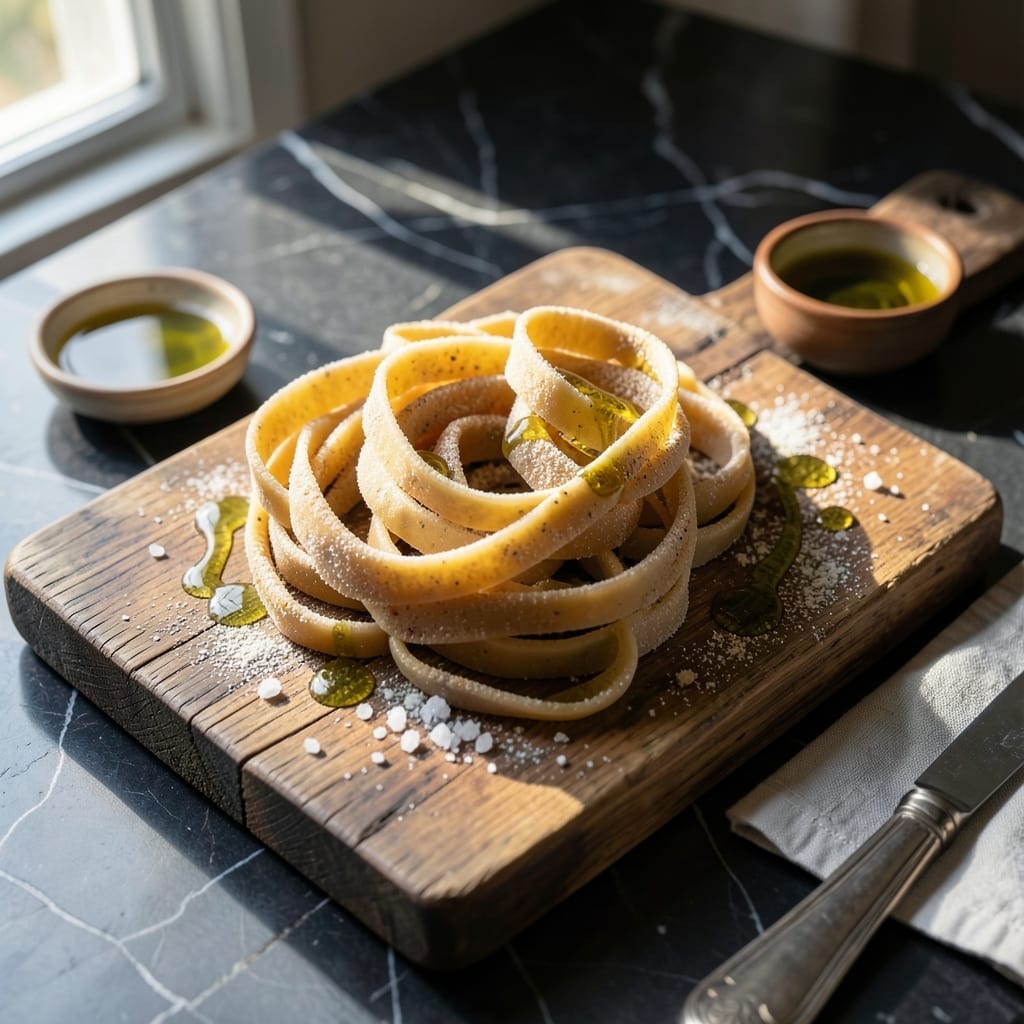
Fresh pasta doesn’t need eggs to achieve that perfect silky texture. I’ve perfected this homemade version using just flour and water, inspired by traditional Italian techniques.
The dough comes together quickly with minimal kneading, resting for 30 minutes to develop elasticity. Rolling it thin creates delicate ribbons that cook in under 2 minutes, offering a tender bite every time.
This method proves that simple ingredients can yield restaurant-quality results. The pasta holds sauce beautifully, with a texture that rivals any egg-based dough you’ve tried before.
Vegan-friendly and versatile, it’s ideal for everything from quick weeknight dinners to special occasions. Try it with your favorite sauce and prepare to be impressed.
Ingredients for Homemade Pasta Recipe No Egg
Just five simple ingredients transform into restaurant-quality pasta with no eggs required.
| Ingredient | Amount | Notes |
|---|---|---|
| All-Purpose Flour 🌾 | 2 cups | Plus extra for dusting |
| Water 💧 | ½ cup | Room temperature preferred |
| Olive Oil 🫒 | 1 tbsp | Extra-virgin for richness |
| Sea Salt 🧂 | ½ tsp | Fine grain preferred |
| Semolina Flour 🌾 | ½ cup | For texture and authenticity |
[recipe_ingredient_scaler]
Flour is the foundation here. King Arthur all-purpose is my go-to for consistency, but any good brand works. Semolina adds that classic Italian bite—find it in the baking aisle or at Italian specialty stores. The olive oil is optional but worth it (trust me on the full-fat version). Room temperature water blends more smoothly into the dough.
No semolina? Replace with all-purpose flour—texture will be slightly different but still delicious. Short on time? Skip the resting period, but the dough will be harder to roll thin. For extra flavor, infuse the water with herbs (frozen works in a pinch). The salt can be adjusted, but don’t skip it entirely—it enhances all the other flavors.
Fresh pasta doesn’t keep long. Cook within 24 hours or freeze for up to 1 month. Dust with extra flour before storing to prevent sticking. Thaw frozen dough in the fridge overnight before rolling.
Why You’ll Love This Recipe
- No-Fuss Dough: I mix flour, water, olive oil, and salt—no eggs, no waiting for dough to rest. Honestly, it’s ready to roll in minutes.
- Rustic Texture: The semolina gives it this delightful bite that store-bought just can’t match. That little crunch with the tender chew? So satisfying.
- Endless Pairings: I toss it with everything from garlic and olive oil to hearty ragù. Between us, it’s my shortcut to a restaurant-worthy meal any night.
- Pantry Staples: All-purpose flour and semolina are always in my cupboard. No special trips, no last-minute ingredient hunts—just good pasta, fast.
Step-by-Step Instructions for Homemade Pasta
Here’s my tested method for creating silky, egg-free pasta with just a few simple ingredients.
Step 1: Combine Dry Ingredients on a Clean Surface
On a clean, dry countertop, mound the 2 cups All-Purpose Flour and 0.5 cup Semolina Flour. I use a wide wooden board for this—it gives me plenty of space to work. Semolina adds that authentic, slightly gritty texture that makes pasta feel restaurant-quality.
Make a well in the center of the flour mound, about 4 inches wide. This creates the perfect space for your wet ingredients. Sprinkle the 0.5 tsp Sea Salt evenly over the flour—this ensures every bite is properly seasoned.
Step 2: Incorporate Wet Ingredients Gradually
Pour the 0.5 cup Water and 1 tbsp Olive Oil into the well. I always use room-temperature water because cold water can make the dough tough. The olive oil adds richness and helps the dough come together smoothly.
Using a fork, gently drag the flour from the inner rim of the well into the wet ingredients. Work in small circles, gradually incorporating the flour until the mixture starts to thicken. You’ll notice it transition from a liquid to a shaggy dough—that’s your cue to switch to using your hands.
Step 3: Knead Until Smooth and Elastic
Once the dough comes together, begin kneading with the heels of your hands. Push the dough away from you, then fold it back over itself. Rotate the dough a quarter turn and repeat. This process develops the gluten, which gives pasta its chewy texture.
Knead for 8-10 minutes until the dough is smooth, elastic, and no longer sticky. If it feels too dry, dampen your hands with a little water and keep kneading. If it’s too wet, dust with a bit of extra all-purpose flour. You’ll know it’s ready when it springs back slightly when pressed with a finger.
Step 4: Rest the Dough for Optimal Texture
Shape the dough into a ball and wrap it tightly in plastic wrap. Let it rest at room temperature for 30 minutes. This resting period relaxes the gluten strands, making the dough easier to roll out and preventing it from shrinking back when you stretch it.
During this time, the flour fully hydrates, which improves the texture of your final pasta. I use this moment to clean up my workspace and set up my pasta machine or rolling pin.
Step 5: Roll and Cut the Pasta
Divide the rested dough into 4 equal portions. Working with one portion at a time (keep the rest covered), flatten it with your hands and run it through a pasta machine on the widest setting. Fold the dough in half and repeat 2-3 times to ensure even thickness.
Gradually decrease the setting and roll the dough through once at each thickness until you reach your desired thinness. For fettuccine or tagliatelle, I stop at the second-to-thinnest setting. Cut the sheets into your preferred shape, dust with a bit of flour to prevent sticking, and cook immediately in boiling salted water for 2-3 minutes until al dente.
Pro Tips For Making Homemade Pasta Recipe No Egg
- Knead Longer: Work the dough for at least 8-10 minutes—it should be smooth and elastic, not sticky. I learned this the hard way after my first few batches turned out gummy.
- Use Warm Water: About 110°F water helps activate the gluten better than cold. Sounds weird, but it actually makes the dough more pliable.
- Skip Over-Flouring: Too much flour during rolling makes the pasta dense. Dust lightly with semolina instead—it adds texture without toughness.
- Rest the Dough: Let it sit covered for 30 minutes before rolling. My grandmother swore by this, and she was right: it prevents springy, resistant dough.
Serving Suggestions for This Dish
Simple Sauce Pairings
This pasta shines with light, fresh sauces that let its delicate flavor stand out. Toss with 2 tbsp extra-virgin olive oil, 3 minced garlic cloves, and a handful of fresh basil for a quick aglio e olio. The simplicity lets the pasta texture take center stage. 💛
Hearty Vegan Options
For a more substantial meal, pair with a chunky marinara sauce from New Seasons Market. I love adding sautéed mushrooms and spinach for extra texture. The pasta holds up beautifully to hearty toppings without falling apart.
Creamy Alternatives
A light cashew cream sauce with roasted red peppers creates a velvety coating. Blend ½ cup soaked cashews with ½ cup water and 1 roasted red pepper for a vegan alternative that clings perfectly to each strand.
Fresh Garnishes
Always finish with fresh toppings. A sprinkle of toasted pine nuts or nutritional yeast adds depth. I grow my own basil in Portland, and a few fresh leaves make all the difference. The contrast of fresh herbs against the warm pasta is divine.
Wine Pairing
A crisp Italian white like Pinot Grigio complements the clean flavors. For red lovers, a light Chianti works surprisingly well. I discovered this pairing at a small trattoria in Ohio that served similar eggless pasta. 🍷
Kid-Friendly Twist
My daughter Lily loves this pasta with just melted vegan butter and a sprinkle of Parmesan alternative. Sometimes I add a pinch of cinnamon to the dough for a subtle sweetness she adores. It’s become our weekly family favorite.
Nutrition Facts
Frequently Asked Questions
Can I use whole wheat flour instead of all-purpose?
Yes, but it will be denser. Replace up to 50% of the all-purpose with whole wheat for best results. The pasta will have a nuttier flavor and slightly heartier texture.
Why does my dough crack when rolling?
It’s likely too dry. Dampen your hands and knead in a bit more water, 1 tsp at a time. Let it rest 10 minutes before trying again.
How thin should I roll the pasta?
For fettuccine, aim for 1/16 inch thickness. Use a pasta machine’s second-thinnest setting. Thinner dough cooks faster but can tear more easily.
Can I make this without a pasta machine?
Use a rolling pin on a floured surface. Roll until translucent, about 2-3 minutes per side. It takes muscle but works perfectly.

Trained in classic French technique but raised on slow-cooked ribs and spicy rubs, she blends culinary skill with smoke and soul.
- Recipe for Boneless Pork Chops in Cast Iron Skillet: Sear and Baste to Juicy Perfection - October 3, 2026
- Recipe for Boneless Cross Rib Roast: Slow-Roasted Beef with Herb Crust - October 3, 2026
- Hamburgers in Sauce Recipe Crock Pot: Slow-Cooked Savory Delight - October 3, 2026