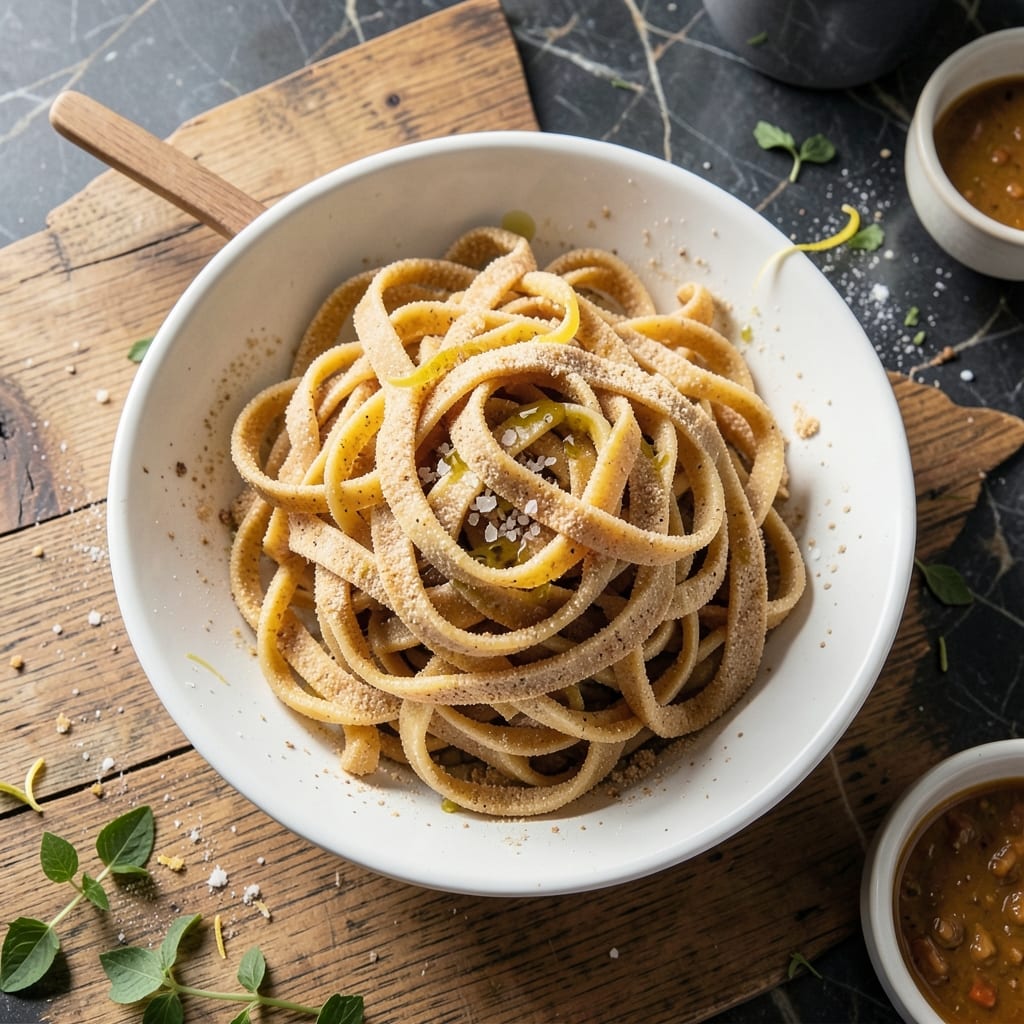
There’s nothing like fresh pasta to elevate a simple meal into something extraordinary. This method uses semolina flour for a rustic texture that holds sauce beautifully.
I developed this recipe after testing multiple flour blends, and semolina delivers the perfect balance of durability and flavor. The eggless approach makes it simple and approachable for any home cook.
The process involves kneading, resting, and rolling the dough to achieve the ideal thickness. Cooking time is just 2-3 minutes in boiling water for perfectly al dente results.
You’ll end up with homemade pasta that’s hearty, flavorful, and far superior to store-bought. The texture is what makes this dish truly special.
Ingredients for Homemade Pasta Recipe Semolina Flour
Semolina and all-purpose flours create this rustic, eggless pasta dough with minimal ingredients.
| Ingredient | Amount | Notes |
|---|---|---|
| Semolina Flour 🌾 | 2 cups | Fine or medium grind |
| All-Purpose Flour 🌾 | 1 cup | For elasticity in dough |
| Water 💧 | ¾ cup | Warm, about 110°F |
| Olive Oil 🫒 | 1 tbsp | Extra-virgin for richness |
| Salt 🧂 | 1 tsp | Fine sea salt preferred |
| Semolina Flour 🌾 | ½ cup | For dusting surfaces |
[recipe_ingredient_scaler]
The semolina flour is non-negotiable here—Bob’s Red Mill or King Arthur brands offer consistent quality with the right texture. Look for fine or medium grind; coarse semolina is too gritty for pasta dough. All-purpose flour balances the semolina’s coarseness, providing the necessary elasticity. Most grocery stores carry these in the baking aisle.
No semolina? Durum wheat flour is the closest substitute, though texture may vary slightly. All-purpose flour alone works in a pinch but lacks the signature bite. The olive oil can be omitted, but a small amount adds richness and aids dough cohesion. For a more traditional approach, some cooks use water only.
Store flours in airtight containers in a cool, dark place for up to 6 months. Dough can rest covered at room temperature for 30 minutes before rolling. Fresh pasta cooks immediately or can be refrigerated for 24 hours.
Why You’ll Love This Recipe
- Minimal Effort: I mix the semolina and all-purpose flour, add water, and roll—no fancy tools needed.
- Rustic Bite: The semolina gives it this hearty, slightly grainy texture that holds sauce like a dream.
- Freezer Friendly: I make a double batch, freeze half, and pull it out for lazy dinners.
- Pennies per Serving: All-purpose flour and semolina stretch further than any store-bought pasta I’ve bought.
Step-by-Step Instructions for Homemade Pasta with Semolina Flour
Master the technique for creating perfectly textured eggless pasta every time with these precise steps.
Step 1: Combine Dry Ingredients and Create the Well
On a clean work surface or in a large mixing bowl, combine the 2 cups Semolina Flour and 1 cup All-Purpose Flour. Use your fingers to blend them thoroughly until the mixture appears uniform in color and texture. This combination provides the ideal balance of rustic bite and elasticity.
Form the flour mixture into a mound and create a deep well in the center, roughly 4 inches across. The well should be large enough to hold all the wet ingredients without spilling over. The walls of the well should be thick enough to contain the liquid as you begin mixing.
Step 2: Incorporate Wet Ingredients Gradually
Pour the 0.75 cup Water, 1 tbsp Olive Oil, and 1 tsp Salt into the well. Begin mixing with a fork, starting at the center and gradually incorporating the flour from the inner walls of the well. Work in a circular motion, pulling in more flour as the liquid absorbs.
Continue this process until the mixture becomes too thick to stir with a fork. At this point, switch to using your hands. The dough will initially feel shaggy and dry, but resist the urge to add more water. The 110°F water temperature helps activate the gluten without making the dough sticky.
Step 3: Knead to Develop Gluten Structure
Transfer the dough to a lightly floured surface dusted with 0.5 cup Semolina Flour. Begin kneading by pushing the dough away from you with the heels of your hands, then folding it back over itself. Rotate the dough 90 degrees after each push-fold motion to ensure even development.
Knead vigorously for 8-10 minutes until the dough becomes smooth, elastic, and slightly springy to the touch. Properly developed gluten is crucial for pasta that holds its shape during cooking. The dough should feel firm but not dry—if it cracks, it needs more kneading, not more water.
Step 4: Rest and Shape the Dough
Wrap the kneaded dough tightly in plastic wrap and let it rest at room temperature for 30 minutes. This resting period allows the gluten to relax, making the dough easier to roll out. The dough will also absorb any remaining moisture, achieving the perfect consistency for rolling.
After resting, divide the dough into 4 equal portions for easier handling. Work with one portion at a time, keeping the others covered to prevent drying. Flatten the portion with your hands before beginning to roll it out to your desired thickness, dusting with additional Semolina Flour as needed to prevent sticking.
Pro Tips For Making Homemade Pasta Recipe Semolina Flour
- Knead Longer: I learned this the hard way—semolina dough needs a solid 8-10 minutes of kneading for that smooth, elastic texture. Skimping leaves you with brittle pasta that cracks when rolled.
- Use Warm Water: Cold water makes the semolina resist hydration. I switched to 100°F water and suddenly my dough came together faster with no dry pockets.
- Rest the Dough: After rolling, give it 20 minutes under a damp towel. Sounds tedious, but it relaxes the gluten so it doesn’t spring back when you run it through the machine.
- Dust with Semolina: Skip the all-purpose flour for dusting—semolina keeps the pasta from sticking without making it gummy. I was skeptical until I tried it, now it’s my only method.
Storing and Reheating This Dish
Fresh Pasta Storage
After rolling, dust your pasta sheets or shapes with semolina flour to prevent sticking. I store fresh pasta in a single layer on a baking sheet at room temperature for up to 2 hours before cooking. For longer storage, transfer to an airtight container. ❄️
Refrigerator Method
Fresh pasta keeps beautifully in the fridge for 24-48 hours. Place it in an airtight container with parchment paper between layers. I learned this trick from my Nonna—it prevents the strands from fusing together. Toss with a bit of olive oil if storing cut shapes.
Freezing for Later
Freeze fresh pasta spread on a baking sheet first, then transfer to freezer bags. It’ll keep for 3 months without losing texture. When ready to cook, boil from frozen—just add 1-2 extra minutes to the cooking time.
Reheating Cooked Pasta
If you’ve cooked your pasta ahead, store it in the fridge with a bit of olive oil for up to 5 days. Reheat by dropping it into boiling water for 30-60 seconds to refresh. This method restores that perfect al dente bite. 💡
Nutrition Facts
Frequently Asked Questions
Can I use only semolina flour?
No, semolina alone makes dough too brittle. The recipe needs all-purpose flour for elasticity to hold the pasta shape during cooking.
Why does the dough need to rest?
Resting for 30 minutes relaxes the gluten, making the dough easier to roll thin without springing back. It also hydrates the flour fully.
How thin should I roll the pasta?
For most shapes, aim for 1-2mm thickness. Use a pasta machine’s #5 or #6 setting for consistent results. Thinner sheets cook faster but may tear.
Can I make this without a pasta machine?
A rolling pin works fine—just roll as thin as possible on a floured surface. Cut shapes with a knife or pizza cutter.

Trained in classic French technique but raised on slow-cooked ribs and spicy rubs, she blends culinary skill with smoke and soul.
- Recipe for Boneless Pork Chops in Cast Iron Skillet: Sear and Baste to Juicy Perfection - October 3, 2026
- Recipe for Boneless Cross Rib Roast: Slow-Roasted Beef with Herb Crust - October 3, 2026
- Hamburgers in Sauce Recipe Crock Pot: Slow-Cooked Savory Delight - October 3, 2026