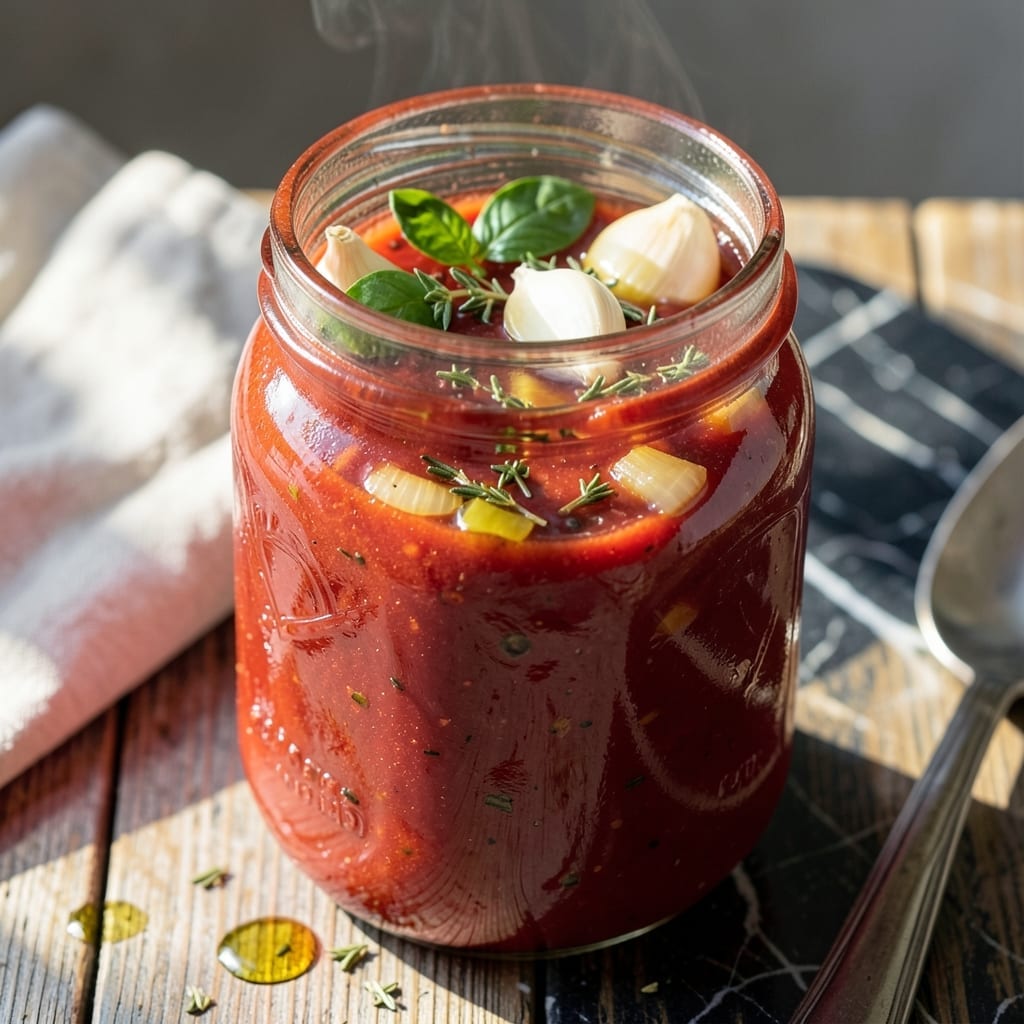
There’s nothing quite like the rich, robust flavor of homemade pasta sauce preserved at the peak of tomato season. This recipe transforms fresh tomatoes into a shelf-stable sauce that captures summer’s essence in every jar.
With simple ingredients and proper canning techniques, you’ll create a versatile sauce that’s ready for pasta, pizza, or stews whenever you need it. The process ensures both safety and deliciousness for months to come.
Ingredients for Homemade Pasta Sauce Recipe for Canning
Ten ingredients capture summer in every jar of this rich, shelf-stable sauce.
| Ingredient | Amount | Notes |
|---|---|---|
| Roma Tomatoes 🍅 | 20 lb | Fresh, ripe, cored and quartered |
| Yellow Onions 🧅 | 3 whole | Peeled and finely diced |
| Garlic Cloves 🧄 | 12 cloves | Peeled and minced |
| Extra-Virgin Olive Oil 🫒 | ½ cup | For sautéing aromatics |
| Fresh Basil Leaves 🌿 | 1 cup | Loosely packed, chopped |
| Fresh Oregano Sprigs 🍃 | ½ cup | Leaves stripped and chopped |
| Canning Salt 🧂 | 2 tbsp | Non-iodized for preservation |
| Black Pepper 🌶️ | 1 tbsp | Freshly ground preferred |
| Red Wine Vinegar 🍷 | ½ cup | For acidity balance and preservation |
| Brown Sugar 🍚 | ¼ cup | Optional, to balance acidity |
[recipe_ingredient_scaler]
The tomatoes are everything here. Roma tomatoes are ideal for their low water content and meaty texture—source from local farmers markets at peak season for the best flavor. Look for fruit that’s heavy for its size with vibrant red color and no bruises. If you’re growing your own, pick them slightly underripe for better acidity in the final sauce. Organic produce is preferred to avoid pesticides in your preserved sauce.
No fresh oregano? Dried oregano at one-third the amount works fine, though fresh adds brighter notes. Short on basil? Substitute with fresh parsley or a pinch of dried basil. The vinegar is non-negotiable for safety—apple cider vinegar can replace red wine in a pinch. For a sweeter sauce, increase the brown sugar slightly, but don’t skip the salt—it’s essential for flavor and preservation.
Processed sauce can be stored in a cool, dark place for up to 12-18 months. Once opened, refrigerate and use within 5 days. For best quality, use sterilized jars and follow tested canning procedures to prevent spoilage.
Why You’ll Love This Recipe
- One Pot Wonder: I toss in the Roma tomatoes, onions, and garlic, then let them simmer while I prep the canning jars—no extra pans to wash.
- Sunshine in a Jar: Honestly, the fresh basil and olive oil make it taste like summer, even in the middle of winter.
- Pantry Staple: I can it in batches and have dinner ready in minutes—just heat and pour over pasta or use in lasagna.
- Budget Friendly: Roma tomatoes are cheap in season, so I stock up and fill my pantry with this rich, homemade sauce for pennies per serving.
Step-by-Step Instructions for Homemade Pasta Sauce for Canning
Master this preservation method to capture peak flavor and extend shelf life safely.
Step 1: Prepare and Cook the Tomato Base
Begin by processing the 20 lb Roma Tomatoes through a food mill to remove skins and seeds, yielding a smooth puree. Transfer this to a large, heavy-bottomed stockpot. The puree should be thick but pourable—this consistency ensures proper reduction.
Bring the puree to a gentle boil over medium-high heat, then reduce to medium. Cook uncovered for 30-45 minutes, stirring occasionally with a wooden spoon to prevent scorching. You’ll notice the color deepen and the volume reduce by about one-third as excess moisture evaporates.
Step 2: Sauté Aromatics for Depth of Flavor
While the tomatoes cook, heat the 0.5 cup Extra-Virgin Olive Oil in a large skillet over medium heat. Add the 3 whole Yellow Onions and sauté for 8-10 minutes until translucent and just beginning to caramelize at the edges.
Add the 12 cloves Garlic Cloves and cook for an additional 2-3 minutes until fragrant but not browned. Browning garlic can impart bitterness, so monitor closely. Transfer the onion-garlic mixture to the stockpot with the tomatoes, stirring to combine thoroughly.
Step 3: Incorporate Herbs and Seasonings
Stir in the 1 cup Fresh Basil Leaves and 0.5 cup Fresh Oregano Sprigs, ensuring they are fully submerged in the sauce. These herbs infuse best when added early in the cooking process, allowing their essential oils to meld with the tomatoes.
Add the 2 tbsp Canning Salt, 1 tbsp Black Pepper, 0.5 cup Red Wine Vinegar, and 0.25 cup Brown Sugar. The vinegar and sugar balance the acidity and sweetness, respectively, while the salt and pepper provide foundational seasoning. Simmer for another 20-25 minutes to let the flavors marry.
Step 4: Achieve the Ideal Consistency and Sterilize
Continue simmering the sauce, stirring every 10-15 minutes, until it thickens enough to coat the back of a spoon. This typically takes 1-1.5 hours total, depending on your pot size and heat level. The sauce should reduce by nearly half its original volume.
Once thickened, remove from heat. For canning safety, ensure the sauce reaches 180°F throughout before jar filling. Use a clean spoon to taste and adjust seasoning if needed, though the flavors will intensify slightly as it cools.
Step 5: Can Using a Water Bath Method
Ladle the hot sauce into sterilized jars, leaving ½-inch headspace. Remove air bubbles by gently tapping the jars, then wipe the rims clean. Seal with lids and process in a boiling water bath for 35-40 minutes for pints or 40-45 minutes for quarts, adjusting for altitude if necessary.
After processing, let the jars cool undisturbed for 12-24 hours. Check seals, then store in a cool, dark place. The sauce will keep for up to 12 months, with flavors deepening over time. Always inspect jars for signs of spoilage before use.
Pro Tips For Making Homemade Pasta Sauce Recipe For Canning
- Simmer Low and Slow: Cook your sauce at a gentle simmer for at least 1-2 hours—rushing it with high heat leaves the tomatoes tasting raw. I learned this the hard way after my first batch tasted like canned soup.
- Blanch the Tomatoes: Plunge Roma tomatoes in boiling water for 30 seconds, then ice bath to peel them easily. Skipping this leaves bitter skins in your sauce.
- Salt in Layers: Season onions as they sweat, tomatoes as they break down, and finish with a final taste—this builds depth. My grandmother swore by this, and she was right.
- Add Basil Last: Stir in fresh basil leaves during the final 10 minutes of cooking to preserve their bright flavor. After burning three batches, I finally figured out adding it early turns it bitter.
Pro Cooking Tips for This Dish
💡 Master the Heat
Low and slow is the golden rule for homemade pasta sauce for canning. Simmer your sauce at 180–200°F to deepen flavors without scorching. Use a heavy-bottomed pot to prevent hot spots, and stir occasionally to ensure even cooking. This gentle heat helps break down tomatoes naturally while preserving their fresh taste.
✨ Balance the Acidity
For safe canning, your sauce must have a pH of 4.6 or lower. Add bottled lemon juice or citric acid (1 tbsp per quart) to guarantee acidity. Taste as you go—if it’s too sharp, a pinch of sugar can mellow it out. This step ensures both safety and a vibrant, well-rounded flavor.
🎯 Texture Tips
For a smooth sauce, blend tomatoes before cooking or use an immersion blender halfway through. If you prefer chunky sauce, simmer longer (up to 2 hours) to soften tomato pieces. Remove skins beforehand for a silky finish, or leave them for rustic texture.
🌡️ Sterilize Jars Properly
Clean jars aren’t enough—sterilize them in boiling water for 10 minutes before filling. Keep jars hot until ready to use to prevent breakage. Fill with sauce while it’s hot, leaving ½-inch headspace for expansion during processing. This step is critical for long-term storage safety.
Nutrition Facts

Trained in classic French technique but raised on slow-cooked ribs and spicy rubs, she blends culinary skill with smoke and soul.
- Recipe for Boneless Pork Chops in Cast Iron Skillet: Sear and Baste to Juicy Perfection - October 3, 2026
- Recipe for Boneless Cross Rib Roast: Slow-Roasted Beef with Herb Crust - October 3, 2026
- Hamburgers in Sauce Recipe Crock Pot: Slow-Cooked Savory Delight - October 3, 2026