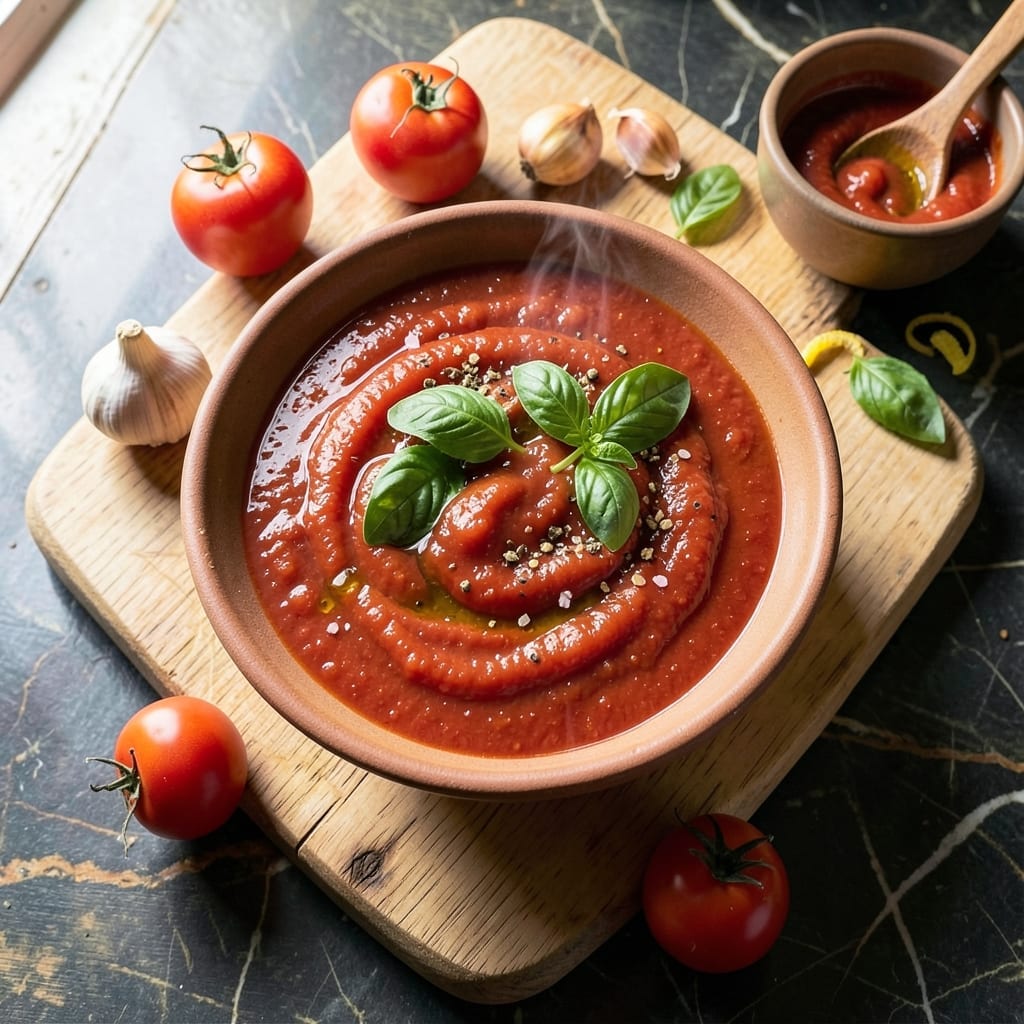
This authentic pizza sauce transforms fresh tomatoes into a bright, rustic blend that elevates any pie. The key is slow-simmering ripe tomatoes with garlic, herbs, and a touch of olive oil to develop deep, balanced flavors.
You’ll get a smooth, vibrant sauce that’s far superior to store-bought versions. It’s perfect for Neapolitan-style pizzas or as a dipping sauce for breadsticks.
Ingredients for Homemade Pizza Sauce Recipe Using Fresh Tomatoes
Nine simple ingredients transform into restaurant-quality sauce you’ll crave on everything.
| Ingredient | Amount | Notes |
|---|---|---|
| Fresh Roma Tomatoes 🍅 | 2 ½ lb | Ripe, cored and quartered |
| Extra-Virgin Olive Oil 🫒 | 3 tbsp | High quality, fruity |
| Garlic Cloves 🧄 | 4 cloves | Peeled and minced |
| Fresh Basil Leaves 🌿 | ½ cup | Packed, stems removed |
| Dried Oregano 🍃 | 1 tsp | Mediterranean variety preferred |
| Sea Salt 🧂 | 1 tsp | Fine grain for even distribution |
| Black Pepper 🌶️ | ½ tsp | Freshly ground |
| Red Pepper Flakes 🔥 | ¼ tsp | Adjust for heat preference |
| Tomato Paste 🍅 | 2 tbsp | For depth and thickness |
[recipe_ingredient_scaler]
The tomatoes are everything here. Hunt for Roma or San Marzano at peak ripeness—they’re meatier, less watery. Farmers markets in late summer are ideal, but Whole Foods or Trader Joe’s usually stock solid options year-round. Look for deep red color and a slight give when squeezed. Skip the pre-cut ones—they lose flavor fast.
No fresh basil? Dried basil at one-third the amount works in a pinch, but fresh really shines. Short on tomato paste? Double the simmer time to reduce natural juices instead. The olive oil should be something you’d drizzle on bread—California Olive Ranch or Colavita are great mid-range picks. Want more depth? Add a pinch of sugar to balance acidity.
Sauce keeps in the fridge for 5 days—the flavors actually improve overnight. For longer storage, freeze in ice cube trays (about 2 weeks), then transfer to a bag. Thaw only what you need. Always taste before using—you might need a final salt adjustment.
Why You’ll Love This Recipe
- No Cooking Required: I just simmer the Roma tomatoes with olive oil and garlic—no fancy techniques.
- Ridiculously Fresh: The basil and oregano make it taste like summer in a jar, honestly better than store-bought.
- Meal Prep Hero: I make a big batch on Sunday and it keeps in the fridge for pizza, pasta, or dipping all week.
- Budget Friendly: Roma tomatoes are cheap in season, and this costs pennies compared to jars of sauce.
Step-by-Step Instructions for Pizza Sauce Using Fresh Tomatoes
This method transforms ripe tomatoes into a bright, rustic sauce perfect for authentic pies.
Step 1: Blanch and Peel the Roma Tomatoes
Bring a large pot of water to a rolling boil. I always use my biggest pot to ensure there’s enough room for all 2.5 lb Fresh Roma Tomatoes at once. While the water heats, prepare an ice bath in a large bowl—this stops the cooking process immediately.
Score an X on the bottom of each tomato, then drop them into the boiling water for 30-60 seconds until the skin begins to split. Remove with a slotted spoon and plunge into the ice bath. The skin should slip off easily with your fingers. Core and quarter the peeled tomatoes.
Step 2: Sauté Aromatics in High-Quality Olive Oil
Heat 3 tbsp Extra-Virgin Olive Oil in a large saucepan over medium heat. Add the 4 cloves Garlic Cloves (peeled and minced) and cook for 30 seconds until fragrant but not browned. Garlic burns quickly, so keep it moving.
Stir in 2 tbsp Tomato Paste and cook for 2 minutes until it deepens in color. This step builds a rich foundation for the sauce. The paste will turn from bright red to a deeper brick color when it’s ready for the tomatoes.
Step 3: Simmer Tomatoes with Herbs and Spices
Add the blanched tomatoes to the saucepan, breaking them up with your hands or a wooden spoon as they cook. Stir in 1 tsp Dried Oregano, 1 tsp Sea Salt, 0.5 tsp Black Pepper, and 0.25 tsp Red Pepper Flakes. The red pepper adds just a hint of heat without overpowering.
Bring the mixture to a boil, then reduce heat to low. Let it simmer uncovered for 45-60 minutes, stirring occasionally, until the sauce thickens and reduces by about half. You’ll know it’s ready when it coats the back of a spoon and has a rich, concentrated tomato flavor.
Step 4: Finish with Fresh Basil and Adjust Seasoning
Remove the sauce from heat and stir in 0.5 cup Fresh Basil Leaves (packed, stems removed). The basil should be added at the end to preserve its bright, fresh flavor. Taste and adjust seasoning if needed—sometimes a pinch more salt brings out the best in the tomatoes.
Let the sauce cool to room temperature. It will continue to thicken slightly as it cools. For a smoother texture, you can blend it briefly with an immersion blender, but I prefer the rustic, chunky texture for pizza. This sauce keeps in the refrigerator for up to 5 days or can be frozen for 3 months.
Pro Tips For Making Homemade Pizza Sauce Recipe Using Fresh Tomatoes
- Seed the Tomatoes: I learned this the hard way—skip the watery tomato guts by scooping out seeds and excess juice before cooking, or your sauce will be thin and bland.
- Bloom the Garlic: Cook minced garlic in olive oil for exactly 30-45 seconds until fragrant but not brown, or you’ll end up with bitter sauce that overpowers the basil.
- Simmer Low and Slow: After burning my first batch, I now keep the heat at a gentle simmer for 20-25 minutes to concentrate the flavors without scorching the tomatoes.
- Add Basil Late: Fresh basil loses its punch if cooked too long—stir it in at the very end, just before pulling the sauce off the heat.
Troubleshooting Great homemade pizza sauce recipe using fresh tomatoes
🔥 Too Watery?
Fresh tomatoes contain a lot of moisture, which can make your sauce runny. This often happens if you skip the straining step or don’t cook it long enough.
Quick Fix: Simmer the sauce uncovered for an extra 10-15 minutes to evaporate excess liquid. For a faster fix, add 1 tsp of tomato paste to thicken it up.
🍳 Too Acidic or Bitter?
Some tomato varieties can be overly tart, especially if they’re underripe. This can result in a sharp or bitter taste in your sauce.
Quick Fix: Balance the acidity with a pinch of sugar or a splash of cream. Alternatively, add a grated carrot while cooking—it naturally sweetens the sauce.
👨🍳 Lacks Flavor?
If your sauce tastes bland, it might need more seasoning or a longer cooking time to develop depth. Fresh tomatoes can sometimes be mild in flavor.
Quick Fix: Enhance it with minced garlic, a dash of red pepper flakes, or fresh basil. Let it simmer for at least 20 minutes to meld the flavors.
⏰ Sauce Separates in the Jar?
Separation can occur if the sauce isn’t emulsified properly or if it’s stored for too long. This is common with homemade sauces that lack stabilizers.
Quick Fix: Stir vigorously before using, or blend it briefly to reincorporate the liquids. For storage, keep it in an airtight container and refrigerate for up to 5 days.
Nutrition Facts

Trained in classic French technique but raised on slow-cooked ribs and spicy rubs, she blends culinary skill with smoke and soul.
- Recipe for Boneless Pork Chops in Cast Iron Skillet: Sear and Baste to Juicy Perfection - October 3, 2026
- Recipe for Boneless Cross Rib Roast: Slow-Roasted Beef with Herb Crust - October 3, 2026
- Hamburgers in Sauce Recipe Crock Pot: Slow-Cooked Savory Delight - October 3, 2026