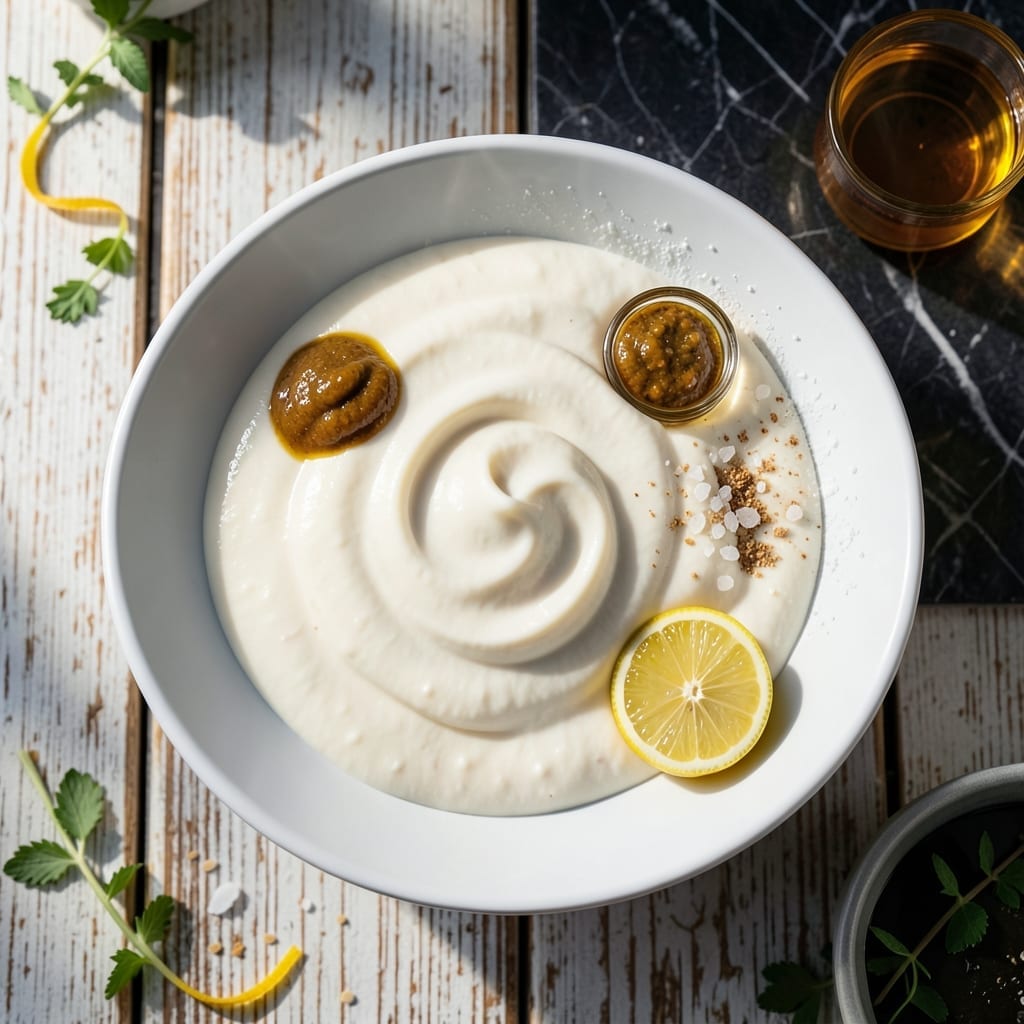
This plant-based mayonnaise delivers the same silky texture and rich flavor as traditional versions, without a drop of oil. I developed this method using aquafaba as the emulsifying base, which creates a stable, creamy sauce.
The process is straightforward and reliable, producing a vegan condiment perfect for sandwiches, dips, or dressings. It keeps well in the fridge for up to a week, maintaining its smooth consistency.
Ingredients for Vegan Mayo Recipe No Oil
Eight simple ingredients transform into a creamy, oil-free vegan condiment with perfect emulsion.
| Ingredient | Amount | Notes |
|---|---|---|
| Aquafaba 🥫 | ½ cup | From canned chickpeas, unsalted |
| Dijon Mustard 🟡 | 1 tbsp | Smooth, not whole grain |
| Apple Cider Vinegar 🍏 | 1 tbsp | Or white vinegar for tang |
| Lemon Juice 🍋 | 1 tbsp | Freshly squeezed preferred |
| Garlic Powder 🧄 | ½ tsp | Not garlic salt |
| Sea Salt 🧂 | ½ tsp | Fine grain for even distribution |
| White Sugar 🍚 | ½ tsp | Optional, balances acidity |
| Onion Powder 🧅 | ¼ tsp | For depth of flavor |
[recipe_ingredient_scaler]
Aquafaba quality is critical for stability. Use liquid from unsalted canned chickpeas—brined versions can make your mayo taste metallic. Goya or Eden Organic brands work consistently well. The mustard acts as your primary emulsifier, so don’t substitute yellow mustard here. Maille or Grey Poupon Dijon have the right consistency and acidity balance for proper binding.
No aquafaba on hand? Cooked chickpea water works in a pinch (reduce it by half for concentration). Out of Dijon? Whole grain mustard at half the quantity plus a pinch of turmeric for color. The vinegar can be swapped for rice vinegar, but avoid balsamic—it’s too sweet. Fresh lemon juice is non-negotiable for that classic mayo brightness.
This keeps beautifully in an airtight container for about 1 week. Surface may separate slightly—just whisk before using. For longer storage, freeze in ice cube trays, then transfer to a bag. Thaw overnight in the fridge. Always use clean, dry utensils to prevent spoilage.
Why You’ll Love This Recipe
- Blender Magic: I just dump the aquafaba, mustard, and vinegar in and let the blender do the work—no whisking, no fuss.
- Tangy Kick: The lemon juice and a hint of garlic powder give it that bright, zesty flavor I crave in every sandwich.
- Spreads Everywhere: Honestly, it’s my go-to for wraps, salads, and even as a dip for roasted veggies.
- Pantry Staples: Between us, I always have aquafaba and mustard on hand, so this costs me next to nothing to make.
Step-by-Step Instructions for Vegan Mayo
Master this emulsification technique and you’ll create a rich, creamy spread without a drop of oil.
Step 1: Whip the Aquafaba to Stiff Peaks
In a medium bowl, combine the 0.5 cup Aquafaba with the 1 tbsp Apple Cider Vinegar and 1 tbsp Lemon Juice. Using a hand mixer or stand mixer fitted with the whisk attachment, beat on high speed for 3-5 minutes until the mixture forms stiff peaks.
You’ll know it’s ready when the whisk leaves distinct, sharp peaks that hold their shape. This step is crucial—under-whipped aquafaba won’t create a stable emulsion. I recommend chilling your bowl and whisk attachment beforehand for optimal volume.
Step 2: Incorporate Seasonings and Stabilizers
With the mixer running on medium speed, gradually add the 1 tbsp Dijon Mustard, 0.5 tsp Sea Salt, 0.5 tsp White Sugar, 0.5 tsp Garlic Powder, and 0.25 tsp Onion Powder. Mix for an additional 30-45 seconds until fully combined.
The mustard acts as an emulsifier, while the seasonings provide depth of flavor. The sugar balances the acidity from the vinegar and lemon juice, creating a well-rounded taste. Watch for the mixture to thicken slightly as the ingredients incorporate.
Step 3: Achieve the Perfect Emulsion
Continue mixing on high speed for another 2-3 minutes, scraping down the sides of the bowl as needed. The mixture will begin to lighten in color and develop a creamy, mayonnaise-like texture.
You’re looking for a smooth, glossy appearance with enough body to hold its shape when the whisk is lifted. If the mixture appears too thin, continue mixing—aquafaba can sometimes take longer to reach full volume depending on humidity and temperature.
Step 4: Test and Adjust Consistency
Stop the mixer and test the texture. The finished product should be thick enough to spread easily but still pourable. If it’s too thick, thin it with 1 teaspoon of water at a time, mixing well after each addition.
If it’s too thin, return to mixing on high speed for another 1-2 minutes. The emulsion should cling to a spoon and have a rich, creamy mouthfeel. This step ensures your creation matches commercial mayonnaise in texture.
Step 5: Chill Before Serving
Transfer the vegan mayo to an airtight container and refrigerate for at least 30 minutes before using. This chilling time allows the flavors to meld and the texture to set fully.
Store in the refrigerator for up to 5 days. The flavor will deepen slightly as it rests. Use it as you would traditional mayonnaise—on sandwiches, in dressings, or as a base for dips. The finished product should have a neutral color with a subtle sheen, and a balanced flavor with just a hint of tang.
Pro Tips For Making Vegan Mayo Recipe No Oil
- Chill the Aquafaba: I learned this the hard way—using room-temperature aquafaba makes the mayo thin and runny. Pop the can in the fridge for 30 minutes before starting.
- Blend Before Adding Acid: Start with just aquafaba and mustard, blend until thick, then slowly add vinegar and lemon. Dumping it all in at once breaks the emulsion.
- Skip the Cold Garlic: Garlic powder dissolves better than fresh, but if you use fresh, mince it fine and let it sit in the lemon juice for 5 minutes to mellow the bite.
- Add Acid Slowly: After burning three batches, I finally figured out that drizzling the vinegar and lemon in a thin stream keeps the mayo from separating.
Creative Variations of This Dish
🔥 Spicy Texas Style
Kick your vegan mayo up a notch with a Tex-Mex twist! Blend in 1 tablespoon of chipotle peppers in adobo sauce and 1 teaspoon of smoked paprika for a bold, smoky heat. Add 1 clove of roasted garlic and 1 teaspoon of lime juice to balance the flavors. This fiery version is perfect for burgers, tacos, or as a zesty dip for fries. For extra texture, stir in 1 tablespoon of finely chopped pickled jalapeños after blending.
🍯 Sweet and Savory Fusion
Combine the creamy richness of vegan mayo with a touch of sweetness. Mix in 1 tablespoon of maple syrup and 1 teaspoon of Dijon mustard for a harmonious blend of flavors. A pinch of ground cinnamon and 1/4 teaspoon of vanilla extract adds depth, making it ideal for sandwiches with fruit or as a glaze for roasted veggies. For a nutty twist, add 1 teaspoon of tahini.
💪 Healthy Lighter Version
Cut calories without sacrificing creaminess by swapping in 1/2 cup of low-fat coconut yogurt for part of the aquafaba. Boost the nutrition with 1 tablespoon of nutritional yeast for a cheesy, umami flavor and a B-vitamin punch. Add 1 teaspoon of apple cider vinegar to enhance tanginess. This lighter version is great for dressings or as a topping for baked potatoes.
🍂 Seasonal Twist
Embrace fall flavors by blending in 1 tablespoon of pumpkin puree and 1/2 teaspoon of pumpkin pie spice. A dash of maple syrup and 1 teaspoon of orange zest brightens the mix, creating a mayo perfect for holiday sandwiches or as a dip for roasted squash. For a spring variation, try 1 tablespoon of fresh dill and 1 teaspoon of lemon zest instead.
Nutrition Facts

Trained in classic French technique but raised on slow-cooked ribs and spicy rubs, she blends culinary skill with smoke and soul.
- Recipe for Boneless Pork Chops in Cast Iron Skillet: Sear and Baste to Juicy Perfection - October 3, 2026
- Recipe for Boneless Cross Rib Roast: Slow-Roasted Beef with Herb Crust - October 3, 2026
- Hamburgers in Sauce Recipe Crock Pot: Slow-Cooked Savory Delight - October 3, 2026