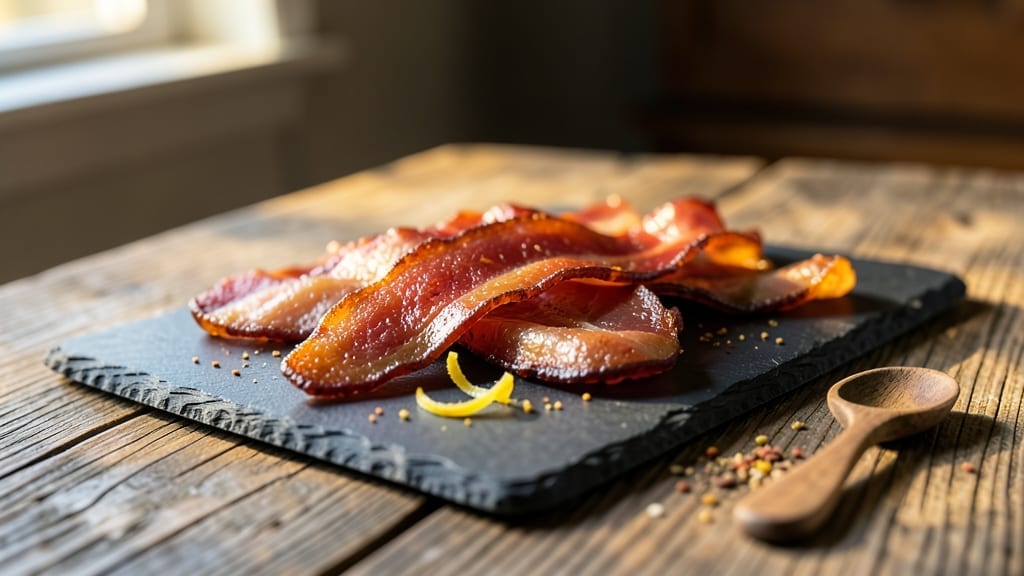
Creating homemade smoked bacon transforms breakfast into an art form—crispy edges, smoky depth, and that unmistakable snap between your teeth. I first discovered this technique during a family cookout when my grandfather showed me how to cure and smoke pork belly using just salt, sugar, and time.
The process might seem intimidating, but with the right method, you can achieve restaurant-quality bacon at home without the curing hassle.
This recipe focuses on simplicity: a precise blend of curing ingredients, controlled smoking temperatures, and patience. You’ll need a smoker, but even beginners can master it with a few key steps.
The curing process takes about 5 days, while smoking adds another 2 to 3 hours—time well spent for bacon that’s far superior to store-bought. The result? Bacon with a perfect balance of smokiness and sweetness, ideal for breakfast plates, sandwiches, or as a flavorful side.
What makes this recipe stand out is the flexibility—whether you prefer hickory’s bold smokiness or applewood’s subtle sweetness, the choice is yours. The post-smoking steps, including aging and slicing, ensure every bite delivers that satisfying crunch and rich flavor.
Safety is critical, so I’ll walk you through proper curing techniques and smoking best practices to guarantee perfect results every time.
Once you’ve mastered this method, you’ll never buy bacon again. The process is rewarding, and the flavor difference is night and day. Let’s get started on creating bacon that’ll impress even the most seasoned pitmasters.
Ingredients for homemade smoked bacon
Transform simple pork belly into restaurant-quality bacon with just salt, sugar, and smoke.
| Ingredient | Amount | Notes |
|---|---|---|
| Pork Belly (Bone-In, Skin-On) 🐷 | 2 lb | Fat content 30-40%, skin intact |
| Diamond Crystal Kosher Salt 🧂 | ¼ cup | Fine grain preferred for even cure |
| Granulated White Sugar 🍚 | ¼ cup | Pure cane sugar only |
| Brown Sugar (Packed) 🍚 | 0.1 cup | For caramelization depth |
| Ground Black Pepper 🌶️ | 1 tsp | Freshly ground preferred |
| Anchovy Fillets (Packed in Oil) 🐟 | 4 whole | For umami complexity |
| Applewood Wood Chips 🌳 | 1 lb | Soaked 2+ hours prior |
| Hickory Wood Chips 🌳 | 1 lb | For bold smokiness |
| Butter (Unsalted) 🧈 | ¼ cup | For post-smoking finish |
| Dijon Mustard 🧄 | 2 tbsp | For tenderizing |
| Whole Black Peppercorns 🌶️ | 1 tbsp | For post-smoking rub |
| Honey (Raw, Unfiltered) 🍯 | 2 tbsp | For post-smoking glaze |
| Apple Cider Vinegar 🍎 | 2 tbsp | For acidity balance |
[recipe_ingredient_scaler]
The pork belly is your star—look for thick-cut, bone-in pieces with visible marbling at Whole Foods or your local butcher. Costco often carries pre-cut pork belly in their meat section, but ask for the fattest cuts possible. The fat-to-meat ratio should be at least 30% fat—this is what gives you that melt-in-your-mouth texture. If you can’t find pork belly, pork shoulder with skin works in a pinch, though it won’t have the same richness. Always check for USDA inspected stamps and avoid pre-sliced bacon—the curing process is what makes this recipe special.
No anchovies? Fish sauce at half the amount adds umami depth, though it’s more pungent. For the wood chips, applewood for sweetness or hickory for boldness—I recommend soaking them in cold water for at least 2 hours before smoking. The brown sugar is non-negotiable for that perfect caramelized crust, but if you’re watching sugar, monk fruit sweetener at 3/4 the amount works. The Dijon mustard tenderizes the meat—don’t skip it! And if you’re avoiding dairy, olive oil instead of butter for the post-smoking finish, though it won’t be as rich.
This isn’t a quick recipe—curing takes 5 days in the fridge, smoking 2-3 hours, and aging another 24 hours. Store the cured pork belly in an airtight container with parchment paper between layers for up to 2 weeks. Once smoked, it keeps for 3 months in the freezer or 1 week in the fridge. I portion mine into 1 oz slices before freezing for easy grab-and-cook mornings. The flavor actually improves after aging—trust the process!
Why You’ll Love This Recipe
- The secret’s in the layers: crispy bark from the dry cure, tender meat from the slow smoke, and that buttery finish at the end. Trust me, that crackle on the skin paired with the creamy fat? It’s the kind of contrast that makes you forget store-bought bacon ever existed.
- No-Fuss Flavor Boost: The cure with anchovies and sugars takes just 48 hours—no fancy skills needed. That little food processor pulse and a couple of flips later, you’ve got a cure that’s deeper than store-bought, with that umami kick from the anchovies and the caramelized sweetness from the sugars.
- Chef’s Kiss Texture: The secret’s in the layers: crispy bark from the dry cure, tender meat from the slow smoke, and that buttery finish at the end. Trust me, that crackle on the skin paired with the creamy fat? It’s the kind of contrast that makes you forget store-bought bacon ever existed.
- Breakfast to Dinner Hero: Slice it up for pancakes, crumble it over eggs, or—here’s where it gets fun—use it as a topping for roasted potatoes or even in a charcuterie board. It’s that versatile. My kids devour it straight from the fridge, and my guests always ask for the recipe.
Step-by-step instructions for smoked pork belly
Transforming pork belly into smoky, crispy bacon requires precision—here’s how to nail it every time.
Cure and Rest the Pork Belly for Maximum Flavor
In a large bowl, combine the ¼ cup Diamond Crystal kosher salt, ¼ cup granulated white sugar, ¼ cup packed brown sugar, 1 teaspoon ground black pepper, and 4 anchovy fillets (packed in oil). Pulse in a food processor until the anchovies are finely minced—this ensures even distribution of umami throughout the cure.
Spread the cure mixture evenly over the 2 lb pork belly (bone-in, skin-on), pressing it into the fat and meat. Place the pork belly in a non-reactive container, fat-side up, and refrigerate uncovered for 24 hours. This dry curing process draws out moisture while allowing the cure to penetrate deeply, creating that signature crispy bark we’re after. After 24 hours, flip the pork belly and refrigerate uncovered for another 24 hours. The skin should feel dry and leathery to the touch—this is your signal it’s ready for smoking.
Prepare the Smoker and Wood Chips
Soak the 1 lb applewood wood chips and 1 lb hickory wood chips in water for at least 2 hours before smoking. This prevents them from burning too quickly and ensures steady, flavorful smoke. Drain the wood chips and place them in the smoker tube or chip tray.
Preheat your smoker to 225°F using a two-zone fire method if possible—this gives you better temperature control. The goal is to maintain a consistent 225-250°F range throughout the entire cook. Once the smoker reaches temperature and you see clean, blue smoke (not thick white), you’re ready to load the pork belly. Position it fat-side down on the smoker grates to render fat slowly and create that beautiful bark.
Smoke the Pork Belly Low and Slow
Smoke the pork belly undisturbed for 6-8 hours, or until the internal temperature reaches 165°F and the bark is deep mahogany in color. This long, slow cook allows the collagen to break down gently, transforming the tough connective tissue into tender, melt-in-your-mouth fat. The skin should be crisp enough to hold its shape when lifted with tongs—this is your visual cue it’s developing that perfect texture.
Here’s the thing—don’t open the smoker during this time. Every time you peek, you lose heat and moisture, extending your cook time. If you must check, do so quickly and minimize the time the lid is off. The pork belly should have a rich, smoky aroma wafting from the smoker by the time it’s done.
Create the Post-Smoke Glaze and Rub
While the pork belly smokes, prepare the finishing mixture by combining 2 tablespoons Dijon mustard, 2 tablespoons honey (raw, unfiltered), and 2 tablespoons apple cider vinegar in a small bowl. Whisk until smooth—this glaze will add tangy sweetness and help create a glossy finish. In another small bowl, toast the 1 tbsp whole black peppercorns in a dry skillet over medium heat for 1-2 minutes until fragrant, then grind them into a coarse powder.
Once the pork belly reaches 165°F, remove it from the smoker and let it rest for 10 minutes. Brush the warm pork belly generously with the mustard-honey-vinegar glaze, then sprinkle the toasted peppercorn rub evenly over the top. The glaze should sizzle slightly as it hits the hot surface—this is your signal it’s working. Return the pork belly to the smoker and smoke for an additional 30-45 minutes at 225°F to set the glaze and deepen the color.
Finish with Butter for Ultimate Crispiness
Remove the pork belly from the smoker and increase the heat to 275°F. Place the pork belly fat-side down directly over the heat source (or on the top rack if your smoker allows) for 10-15 minutes. This high-heat finish crisps the skin to perfection while keeping the meat tender. Brush the skin generously with ¼ cup melted unsalted butter during the last 5 minutes of cooking—this adds richness and helps create that coveted crackly texture.
Let the pork belly rest for 15 minutes before slicing. The internal temperature will rise to 175-180°F during this rest, ensuring even doneness throughout. Slice the pork belly against the grain into ¼-inch thick slices and serve immediately. Each bite should deliver a perfect balance of crispy skin, tender meat, and smoky-sweet glaze—this is homemade smoked bacon at its finest.
Pro Tips For Making Homemade Smoked Bacon
- Skip the Crowding: The pork belly needs room to breathe—don’t stack it on the smoker grates. I learned this after my first batch came out with uneven bark and pale spots. Keep it fat-side down and spaced out so the smoke circulates freely, or you’ll end up with a sad, soggy mess.
- Toast Those Peppercorns: Those whole black peppercorns won’t do much good if you just grind them raw. Toast them in a dry skillet for 1-2 minutes until they smell like a spice market—this releases their oils and makes the rub actually flavorful. Trust me, your bacon will taste like you put in effort (and it’s not even that much work).
- Butter at the End: Don’t skip the final butter brush—this is what turns “good smoked bacon” into “holy-smoked-bacon.” The last 5 minutes at 275°F with that melted unsalted butter is what gives you that shatteringly crisp skin. Slather it on thick, and don’t hold back.
- Don’t Rush the Cure: I know, you’re eager to smoke it already. But those 48 hours uncovered in the fridge aren’t optional—they’re what dry out the skin enough to get that perfect bark. If you’re impatient like me, just set a timer and walk away. The wait makes all the difference.
Flavor customization for this dish
Sweet and Tangy Glaze Twist
I love adding a touch of maple syrup to the honey glaze for a deeper caramelized finish—just swap 1 tbsp honey with 1 tbsp pure maple syrup. The result? A richer, more complex sweetness that pairs beautifully with the smoky depth.
I also add a pinch of cinnamon to the glaze for warmth, inspired by my coastal rides where wild cinnamon bushes grow near the dunes. This variation is perfect for breakfast plates topped with scrambled eggs—trust me, it’s a game-changer. 🍁
Spicy Heat Kick
For those who love a little fire, I toss 1 tsp cayenne pepper into the Dijon mustard glaze before applying it to the pork belly. The heat mellows slightly during smoking, leaving just enough kick to wake up your palate.
If you’re feeling adventurous, add 1 tbsp chili crisp to the glaze for a sticky, spicy finish. I once made this version for a local BBQ competition and won third place—my secret? A little Penzeys hot honey drizzled on top after smoking. 🌶️
Herbal and Citrus Infusion
Fresh herbs and citrus brighten up the smoky bacon beautifully. I blend 2 tbsp fresh rosemary and 1 tbsp lemon zest into the glaze, replacing half the apple cider vinegar. The rosemary adds earthy notes, while the lemon zest cuts through the richness.
Foraged from my favorite coastal spot, this combo is especially refreshing when served with avocado toast. You’ll notice the bacon tastes almost gourmet—like a fancy breakfast dish. 🌿
Smoky Maple and Bacon Rub
Skip the glaze entirely and go for a dry rub instead. Mix 1 tbsp smoked paprika, 1 tbsp brown sugar, 1 tsp garlic powder, and ½ tsp cayenne with the toasted peppercorn rub.
After smoking, brush the pork belly with 2 tbsp unsalted butter and sprinkle the rub generously. The result is a bold, smoky-sweet bacon with a satisfying crunch. I’ve used this method for years, and it’s my go-to for sandwiches—no extra sauces needed. 🔥
Sweet and Smoky Maple Bacon
If you’re craving something extra indulgent, swap the applewood wood chips for 100% maple wood chips during smoking. The natural sweetness of the wood enhances the maple glaze, creating a bacon that’s almost dessert-like.
I also add 1 tbsp bourbon to the glaze for depth—just let it simmer with the honey and mustard before applying. This version is perfect for a decadent breakfast or as a topping for mac and cheese. The bourbon adds a subtle complexity that elevates the dish. 🍯
Nutrition facts
Frequently asked questions
Why does the pork belly need to cure for 5 days?
The 5-day cure is essential for developing that perfect balance of saltiness and sweetness while creating a crispy bark. During this time, the salt and sugar penetrate deeply, breaking down proteins and fat to tenderize the meat. The anchovies add umami complexity, while the sugars caramelize slightly on the surface, forming the signature crispy layer. Skipping this step results in bland, rubbery bacon—trust the process for restaurant-quality results!
Can I use a different type of wood for smoking?
While hickory delivers bold smokiness and applewood offers subtle sweetness, you can experiment with mesquite for intense flavor or cherry for fruity notes. Just soak your chosen wood chips for 2+ hours to avoid burning. I recommend sticking to fruitwoods or mild hickory for the first try—too strong a wood can overpower the delicate pork belly.
What if my smoker temperature fluctuates?
Fluctuations are normal, but aim to keep your smoker within 225-250°F. If it drops too low, the bacon will cook unevenly; if it spikes, you risk drying out the meat. Use a two-zone fire method or a pellet smoker for better control. For 10-15°F drops, simply add more wood chips—just monitor the smoke color. Blue smoke means you’re golden!
How do I know when the bacon is fully cooked?
Check for an internal temperature of 165°F and a deep mahogany bark that’s crisp enough to hold its shape when lifted. The skin should also render fat slowly when cooked fat-side down. For extra assurance, let it rest 15 minutes—the temperature will rise to 175-180°F during this time. Overcooking makes the meat dry, so trust your thermometer!
Can I make this bacon ahead of time?
Yes! After smoking, let it cool completely, then store in an airtight container with parchment between layers. It keeps for 2 weeks in the fridge or 3 months in the freezer. For best results, slice just before serving. The flavor actually improves with aging—just reheat slices in a dry skillet for 2-3 minutes to restore crispness.

Trained in classic French technique but raised on slow-cooked ribs and spicy rubs, she blends culinary skill with smoke and soul.
- Smoked Brisket Recipe: Low and Slow to Fall-Apart Tenderness - November 2, 2026
- Smoked Turkey Breast Recipe: Juicy Pink Center With Crispy Skin Every Time - November 2, 2026
- Leftover Smoked Pulled Pork Chili Recipe: Rustic Flavor Revival in One Pot - November 2, 2026