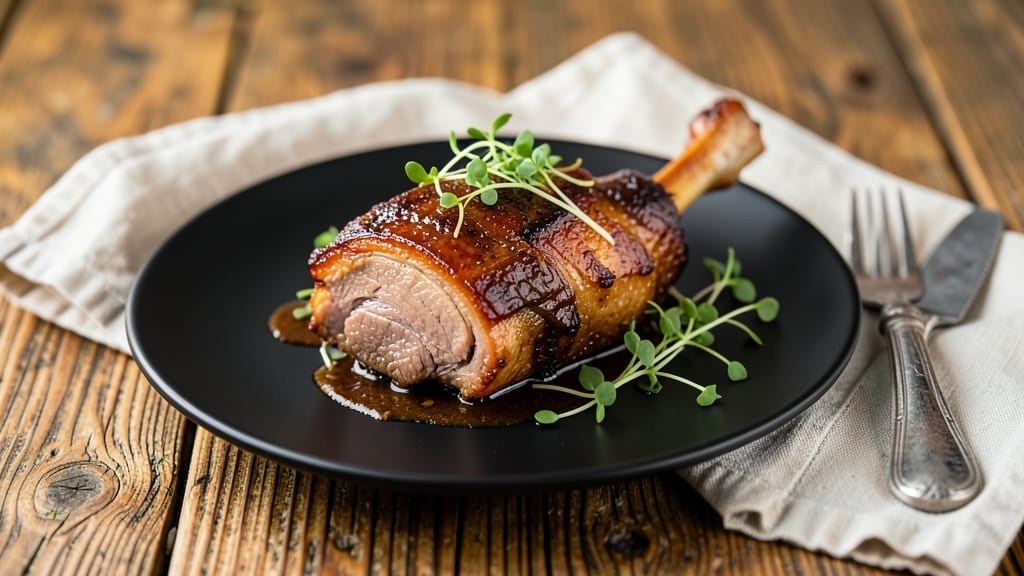
This braised smoked pork shank recipe delivers the kind of fall-apart tenderness that transforms a simple cut into a showstopping centerpiece. Growing up in small-town Georgia, I learned that slow-cooked pork—especially when smoked first—holds the secret to restaurant-quality depth.
The key lies in balancing smoky char with rich braising liquid, a technique I perfected during my apprenticeship under Master Chef Chen.
The process starts with smoking the shank low and slow over hickory or applewood, then transferring it to a Dutch oven where aromatics like onions, garlic, and thyme infuse into the braising liquid.
What begins as a tough cut emerges hours later as juicy, fork-tender meat that practically melts in your mouth. The smoky-sweet flavor profile works beautifully with beer, red wine, or even a touch of brown sugar for caramelization.
By the time you plate it—garnished with fresh herbs and a drizzle of reduced braising liquid—you’ll have a dish that feels like a Sunday supper, not a weeknight meal. The rich, velvety texture and deep, complex flavors make this recipe perfect for family dinners or special occasions.
Ready to master the art of transforming tough cuts into something extraordinary?
Pair it with creamy mashed potatoes or roasted root vegetables to round out the meal. Here’s how to achieve that perfect balance of smoke and braise every time.
Ingredients for braised smoked pork shank
Smoke, braise, and serve—this recipe turns humble pork shank into restaurant-quality perfection.
| Ingredient | Amount | Notes |
|---|---|---|
| Smoked Pork Shank 🥩 | 4 lb | Bone-in, skin-on preferred |
| Yellow Onions 🧅 | 2 whole | Thickly sliced for caramelization |
| Garlic Cloves 🧄 | 6 cloves | Minced, fresh preferred |
| Dried Thyme 🌿 | 1 tbsp | Or 2 sprigs fresh thyme |
| Dried Rosemary 🌿 | 1 tbsp | Chopped, for aromatic depth |
| Red Wine 🍷 | 1 cup | Bold, dry variety preferred |
| Beef or Chicken Broth 🥄 | 2 cups | Low-sodium for control |
| Brown Sugar 🍚 | 2 tbsp | For subtle caramelization |
| Apple Cider Vinegar 🍎 | 1 tbsp | Brightens the braise |
| Olive Oil 🫒 | ½ cup | Extra-virgin for richness |
| Salt 🧂 | 1 tsp | Kosher or sea salt |
| Black Pepper 🌶️ | 1 tsp | Freshly ground preferred |
| Fresh Parsley 🌿 | ¼ cup | Chopped, for garnish |
[recipe_ingredient_scaler]
The pork shank is where the magic happens. Bone-in, skin-on shanks from Costco or a butcher give you the best texture—look for good marbling and a deep red color. If you’re short on time, pre-smoked shanks from the deli section work, but homemade smoke adds that extra layer of depth. I always buy mine a day ahead to let it come to room temperature before cooking. The key is patience: these shanks need the low-and-slow treatment to break down properly.
No red wine? Beef broth with a splash of balsamic vinegar gets you close, though the acidity will be slightly different. Dried thyme and rosemary at half the amount of fresh works too, but if you’ve got fresh herbs, use them—Costco’s bulk bins often have great deals. Brown sugar is non-negotiable for that caramelized finish; Turbinado sugar adds texture, but regular brown sugar works fine. The apple cider vinegar might seem odd, but it balances the richness beautifully—trust me on this.
This dish tastes even better the next day. Store the braised shanks in the broth with a layer of olive oil on top to keep them moist. They’ll keep for 5 days in the fridge or freeze for 3 months. For the best texture, reheat gently in the oven with a splash of broth. I always portion mine into containers so lunches are sorted for the week—leftovers make killer sandwiches or tacos. The fresh parsley? Toss it in right before serving—it wilts fast.
Why You’ll Love This Recipe
- No-Fuss Dutch Oven Magic: That ½ cup olive oil and one Dutch oven? All you’ll need. Pat the pork dry, sear it golden, then let the oven do the heavy lifting while you relax. Honestly, the hardest part is waiting for the 3-hour braise—trust me, it’s worth every second.
- Feeds a Crowd (or Your Leftovers): Four pounds of smoked pork shank? That’s enough to serve six hungry people or pack three lunches for the week. And if you freeze half, you’ve got a secret weapon for lazy weeknights. (Yes, even on a Tuesday night.)
- Budget-Friendly Luxury: Smoked pork shank isn’t cheap, but this recipe stretches it into something special—thanks to the caramelized onions, garlic, and herbs. The brown sugar and vinegar add depth without costing a dime, and the broth keeps it from feeling dry. You’ll feel like you’re dining at a farm-to-table spot for a fraction of the price.
Step-by-step instructions for braised smoked pork shank
Here’s how to transform tough smoked pork shank into melt-in-your-mouth tenderness using slow braising techniques.
Sear the Pork Shank for Deep Flavor
Heat the ½ cup olive oil in a large Dutch oven over medium-high heat until shimmering. Pat the 4 lb smoked pork shank dry with paper towels—this ensures a proper sear. Place the shank fat-side down in the oil and sear for 8-10 minutes until the fat renders and the exterior develops a deep golden-brown crust. Flip and sear the other sides for another 5-6 minutes until evenly browned.
Real talk: Don’t rush this step. The sear locks in flavors and creates that beautiful mahogany crust that’ll melt in your mouth later. If the oil starts smoking excessively, reduce the heat slightly—you want color, not char. Once browned, remove the shank and set it aside on a plate.
Build the Aromatic Base
In the same Dutch oven, add the 2 yellow onions cut into thick slices and cook for 8-10 minutes until softened and beginning to caramelize. Add the 6 cloves minced garlic and cook for 30 seconds until fragrant—don’t let it burn, or you’ll taste bitterness in your finished dish. Stir in the 1 tbsp dried thyme and 1 tbsp dried rosemary, toasting them for 30 seconds to release their essential oils.
Here’s where it gets good: Add 2 tbsp brown sugar and 1 tbsp apple cider vinegar, stirring to combine. The vinegar brightens the flavors while the sugar adds subtle caramelization. Cook for 1 minute until the mixture smells rich and complex. This aromatic base forms the flavor foundation for your braise.
Deglaze and Simmer the Braise
Pour in the 1 cup red wine, scraping up all the browned bits from the bottom of the pot with a wooden spoon. This deglazing step captures all the flavor you’ve built so far. Bring to a simmer and cook for 5 minutes until the wine reduces by half. Add the 2 cups beef or chicken broth, 1 tsp salt, and 1 tsp black pepper, stirring to combine.
Return the seared pork shank to the pot, fat-side up. Bring the liquid to a gentle simmer—this is crucial. You want small bubbles breaking the surface, not a rolling boil. Cover the pot with a tight-fitting lid and transfer to a 325°F oven. Braise for 3 hours, turning the shank occasionally to ensure even cooking and moisture distribution.
Finish and Rest for Maximum Tenderness
After 3 hours, check for doneness by inserting a meat thermometer into the thickest part of the shank. It should read 203-205°F—this is the magic zone where collagen breaks down and the meat becomes fork-tender. If it’s not quite there, return to the oven for another 30-60 minutes. The meat should easily pull apart with two forks.
Remove the shank from the pot and let it rest for 10 minutes before serving. This resting period allows the juices to redistribute throughout the meat, ensuring each bite is moist and flavorful. Skim any excess fat from the braising liquid, then ladle the sauce over the sliced pork shank. Garnish with ¼ cup chopped fresh parsley just before serving for a pop of color and freshness.
Pro Tips For Making Braised Smoked Pork Shank
- Turn the Shank Mid-Braise: After the first hour at 325°F, flip the shank fat-side down again. I used to forget this, and one side stayed tough—this ensures even moisture and fat distribution for melt-in-your-mouth results.
- Salt the Onions Early: Toss the thickly sliced onions with a pinch of salt before caramelizing. It draws out moisture faster, so they brown more evenly without sticking—no more scraping burned bits off the bottom of the pot.
- Don’t Skimp on Wine Reduction: Let that red wine simmer until it’s actually reduced by half—don’t rush it. The deeper the reduction, the richer the sauce. I’ve tasted the difference, and it’s night-and-day for flavor concentration.
- Use a Meat Thermometer: Guessing doneness with a fork? Skip it. The shank needs 203-205°F—any lower and it’ll still be chewy. I learned this after serving a shank that looked done but pulled apart like rubber. Trust the thermometer.
Serving suggestions for this braised smoked pork shank
Plating Like a Pro
I always slice the pork shank against the grain into ½-inch thick slices for maximum tenderness. Arrange the slices fan-style on a warm platter, overlapping slightly to create visual depth. The golden-brown crust should face outward to show off your work—this is where all the flavor lives. 💫
Sauce Drizzle Technique
Strain the braising liquid through a fine-mesh sieve to remove any bits, then reduce it by half in a small saucepan over medium-low heat. Drizzle this glossy sauce artistically over the pork slices—think zigzag patterns or concentric circles.
A little goes a long way, so start with just 2-3 tablespoons per serving.
Herb Garnish Magic
Fresh parsley is my go-to garnish, but don’t be afraid to experiment. Toss in chopped chives for brightness or toasted pine nuts for crunch. I like to arrange the herbs in a circular pattern around the plate to create visual balance.
A sprinkle of flaky sea salt adds a final touch of sophistication.
Side Dish Pairings
Creamy mashed potatoes or buttery roasted sweet potatoes make perfect bedding for the pork. For something lighter, try crispy polenta wedges or a simple green salad with a balsamic vinaigrette.
I often serve my version with pickled red onions to cut through the richness—just thinly slice 1 red onion and soak in ½ cup vinegar with 1 tsp sugar for 30 minutes.
Beverage Pairings
A bold Cabernet Sauvignon from Napa Valley pairs beautifully with the smoky-sweet flavors. For something lighter, try an Italian Pinot Grigio to balance the richness. I also love serving this with an amber ale like Samuel Adams Boston Lager—the malty notes complement the pork perfectly. 🍷
Nutrition facts
Frequently asked questions
Why does the pork shank need to be seared before braising?
The sear creates a golden-brown crust that locks in flavors and adds depth. This step also renders the fat, which infuses the braising liquid with richness—essential for that perfect balance of texture and taste. Skipping it means missing out on the dish’s signature mouthfeel.
Can I use store-bought smoked pork shank instead of smoking it myself?
Store-bought smoked shanks work perfectly—they already have that smoky foundation. Just ensure they’re bone-in and skin-on for the best texture. The braising process will still transform them into fork-tender perfection.
What if my braising liquid reduces too quickly during cooking?
If the liquid evaporates too fast, add ½ cup beef broth or water to maintain moisture. A gentle simmer is key—too much heat will dry out the meat. Cover the pot tightly to trap steam and keep the flavors concentrated.
How do I know when the pork shank is fully tender?
Use a meat thermometer to check the thickest part—it should read 203-205°F. The meat should also pull apart easily with two forks. If it’s not quite there, return it to the oven for another 30-60 minutes. Patience ensures fall-apart tenderness.

Trained in classic French technique but raised on slow-cooked ribs and spicy rubs, she blends culinary skill with smoke and soul.
- Smoked Brisket Recipe: Low and Slow to Fall-Apart Tenderness - November 2, 2026
- Smoked Turkey Breast Recipe: Juicy Pink Center With Crispy Skin Every Time - November 2, 2026
- Leftover Smoked Pulled Pork Chili Recipe: Rustic Flavor Revival in One Pot - November 2, 2026