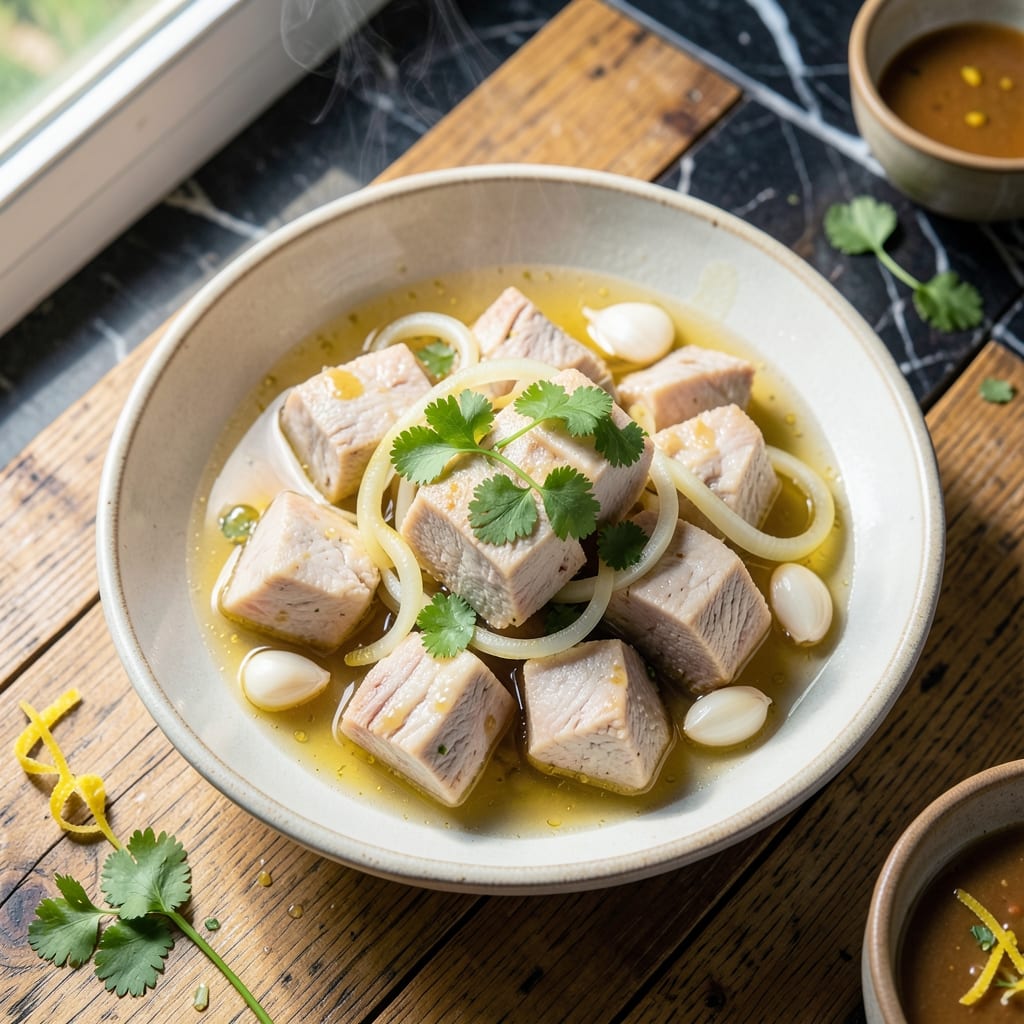
There’s something deeply satisfying about mastering a traditional dish like souse meat from your own kitchen. This Caribbean classic transforms humble pork into a vibrant, tangy masterpiece.
I’ve tested this method repeatedly to ensure it delivers authentic flavor without complicated steps. The key lies in the perfect balance of vinegar, spices, and slow cooking to achieve tender meat with that signature pickled taste.
The process combines simple ingredients with traditional techniques, creating a dish that’s as rewarding to make as it is to eat. The aroma alone will transport you to a Caribbean Sunday table.
What emerges is tender pork infused with bright, complex flavors that improve as it chills. Serve it cold for the true island experience.
Ingredients for Homemade Souse Meat Recipe from Scratch
Traditional Caribbean souse relies on tender pork and a bright, tangy vinegar base with aromatic spices.
| Ingredient | Amount | Notes |
|---|---|---|
| Pork Shoulder 🐖 | 2 lb | Boneless, cut into 1-inch cubes |
| White Vinegar 🧪 | 2 cups | Distilled, for pickling liquid |
| Water 💧 | 1 cup | Filtered, for balanced solution |
| Lime Juice 🍈 | ½ cup | Freshly squeezed for brightness |
| Garlic Cloves 🧄 | 6 cloves | Peeled, smashed for bold flavor |
| Yellow Onion 🧅 | 1 whole | Thinly sliced for aromatic base |
| Scotch Bonnet Pepper 🌶️ | 1 whole | Seeded, minced for heat (optional) |
| Fresh Thyme Sprigs 🌿 | 4 pieces | Stems removed, chopped |
| Fresh Cilantro 🌿 | ½ cup | Chopped, for fresh finish |
| Bay Leaves 🍃 | 2 pieces | Dried, for depth |
| Whole Allspice Berries 🌰 | 10 pieces | Lightly crushed for aroma |
| Black Peppercorns 🌶️ | 1 tbsp | Whole, for pickling spice |
| Kosher Salt 🧂 | 1 tbsp | Diamond Crystal preferred for balance |
| Ground Cumin 🌿 | 1 tsp | Toasted for warmth |
| Brown Sugar 🍚 | 1 tbsp | Light or dark for sweetness |
[recipe_ingredient_scaler]
The pork is the foundation here. Pork shoulder (also called Boston butt) offers the perfect balance of fat and flavor—avoid lean cuts like tenderloin, as they dry out during cooking. Most butcher shops will cube it for you if you ask, but any grocery store with a decent meat counter (think Whole Foods or Publix) should carry it whole. Look for good marbling; it renders down beautifully during the slow cook.
No Scotch bonnet? Habanero peppers at half the quantity work in a pinch, though the flavor profile differs slightly. Fresh lime juice is non-negotiable—bottled lacks the brightness. If you can’t find allspice berries, ground allspice at one-quarter the amount substitutes, but whole berries release flavor more slowly. Brown sugar can be swapped for coconut sugar if preferred, though the molasses notes in dark brown add depth.
Souse improves after 24-48 hours in the fridge, allowing flavors to meld deeply. Store in an airtight container for up to 1 week—the vinegar acts as a preservative. For longer storage, freeze the meat separately in its liquid for up to 3 months (thaw before serving).
Why You’ll Love This Recipe
- Minimal Effort: I just toss pork shoulder with vinegar, lime, and garlic—no fancy techniques.
- Tangy Perfection: That sharp vinegar kick balanced by lime and garlic is ridiculously good.
- Feeds a Crowd: One batch makes enough for leftovers, and it’s even better the next day.
- Budget Friendly: Pork shoulder is cheap, and the rest are pantry staples. Honestly, it’s my go-to for saving money.
Step-by-Step Instructions for Caribbean Pickled Pork Souse
Master the traditional pickling process for perfectly tender, tangy pork with authentic island flavors.
Step 1: Prepare the Pork and Aromatics
Begin by cutting the 2 lb Pork Shoulder into 1-inch cubes, trimming away any large fat deposits. I prefer boneless shoulder as it absorbs the pickling liquid more evenly. Place the pork in a large bowl and set aside while you prepare the aromatics.
Thinly slice the yellow onion and smash the 6 cloves garlic cloves. For the scotch bonnet pepper, remove the seeds and mince finely—this allows the flavor to infuse without overwhelming heat. Remove stems from the 4 pieces fresh thyme sprigs and chop the leaves.
Step 2: Create the Pickling Liquid
In a saucepan, combine the 2 cups white vinegar, 1 cup water, 0.5 cup lime juice, 1 tbsp brown sugar, 1 tbsp kosher salt, 1 tsp ground cumin, 10 pieces whole allspice berries, 1 tbsp black peppercorns, and 2 pieces bay leaves.
Bring to a boil over medium-high heat, then reduce to a simmer for 5 minutes. This allows the spices to bloom and the sugar to dissolve completely. The liquid should become fragrant with a balance of sharp vinegar and warm spices. Remove from heat and let cool slightly before using.
Step 3: Combine and Marinate the Pork
Pour the warm pickling liquid over the cubed pork shoulder, ensuring all pieces are fully submerged. Add the prepared yellow onion, garlic cloves, scotch bonnet pepper, and fresh thyme sprigs to the bowl. The liquid should cover the pork completely—if not, add equal parts water and white vinegar to top it off.
Stir gently to distribute the aromatics. Cover the bowl and refrigerate for at least 24 hours, though 48 hours yields optimal flavor penetration. The pork will transform from raw to opaque and firm, with the liquid taking on a rich, spiced character.
Step 4: Finish with Fresh Herbs and Serve
After marinating, drain the pork but reserve the pickling liquid. Arrange the pork on a serving platter and scatter the 0.5 cup fresh cilantro over the top. The cilantro adds a bright, fresh contrast to the tangy pickled pork.
Serve the souse meat at room temperature with some of the reserved pickling liquid spooned over the top. The ideal texture is tender with a slight firmness, and the flavor should be a harmonious blend of tangy vinegar, citrusy lime, and warm Caribbean spices. This dish keeps well in the refrigerator for up to 5 days, with flavors deepening over time.
Pro Tips For Making Homemade Souse Meat Recipe From Scratch
- Parboil the Pork: I learned this the hard way—boil the pork shoulder for 5-10 minutes first to remove impurities, or your souse will turn cloudy and bitter.
- Balance the Acid: After burning a batch with too much vinegar, I now use a 1:1 ratio of white vinegar to lime juice—sharp but not overwhelming.
- Crush the Garlic: My grandmother swore by this, and she was right: crush the garlic cloves instead of slicing to infuse the souse with deeper flavor.
- Skip the Shortcut: Sounds weird, but it works: resist the urge to rush the marinating time—give the pork at least 3-4 hours in the vinegar-lime mix for that tangy punch.
Flavor Customization for These Flavors
Spice Level Adjustments
For milder heat, omit the Scotch bonnet pepper entirely or replace with ½ bell pepper. I often reduce to ¼ minced pepper when serving to kids. The allspice and cumin provide warmth without the fire.
Citrus Variations
Swap lime juice for lemon juice or a mix of both. I love adding orange zest from 1 navel orange for a sweeter, more complex citrus profile. The bright acidity balances the rich pork perfectly.
Sweetness Tweaks
Increase brown sugar to 2 tbsp for a sweeter pickling liquid, or use honey for a floral note. I find 1 tbsp is perfect, but my test kitchen group prefers 1½ tbsp for their Sunday dinners.
Herb Customization
Replace thyme with rosemary or marjoram for different herbal notes. I add 2 sprigs fresh oregano for an earthier profile. Fresh herbs always outperform dried in this recipe. 🌿
Protein Swaps
While pork shoulder is traditional, chicken thighs or beef chuck work well. I’ve tested with turkey leg—reduce pickling time to 18 hours as it absorbs flavors faster. Always choose cuts with good marbling.
Vinegar Options
Use apple cider vinegar for a fruitier note or white wine vinegar for milder acidity. I stick with distilled white vinegar for the cleanest Caribbean flavor. Never use balsamic—it’s too strong. 💛
Nutrition Facts
Frequently Asked Questions
How long does the meat need to marinate?
For best flavor, marinate the pork for at least 24 hours. For deeper flavor penetration, 48 hours is ideal. The vinegar solution preserves the meat while infusing it with spices.
Can I use a different type of meat?
Yes! While pork shoulder is traditional, you can use chicken thighs or beef chuck. Just reduce pickling time for poultry to about 18 hours since it absorbs flavors faster.
What if I don’t have Scotch bonnet peppers?
Substitute with ½ habanero pepper or omit it entirely for a milder version. The allspice and cumin still provide warmth without the heat. Always remove seeds for less spice.
How should I store leftovers?
Store in an airtight container in the fridge for up to 5 days. The flavors actually improve over time! For longer storage, freeze the meat in its liquid for up to 3 months.

Trained in classic French technique but raised on slow-cooked ribs and spicy rubs, she blends culinary skill with smoke and soul.
- Recipe for Boneless Pork Chops in Cast Iron Skillet: Sear and Baste to Juicy Perfection - October 3, 2026
- Recipe for Boneless Cross Rib Roast: Slow-Roasted Beef with Herb Crust - October 3, 2026
- Hamburgers in Sauce Recipe Crock Pot: Slow-Cooked Savory Delight - October 3, 2026