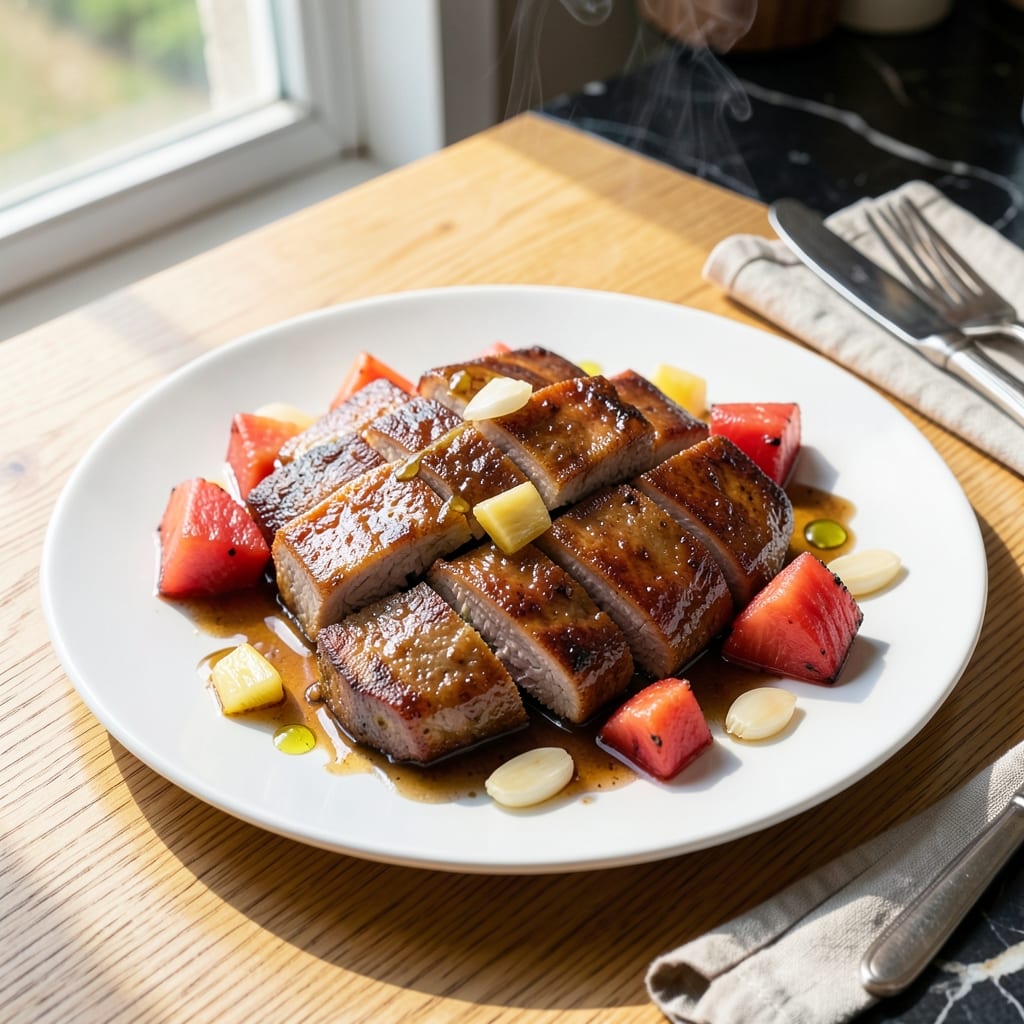
I developed this tocino recipe after years of testing to capture the authentic Filipino breakfast flavor. The curing process transforms ordinary pork into tender, sweet-savory perfection that rivals any store-bought version.
This homemade version uses simple ingredients you likely already have—pork shoulder, pineapple juice, soy sauce, and garlic. The marinade works its magic overnight, infusing every bite with deep, balanced sweetness and garlicky depth.
Cooking is straightforward: pan-fry the cured pork until caramelized and slightly crispy at the edges. The result is fast to prepare in the morning, yet delivers that signature sticky, savory-sweet profile.
Serve with garlic rice and a fried egg for the complete Filipino breakfast experience.
Ingredients for Homemade Tocino Recipe Filipino
A handful of pantry staples and a night in the fridge deliver authentic Filipino tocino flavor.
| Ingredient | Amount | Notes |
|---|---|---|
| Pork Shoulder 🥩 | 1 ½ lb | Cut into 1/4-inch thick slices |
| Pineapple Juice 🍍 | 1 cup | Unsweetened, canned or fresh |
| Soy Sauce 🫕 | ½ cup | Regular or light variety |
| Garlic Cloves 🧄 | 8 cloves | Peeled and minced |
| Brown Sugar 🧈 | ½ cup | Packed, light or dark |
| White Sugar 🧂 | ¼ cup | Granulated for balance |
| Apple Cider Vinegar 🍏 | 2 tbsp | For acidity and preservation |
| Bay Leaves 🌿 | 2 whole | Dried, for marinade |
| Black Peppercorns 🌶️ | 1 tsp | Lightly crushed |
| Salt 🧂 | 1 tsp | Kosher or sea salt preferred |
| Cooking Oil 🫒 | 2 tbsp | Neutral oil for frying |
| Water 💧 | ¼ cup | For marinade consistency |
[recipe_ingredient_scaler]
The pork shoulder is non-negotiable here. Look for well-marbled cuts at Whole Foods or an Asian market—fat equals flavor and tenderness. Avoid lean cuts like tenderloin; they’ll dry out. For the pineapple juice, Dole or Del Monte unsweetened are reliable. The soy sauce should be a quality Filipino brand like Silver Swan if you can find it, but any standard soy sauce works in a pinch.
No pork shoulder? Pork belly adds incredible richness but needs less curing time. Swap apple cider vinegar for calamansi juice (a Filipino citrus) if available. The brown sugar can be replaced with coconut sugar for depth. If you’re short on time, reduce the curing to 8 hours—still tasty, just less penetration. Fresh garlic is a must; jarred lacks the sharpness needed.
Marinate the pork in the fridge for up to 48 hours—the sweetness deepens with time. Cured meat keeps 1 week in the marinade or 3 months frozen. Once cooked, it’s best eaten fresh but leftovers reheat well in a pan with a splash of water.
Why You’ll Love This Recipe
- 5-Minute Marinade: Honestly, I just mix pork shoulder with pineapple juice, soy sauce, garlic, and brown sugar the night before—no chopping, no fuss.
- Sweet-Savory Magic: That caramelized brown sugar with the tang of pineapple juice? It’s the reason my kids ask for this every weekend.
- Breakfast to Dinner: I’ve served it with garlic rice at sunrise and stuffed it in pandesal for a midnight snack.
- Stretches the Budget: A pound of pork shoulder feeds my family of five, and leftovers taste even better the next day.
Step-by-Step Instructions for Sweet Garlic-Cured Pork
This method delivers authentic flavor with a professional technique that’s faster than traditional curing.
Step 1: Prepare the Pork and Make the Marinade
Begin by slicing the 1.5 lb pork shoulder into uniform ¼-inch thick pieces. Consistent thickness ensures even curing and cooking later. Set the meat aside while you build the marinade foundation.
In a large bowl, combine the 1 cup pineapple juice, ½ cup soy sauce, 8 cloves minced garlic, ½ cup brown sugar, and ¼ cup white sugar. The sugars should begin dissolving immediately when stirred. This sweet-savory base is what gives tocino its signature flavor profile.
Step 2: Complete the Marinade and Cure the Pork
Add the 2 tbsp apple cider vinegar, 2 whole bay leaves, 1 tsp lightly crushed black peppercorns, and 1 tsp salt to the bowl. Stir in the ¼ cup water to achieve a pourable consistency that will fully coat the pork slices.
Place the pork slices in a large resealable bag or container and pour the marinade over them. Massage the bag to ensure every piece is thoroughly coated. The pork should be completely submerged in the liquid. Refrigerate and cure for 12-24 hours, turning the bag occasionally to redistribute the marinade.
Step 3: Cook the Cured Pork
After curing, remove the pork from the marinade (reserve the liquid) and pat the slices dry with paper towels. This step prevents steaming and promotes better browning. Heat 2 tbsp cooking oil in a large skillet over medium heat until shimmering but not smoking.
Working in batches to avoid crowding, arrange the pork slices in a single layer. Cook for 4-5 minutes per side until the edges caramelize to a deep mahogany color and the internal temperature reaches 160°F. The sugars in the marinade will create a glossy, slightly sticky exterior.
Step 4: Finish with Marinade Reduction
Pour the reserved marinade into the same skillet and bring to a boil over medium-high heat. Reduce for 5-7 minutes until the liquid thickens to a syrupy consistency and coats the back of a spoon. This creates a concentrated glaze to finish the dish.
Return all the cooked pork to the skillet and toss to coat evenly in the reduced marinade. Cook for an additional 1-2 minutes to allow the flavors to meld. The final result should have a balanced sweet-savory taste with a beautiful caramelized exterior.
Pro Tips For Making Homemade Tocino Recipe Filipino
- Marinate Overnight: I learned this the hard way—giving the pork shoulder at least 12 hours in the pineapple juice, soy sauce, and brown sugar mix makes a real difference in flavor depth. Anything less and the sweet-savory taste just doesn’t penetrate.
- Slice Evenly: Cut the pork into ¼-inch thick strips before marinating. Sounds tedious, but it guarantees even cooking and better absorption of the garlic and brown sugar glaze.
- Simmer, Don’t Boil: After pan-frying, transfer the tocino to a simmer with the leftover marinade for 5-7 minutes. Boiling toughens the meat, but a gentle simmer keeps it tender and lets the sauce reduce into that sticky glaze.
- Use Fresh Garlic: Skip the pre-minced stuff—freshly crushed garlic cloves release more of their sweet, pungent flavor into the marinade. I was skeptical until I tried it, but the difference is noticeable.
Flavor Customization for This Recipe
Spice Level Adjustments
For heat lovers, add 1 tsp crushed red pepper flakes or 1-2 siling labuyo (Filipino bird’s eye chili) to the marinade. David, my official taste-tester, prefers this version. Start with half the amount if you’re heat-sensitive.
Extra Garlicky Version
Double the garlic to 16 cloves for a more pronounced bite. I learned this trick from a vendor at Austin farmers markets. The extra garlic won’t overpower—the pineapple juice balances it beautifully.
Coconut Sugar Swap
Replace ½ cup brown sugar with coconut sugar for a deeper, caramel-like flavor. It’s slightly less sweet but adds complexity. I source mine from Central Market—their bulk section has excellent quality. 💛
Citrus Variations
Swap apple cider vinegar for calamansi juice (if available) or 2 tbsp lemon juice for brightness. The acidity cuts through the richness while adding authentic Filipino flair.
Leaner Pork Option
Use pork loin instead of shoulder, but reduce curing time to 8-12 hours maximum. The leaner cut absorbs flavors faster but can dry out if over-cured. Slice slightly thicker (⅓ inch) to compensate.
Sweetness Control
Reduce both sugars by 25% if you prefer less sweetness. The pineapple juice still provides natural sweetness. I tested this version for Emma—she loves it with the milder profile.
Nutrition Facts
Frequently Asked Questions
Can I use chicken instead of pork?
Yes, chicken thighs work well. Reduce curing time to 4-6 hours and cook to 165°F. The flavors will be milder but still delicious.
Why does the recipe need pineapple juice?
It tenderizes the meat and adds natural sweetness. The acidity also balances the richness of the pork. Skip it and you’ll lose authentic flavor.
How do I know when it’s fully cooked?
Look for deep caramelization and 160°F internal temperature. The edges should be slightly crispy with a glossy glaze.
Can I make this ahead?
The cured pork keeps 1 week refrigerated or 3 months frozen. Cook from thawed for best results.

Trained in classic French technique but raised on slow-cooked ribs and spicy rubs, she blends culinary skill with smoke and soul.
- Recipe for Boneless Pork Chops in Cast Iron Skillet: Sear and Baste to Juicy Perfection - October 3, 2026
- Recipe for Boneless Cross Rib Roast: Slow-Roasted Beef with Herb Crust - October 3, 2026
- Hamburgers in Sauce Recipe Crock Pot: Slow-Cooked Savory Delight - October 3, 2026