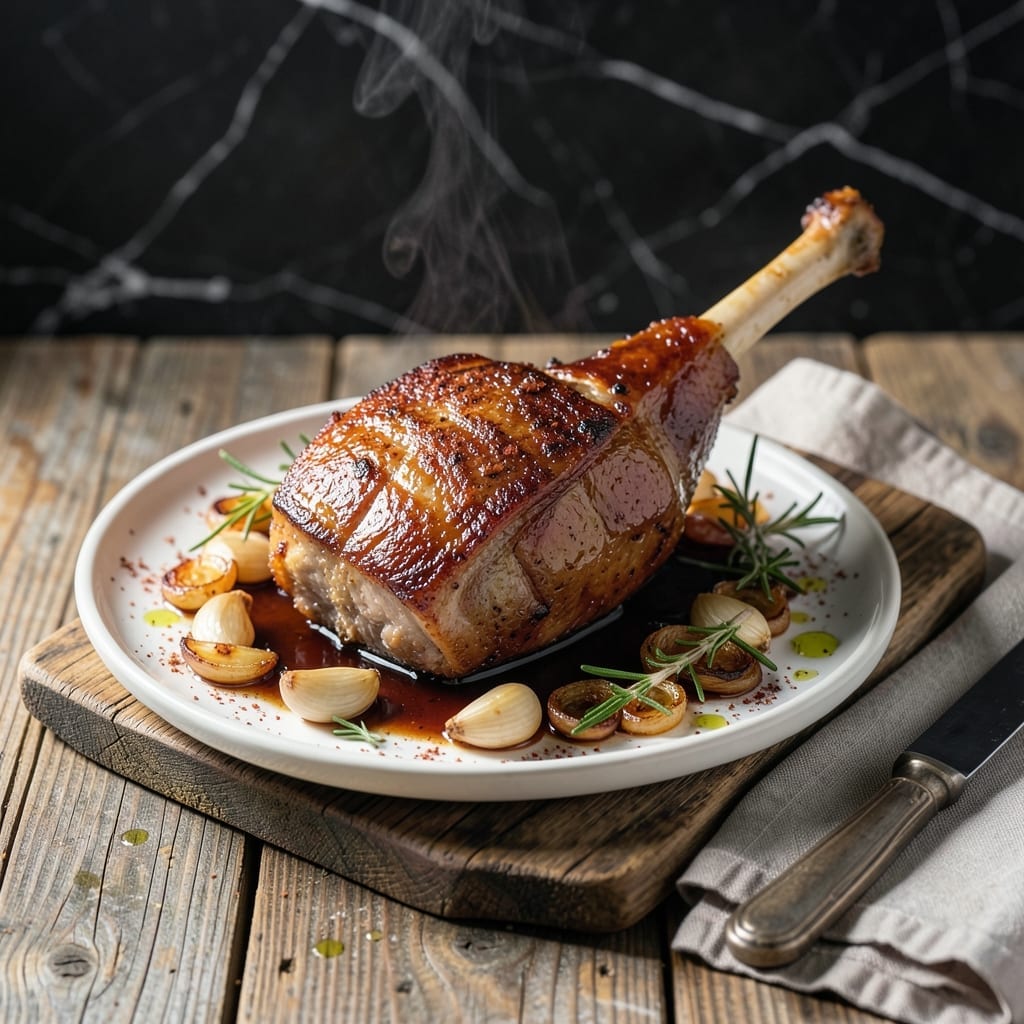
Fall-off-the-bone pork shank is the ultimate comfort food, and this oven method delivers restaurant-quality results at home. I perfected this technique after years of experimenting with different cooking methods.
The secret is low and slow—3 hours in the oven allows the collagen to break down completely, creating meat so tender it nearly melts in your mouth. A simple seasoning blend enhances the natural pork flavor without overpowering it.
What emerges is a dish with crispy edges and succulent meat inside, all bathed in a rich, flavorful braising liquid. The aroma alone will have everyone gathering in the kitchen.
This recipe transforms an affordable cut into a showstopping main course. The process requires patience, but the results are always worth the wait.
Ingredients for Pork Shank Recipe Oven
Four pounds of pork shank plus aromatics create this braised masterpiece. Nothing complicated, just patience.
| Ingredient | Amount | Notes |
|---|---|---|
| Pork Shank 🍖 | 4 lb | Bone-in, skin-on preferred |
| Kosher Salt 🧂 | 2 tbsp | Diamond Crystal brand recommended |
| Freshly Ground Black Pepper 🌶️ | 1 tbsp | Coarse grind preferred |
| Smoked Paprika 🌶️ | 1 tsp | Spanish variety if available |
| Garlic Cloves 🧄 | 6 cloves | Smashed, not minced |
| Yellow Onion 🧅 | 1 whole | Large, roughly chopped |
| Carrots 🥕 | 2 whole | Cut into large chunks |
| Celery Stalks 🥬 | 2 whole | Cut into large chunks |
| Low-Sodium Chicken Stock 🍲 | 4 cups | Homemade preferred |
| Dry White Wine 🍷 | 1 cup | Sauvignon Blanc or Pinot Grigio |
| Tomato Paste 🍅 | 2 tbsp | Double-concentrated preferred |
| Fresh Thyme Sprigs 🌿 | 4 pieces | Plus extra for garnish |
| Fresh Rosemary Sprigs 🌿 | 2 pieces | Plus extra for garnish |
| Bay Leaves 🍃 | 2 pieces | Dried, whole |
| Extra-Virgin Olive Oil 🫒 | 2 tbsp | For searing pork |
[recipe_ingredient_scaler]
Pork shank quality is non-negotiable. Bone-in, skin-on shanks from a reputable butcher or Whole Foods ensure rich flavor and proper texture. Look for pieces with good marbling—about 1.5 to 2 inches thick. Avoid pre-cut shanks, as they often lack the collagen needed for that fall-off-the-bone result. If your butcher offers heritage breeds like Berkshire, grab them (worth the splurge).
No white wine? Substitute with additional chicken stock plus 1 tbsp apple cider vinegar. Fresh herbs can be replaced with dried at one-third the amount. If tomato paste is unavailable, 1/4 cup crushed tomatoes works in a pinch. For a deeper flavor profile, add 1 tsp fish sauce (optional but recommended). The stock can be swapped for vegetable stock if preferred.
The braising liquid can be made 2 days ahead and reheated. Cooked shanks keep in the fridge for 4 days or freeze for 3 months. For best results, cool completely before storing to preserve texture. Reheat gently in the braising liquid to maintain moisture.
Why You’ll Love This Recipe
- Set It and Forget: I toss the pork shank with salt, pepper, and smoked paprika, then let the oven do all the work while I relax.
- Smoky Garlic Bomb: The garlic cloves and smoked paprika create this deep, rich flavor that makes every bite ridiculously good.
- Feeds the Whole Crew: One pork shank stretches to feed four with sides, making it my go-to for family dinners.
- Next-Day Magic: Honestly, it tastes even better the next day—shred it for tacos or pile it on sandwiches.
Step-by-Step Instructions for Oven-Braised Pork Shank
Here’s the method. Straightforward, tested, works every time.
Step 1: Season and Sear the Pork Shank
Pat the 4 lb Pork Shank dry with paper towels. Season aggressively on all sides with the 2 tbsp Kosher Salt, 1 tbsp Freshly Ground Black Pepper, and 1 tsp Smoked Paprika. I use my hands to ensure the seasoning adheres evenly to every crevice of the meat.
Heat the 2 tbsp Extra-Virgin Olive Oil in a large Dutch oven over medium-high heat. When the oil shimmers, add the pork shank and sear for 4-5 minutes per side until deeply browned. You want a rich, dark crust—this builds the foundation of flavor for your braise.
Step 2: Build the Aromatic Base
Remove the pork shank and set it aside. In the same pot, add the 1 whole Yellow Onion, 2 whole Carrots, and 2 whole Celery Stalks. Cook for 5-6 minutes until the vegetables begin to soften and develop color.
Add the 6 cloves Garlic Cloves and 2 tbsp Tomato Paste, stirring constantly for 1-2 minutes until the tomato paste darkens slightly. This step intensifies its sweetness and eliminates any raw flavor. Be careful not to let it burn.
Step 3: Deglaze and Add Braising Liquid
Pour in the 1 cup Dry White Wine and scrape the bottom of the pot with a wooden spoon to release all the browned bits. Let it simmer for 2-3 minutes until reduced by half. This deglazing step captures all the concentrated flavor from the searing process.
Return the pork shank to the pot. Add the 4 cups Low-Sodium Chicken Stock, 4 pieces Fresh Thyme Sprigs, 2 pieces Fresh Rosemary Sprigs, and 2 pieces Bay Leaves. The liquid should come about halfway up the pork shank—add a little water if needed to reach this level.
Step 4: Braise to Fall-Off-The-Bone Tenderness
Cover the pot and transfer it to a preheated 325°F oven. Braise for 3 to 3½ hours, turning the pork shank every 45 minutes to ensure even cooking. You’ll know it’s done when the meat pulls away from the bone easily and a fork slides in with no resistance.
If the braising liquid reduces too much during cooking, add a splash of water to maintain the level. The pork shank is ready when it reaches an internal temperature of 195-200°F and the collagen has fully rendered into gelatin, creating that signature unctuous texture.
Step 5: Rest and Serve
Carefully transfer the pork shank to a serving platter. Skim any excess fat from the surface of the braising liquid, then strain it through a fine-mesh sieve to create a smooth, flavorful sauce. You can reduce the sauce further on the stovetop if you prefer a thicker consistency.
Let the pork shank rest for 10-15 minutes before serving. This allows the juices to redistribute throughout the meat. Serve the pork shank with the sauce spooned over the top, accompanied by the braised vegetables. Garnish with additional fresh thyme or rosemary if desired.
Pro Tips For Making Pork Shank Recipe Oven
- Start Low, Finish Hot: I learned this the hard way—begin at 275°F for 3-4 hours to render the fat, then crank it to 400°F for the last 20 minutes for a crispy skin.
- Score the Skin: Cut 1/4-inch slits in a crosshatch pattern before seasoning. Sounds weird, but it works: the salt and smoke penetrate deeper, and the skin crisps evenly.
- Skip the Crowded Pan: Give each shank its own space on the rack—steer clear of stacking or they’ll steam instead of roast, and you’ll lose that perfect crust.
- Rest Before Slicing: Let it rest under foil for at least 15 minutes after pulling it out. I used to rush this part and wondered why my pork was dry and tough.
Best Sauces and Condiments for This Dish
Classic Gremolata
This bright, herby topping cuts through the richness like a dream. I mix ¼ cup finely chopped parsley, 2 minced garlic cloves, and 1 tbsp lemon zest. Sprinkle it over the pork just before serving. The citrus lifts every bite beautifully. 💡
Rich Red Wine Reduction
Simmer 2 cups dry red wine with 1 tbsp balsamic vinegar and 1 tsp brown sugar until reduced by half. I use a bold Cabernet Sauvignon from my local New Seasons Market. Drizzle this glossy sauce over the pork for depth.
Creamy Horseradish Sauce
Whisk ½ cup sour cream, 2 tbsp prepared horseradish, and 1 tsp Dijon mustard for a tangy kick. This pairing reminds me of Cincinnati-style barbecue. Adjust horseradish to taste—start with less if you’re sensitive to heat.
Apple Compote Glaze
Simmer 1 cup diced apple, 2 tbsp apple cider vinegar, and 1 tbsp honey until soft. I love using apples from Portland farmers markets. The sweet-tart glaze complements the pork’s savory notes perfectly.
Strain if you prefer a smooth sauce, or leave it chunky for texture.
Spicy Harissa Paste
Mix 2 tbsp harissa paste with 1 tbsp olive oil for a North African twist. Brush it on the pork during the last 30 minutes of braising. The smoky heat balances the meat’s richness. ✨
Nutrition Facts
Frequently Asked Questions
Should I cover the pork while it braises?
Yes, keep it tightly covered to trap steam and moisture. This ensures the meat stays tender and prevents the braising liquid from evaporating too quickly in the 325°F oven.
Can I use a different cut of pork?
Not recommended. Shank’s high collagen content is key for that fall-apart texture. Other cuts like shoulder may dry out during the 3 to 3½ hour cook time.
How do I know when it’s done?
The meat should pull away from the bone easily. Use a fork to test—if it slides in with no resistance, it’s ready. Internal temp should reach 195-200°F.
What if my braising liquid reduces too much?
Add a splash of water or stock to maintain the level. The liquid should always come about halfway up the pork to ensure even cooking and moisture.

Trained in classic French technique but raised on slow-cooked ribs and spicy rubs, she blends culinary skill with smoke and soul.
- Recipe for Boneless Pork Chops in Cast Iron Skillet: Sear and Baste to Juicy Perfection - October 3, 2026
- Recipe for Boneless Cross Rib Roast: Slow-Roasted Beef with Herb Crust - October 3, 2026
- Hamburgers in Sauce Recipe Crock Pot: Slow-Cooked Savory Delight - October 3, 2026