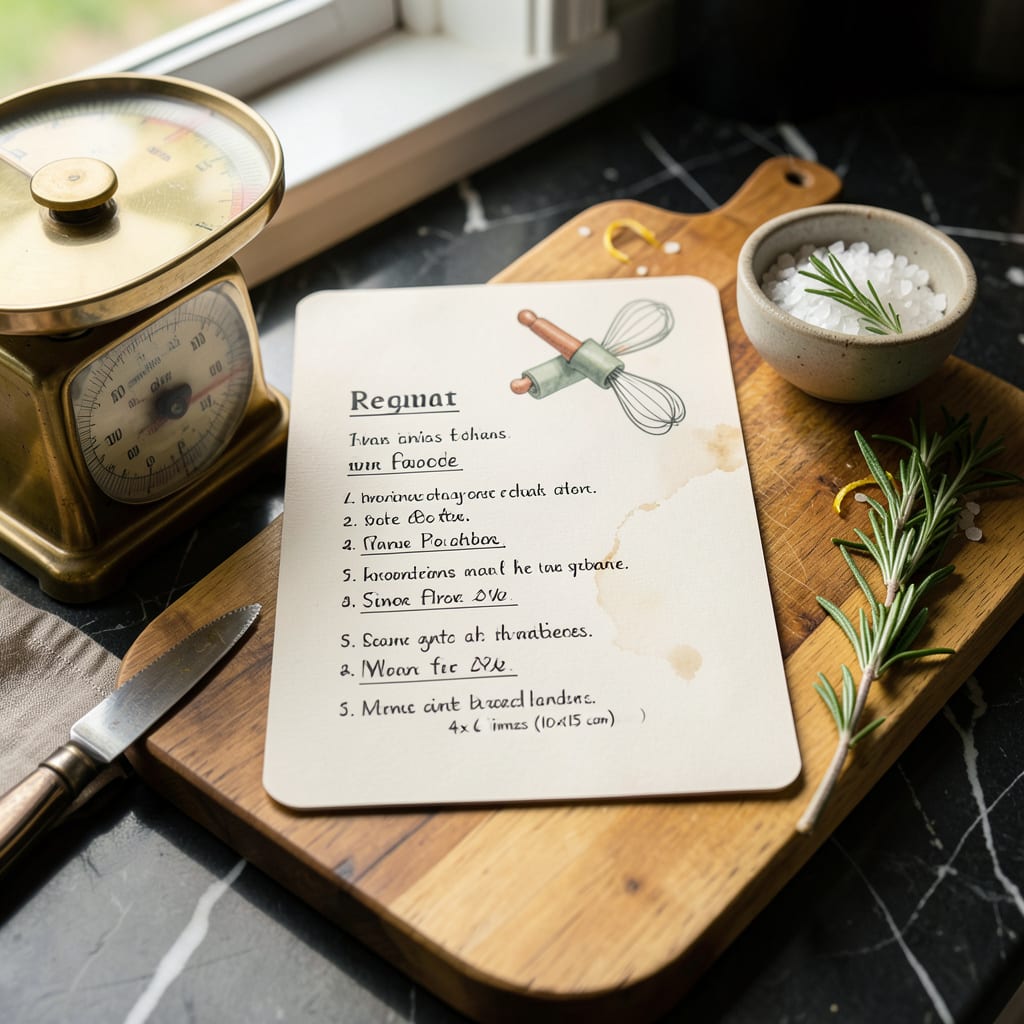
Standard recipe cards typically measure 4×6 inches or 3×5 inches, fitting neatly in card boxes or binders. Larger formats like 5×7 inches are also common for detailed recipes or professional use.
These dimensions evolved from practical kitchen organization needs, balancing readability with storage efficiency. 🔥 The 3×5-inch size became popular for its compact portability, while 4×6-inch cards offer more space for handwritten notes and ingredient lists. Professional chefs often prefer 5×7-inch formats when documenting complex techniques or multi-step recipes that require additional room for detailed instructions and illustrations.
What’s fascinating is how these sizes align with standard printing equipment and storage systems developed in the mid-20th century. The 3×5 format mirrors classic index card dimensions, making it compatible with existing organizational tools, while larger sizes accommodate modern culinary trends like meal prep documentation and recipe testing notes.
💡 In This Article
- Standard Recipe Card Dimensions and Their Origins
- Choosing the Right Recipe Card Size for Your Needs
Standard Recipe Card Dimensions and Their Origins
The 3×5-inch and 4×6-inch sizes became kitchen staples because they perfectly balanced practicality with mid-20th century printing technology. When recipe cards first gained popularity in the 1930s-1950s, home printers and card manufacturers standardized around these dimensions to match existing index card systems.
The 3×5 format mirrored the classic library catalog cards, while 4×6 cards offered just enough extra space for the more detailed recipes becoming popular as home cooking evolved. 🔥
What’s particularly clever about these dimensions is how they align with standard kitchen storage solutions. A 3×5 card fits perfectly in most spice racks’ top drawers, while 4×6 cards slide neatly into the pockets of aprons designed for recipe storage.
The printing industry reinforced these sizes because they allowed for efficient paper usage – a standard 8.5×11-inch sheet could yield either eight 3×5 cards or four 4×6 cards with minimal waste. This efficiency made them affordable for mass production during the post-war home economics boom.
The 5×7-inch format emerged later as culinary documentation became more sophisticated. Professional chefs and serious home cooks needed space for detailed techniques, multiple variations, and even small illustrations.
I’ve noticed this size particularly shines for complex recipes like French pastry techniques or multi-stage barbecue processes where you need room for temperature logs, timing notes, and ingredient substitutions. The larger canvas also accommodates the 0.5-inch margins that prevent ink smudging when cards get handled with flour-dusted fingers. ✨
Vintage recipe cards often show fascinating variations from these standards. Pre-1920s cards frequently appear in irregular sizes like 2.5×4 inches or even 4×5 inches, reflecting hand-cut paper before manufacturing standardization. What’s telling is how these older cards often show more wear – their non-standard sizes made them harder to store systematically.
The shift to uniform dimensions wasn’t just about convenience; it represented how recipe sharing evolved from personal notes to a more organized, shareable system as cooking became both a science and a social activity.
Modern variations now include digital-to-physical hybrids where standard sizes accommodate QR codes linking to video tutorials. I’ve seen innovative cooks using the extra space on 5×7 cards to include small photos of key steps or finished dishes.
The enduring popularity of these dimensions proves how well they balance physical handling needs with information density – a 4×6 card can comfortably hold about 200 words of recipe text while remaining easy to read at arm’s length in a busy kitchen. 💫
What most people don’t realize is how these sizes also consider the human hand’s ergonomics. A 3×5 card fits perfectly in one hand while leaving fingers free to turn pages or measure ingredients.
The 4×6 format offers enough surface area to lay flat on countertops without curling, while still being small enough to tuck into cookbook pages as bookmarks. Even the corner radius (typically 0.125 inches) on modern cards gets designed to prevent dog-earing while allowing easy sorting in boxes.
For specialty applications, you’ll find even larger formats up to 8.5×11 inches used in professional test kitchens. These oversized cards serve as working documents where chefs can jot modifications during recipe development.
The key difference is that these aren’t meant for permanent storage but as active tools in the creation process – their size reflects the dynamic, iterative nature of professional recipe refinement rather than the final, polished versions we keep in our home collections. ⚡

Trained in classic French technique but raised on slow-cooked ribs and spicy rubs, she blends culinary skill with smoke and soul.
- Recipe for Boneless Pork Chops in Cast Iron Skillet: Sear and Baste to Juicy Perfection - October 3, 2026
- Recipe for Boneless Cross Rib Roast: Slow-Roasted Beef with Herb Crust - October 3, 2026
- Hamburgers in Sauce Recipe Crock Pot: Slow-Cooked Savory Delight - October 3, 2026