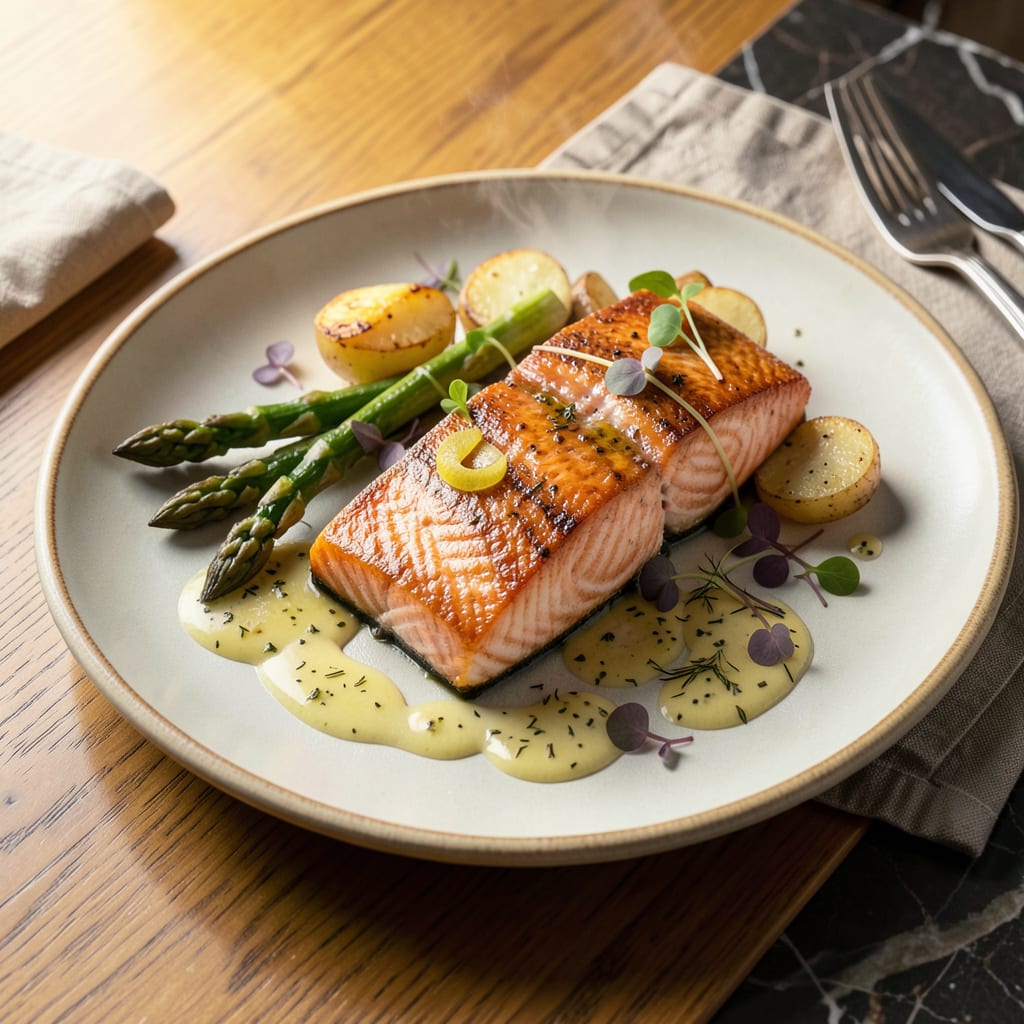
Cooked salmon stays safe to eat for 3-4 days when refrigerated at 40°F or below. For longer storage, freeze it within 2 hours of cooking and consume within 2-3 months for best quality.
I’ve learned through years of handling seafood that proper storage makes all the difference in maintaining flavor and safety. The 2-hour window before refrigeration isn’t arbitrary—it’s based on how quickly bacteria multiply between 40°F and 140°F, what we call the “danger zone.” This is why I always transfer leftovers to shallow containers immediately after cooling. 🔥
What many don’t realize is that freezing affects texture more than safety. While frozen salmon remains safe for months, the delicate flakes can become slightly grainy after thawing. My pro tip? Portion before freezing and use a vacuum sealer to minimize air exposure and freezer burn.
💡 In This Article
- Food Safety Guidelines for Cooked Salmon Storage
- Best Practices for Reheating and Serving Leftover Salmon
Food Safety Guidelines for Cooked Salmon Storage
The 2-hour rule for refrigerating cooked salmon exists because bacteria like Salmonella and Listeria double every 20 minutes between 40°F and 140°F. This temperature range—called the “danger zone”—creates ideal conditions for microbial growth. When salmon sits at room temperature, its protein-rich flesh becomes a breeding ground for pathogens that can cause foodborne illness. 🔥
Your refrigerator’s temperature plays a critical role in shelf life. At 40°F or below, bacterial growth slows dramatically, giving you that 3-4 day window of safe consumption. USDA research shows that every 5°F increase above 40°F can cut storage time by half.
That’s why I always use a fridge thermometer—what feels cold might actually be 45°F, reducing your salmon’s safe period to just 2 days.
The texture and color changes you notice over time aren’t just about quality—they’re spoilage indicators. Fresh cooked salmon should have a light pink hue and flake easily. When it develops a grayish tint, slimy film, or sour ammonia-like smell, the proteins are breaking down from bacterial action.
These changes often appear before the salmon becomes unsafe, giving you a visual warning system.
Here’s what most people miss about freezing: while it pauses bacterial growth, it doesn’t kill existing bacteria. That’s why the 2-hour window before freezing matters. Freezing at 0°F or below maintains safety indefinitely, but quality degrades after 2-3 months as ice crystals damage cell structure.
Vacuum-sealing removes oxygen that causes freezer burn, preserving that buttery texture we love in salmon.
Proper storage containers make a surprising difference. Glass or BPA-free plastic with airtight seals prevent oxidation that turns salmon rancid. I learned this the hard way when my favorite salmon salad turned after just 2 days in a loosely covered bowl.
Now I use shallow containers—this increases surface area for rapid cooling, which is crucial for food safety.
Remember that cross-contamination risks don’t disappear after cooking. Always store salmon on the bottom shelf of your fridge to prevent drips onto ready-to-eat foods. And never reuse containers that held raw salmon for cooked leftovers—this is how I’ve seen many home cooks accidentally reintroduce bacteria to their carefully prepared meals.
The 165°F reheating rule isn’t just for chicken—it applies to salmon too. This temperature kills most pathogens that might have developed during storage. What surprises people is that salmon only needs to reach 145°F when initially cooked, but the higher reheat temperature accounts for potential bacterial growth during storage. ✨

Trained in classic French technique but raised on slow-cooked ribs and spicy rubs, she blends culinary skill with smoke and soul.
- Recipe for Boneless Pork Chops in Cast Iron Skillet: Sear and Baste to Juicy Perfection - October 3, 2026
- Recipe for Boneless Cross Rib Roast: Slow-Roasted Beef with Herb Crust - October 3, 2026
- Hamburgers in Sauce Recipe Crock Pot: Slow-Cooked Savory Delight - October 3, 2026