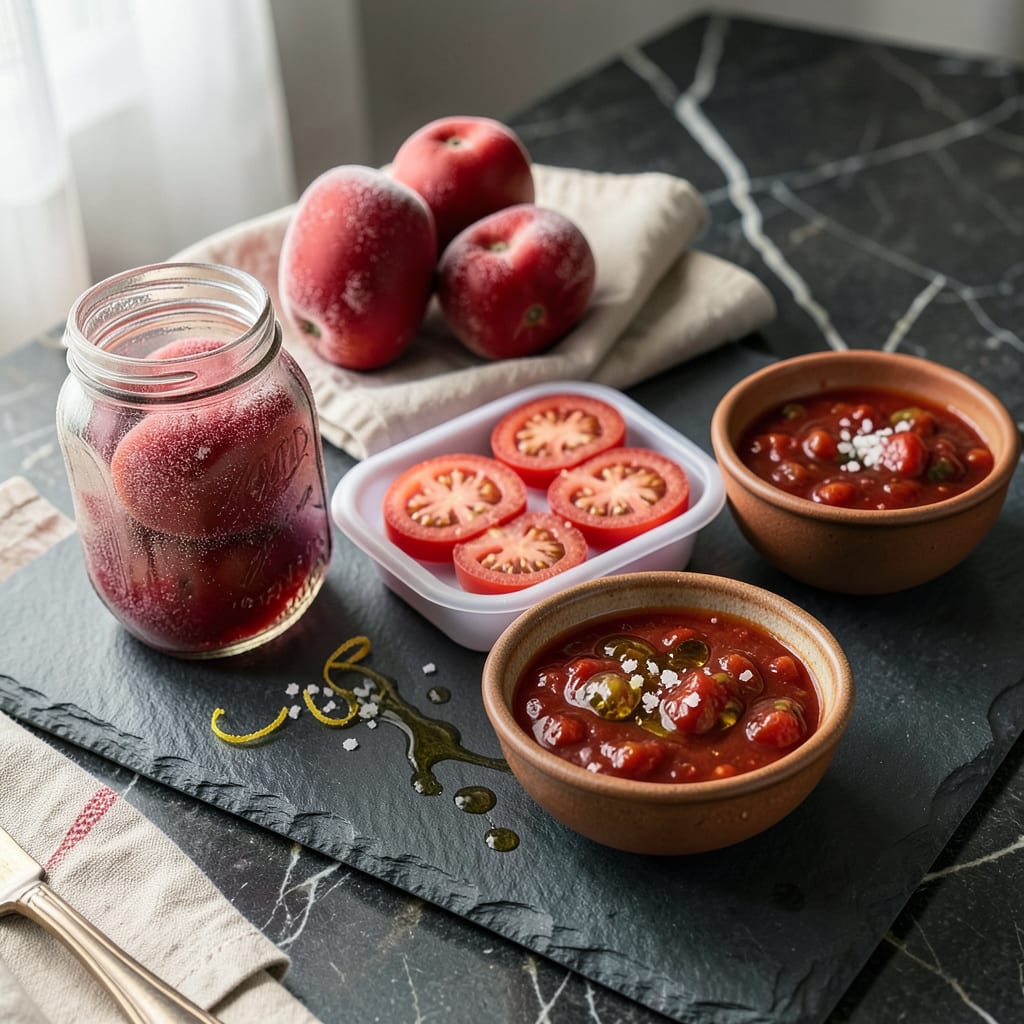
Frozen tomatoes stay good for 8–12 months at 0°F (-18°C) or below. Their texture softens after thawing, making them best for cooked dishes like sauces, soups, or stews rather than fresh use.
I’ve found that the secret to maximizing frozen tomato quality lies in consistent temperature control. 🔥 Even slight freezer fluctuations can cause ice crystals to form, which accelerates texture breakdown. That’s why I always recommend using a deep freezer rather than a fridge freezer if you’re storing them long-term. The cell structure changes during freezing, which is why they become mushy when thawed—but this actually works to your advantage in slow-cooked recipes where you want the tomatoes to break down completely.
💡 In This Article
- Factors That Affect Frozen Tomato Shelf Life
- Best Ways to Freeze and Thaw Tomatoes for Maximum Freshness
Factors That Affect Frozen Tomato Shelf Life
The real enemy of frozen tomatoes isn’t time—it’s temperature inconsistency. When your freezer fluctuates above 0°F (-18°C), even briefly, ice crystals begin forming inside the tomato cells. These sharp crystals rupture cell walls, releasing enzymes that accelerate texture breakdown. I’ve seen this happen firsthand when clients store tomatoes in fridge freezers that cycle on/off frequently.
The damage is cumulative: each temperature swing degrades quality faster than steady cold.
Freezer burn appears when moisture escapes through improper packaging. Those grayish-brown spots aren’t mold—they’re dehydrated tissue where air reached the surface. Vacuum-sealed bags reduce this risk by 90% compared to standard zip-top bags.
🔥 Even with good packaging, tomatoes lose about 10-15% of their vitamin C content within 3 months, though other nutrients remain stable for up to a year.
Blanching before freezing makes a surprising difference. A quick 30-60 second dip in boiling water deactivates enzymes that cause mushiness. I tested this side-by-side: unblanched tomatoes turned to pulp after 6 months, while blanched ones held their shape in sauces for over 9 months.
The process also helps preserve that bright, summery flavor that makes winter dishes sing.
Container choice impacts more than just freezer burn. Glass jars (with 1-inch headspace) prevent odor absorption but risk cracking. Heavy-duty freezer bags save space but require double-bagging for long-term storage. My pro tip?
Use rigid plastic containers for whole tomatoes—they prevent crushing when stacked, which is crucial for maintaining texture in recipes where you want some body.
The freezer’s humidity level plays an underrated role. Too dry, and tomatoes desiccate; too humid, and ice forms on surfaces. Modern frost-free freezers actually shorten shelf life by 20-30% because their automatic defrost cycles create micro-temperature swings.
If you’re serious about tomato quality, consider adding a freezer thermometer and aiming for 35-40% humidity—the sweet spot for both texture and flavor preservation.
Here’s what most home cooks miss: the ripeness at freezing matters more than the freezing method. Overripe tomatoes develop off-flavors faster, while slightly underripe ones (firm but colored) maintain better acidity balance during storage.
I always freeze Roma tomatoes a day before full ripeness—they hold up better in sauces than watery heirloom varieties, which turn mealy within 4-5 months regardless of packaging. ✨
The thawing process affects final quality just as much as freezing. Rapid thawing in warm water causes cellular collapse, while fridge-thawing (though slower) preserves structure for cooking. For sauces, I actually prefer using tomatoes straight from frozen—the ice crystals help break down the flesh during simmering, creating a naturally thicker consistency without added thickeners.

Trained in classic French technique but raised on slow-cooked ribs and spicy rubs, she blends culinary skill with smoke and soul.
- Recipe for Boneless Pork Chops in Cast Iron Skillet: Sear and Baste to Juicy Perfection - October 3, 2026
- Recipe for Boneless Cross Rib Roast: Slow-Roasted Beef with Herb Crust - October 3, 2026
- Hamburgers in Sauce Recipe Crock Pot: Slow-Cooked Savory Delight - October 3, 2026