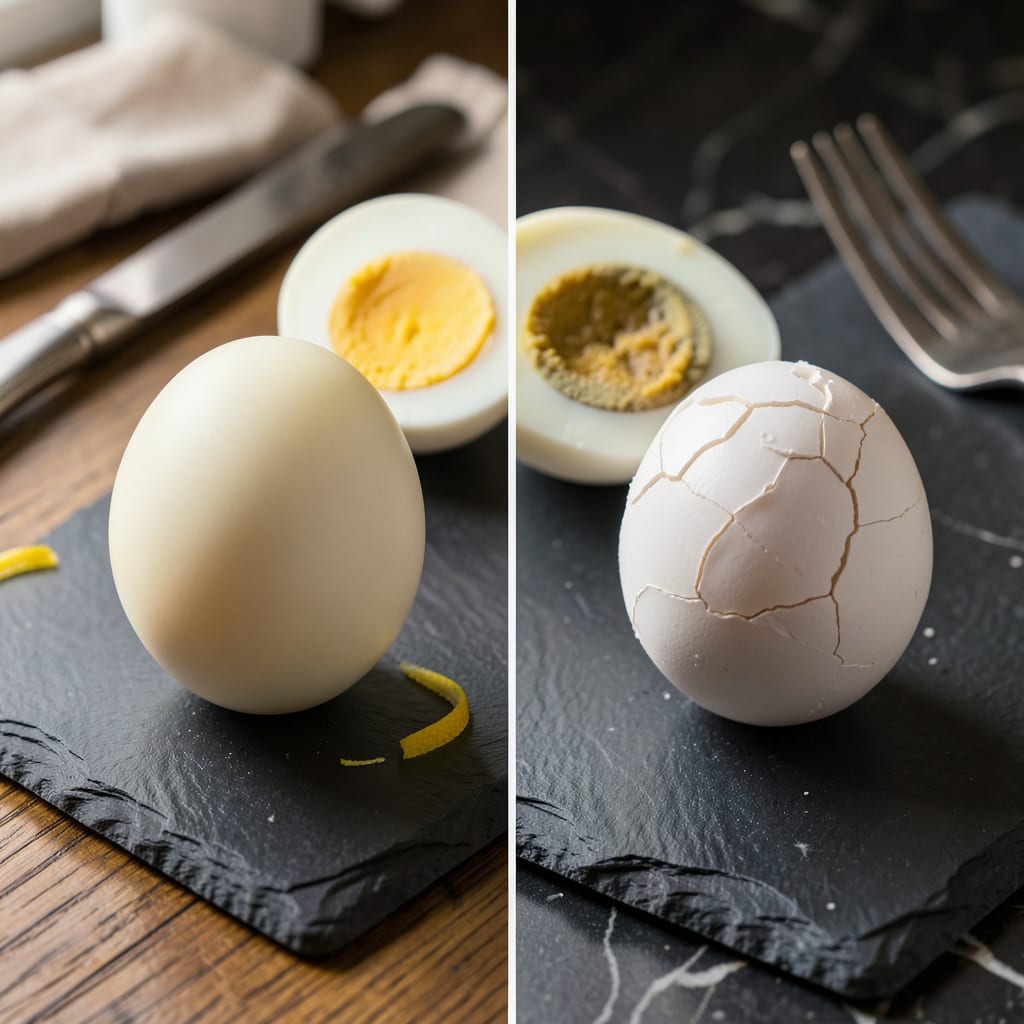
Reboiling eggs is not recommended as it can make them rubbery, difficult to peel, and potentially unsafe if left at room temperature too long. The texture and quality degrade significantly with each reheating.
I’ve seen many home cooks try to salvage undercooked eggs by reboiling them, but the results are always disappointing. 🔥 The proteins in eggs tighten with each heat exposure, squeezing out moisture and creating that unpleasant rubbery bite. Even worse, the yolk often develops a grayish-green ring from sulfur compounds reacting to prolonged heat. For meal prep, I always recommend perfecting the boil time initially—12 minutes for large eggs—rather than trying to fix them later.
💡 In This Article
- What Happens When You Reboil Hard-Boiled Eggs
- Safe Alternatives to Reboiling Eggs for Meal Prep
What Happens When You Reboil Hard-Boiled Eggs
When you subject eggs to a second boil, the proteins undergo dramatic changes. Egg whites are primarily made of ovalbumin, which unfolds and bonds during initial cooking. Reboiling forces these already-coagulated proteins to tighten further, squeezing out moisture like a wrung-out sponge. This creates that dreaded rubbery texture—imagine overcooked chicken breast but worse.
The yolk suffers too, with fats and proteins separating under excessive heat.
The infamous greenish-gray ring around yolks appears due to a chemical reaction between sulfur and iron compounds. At temperatures above 160°F, hydrogen sulfide (from the white) reacts with iron (from the yolk), forming ferrous sulfide. This reaction accelerates with each reheating, turning that vibrant yellow yolk into something resembling a science experiment.
I’ve seen yolks go from sunny to swampy in just 3-5 extra minutes of boiling.
Structural integrity completely breaks down during reboiling. The delicate balance between the egg’s membrane and cooked proteins collapses, making peeling nearly impossible. I once tried reboiling a batch for deviled eggs and ended up with crumbly whites that stuck to the shell like glue.
The albumen (egg white) becomes so dense it actually repels water, creating a dry, chalky mouthfeel that’s particularly unpleasant in dishes like egg salad.
Temperature shock plays a role too. Rapid reheating causes the egg’s interior to expand faster than the shell can contain, leading to those frustrating cracks you often see. The USDA notes that eggs left at room temperature for more than 2 hours enter the “danger zone” where bacteria can multiply rapidly.
Reboiling won’t reset this clock—it actually concentrates any potential contaminants by driving off moisture while leaving pathogens behind.
Consider this comparison: A properly boiled egg has about 75% moisture content in the white. After reboiling, that drops to 60% or lower, similar to overcooked shrimp. The difference is noticeable immediately—where fresh-boiled eggs have a clean snap when bitten, reboiled ones offer resistance like a rubber band.
Even the aroma changes, developing a faint sulfurous smell that lingers unpleasantly.
For those tempted to reboil for food safety reasons, know this: The interior temperature needs to reach 165°F to kill bacteria, but by that point, you’ve already ruined the texture.
A better approach is proper initial cooking to 212°F for 12 minutes (for large eggs), followed by immediate ice bath cooling to halt the cooking process and lock in quality. 🔥

Trained in classic French technique but raised on slow-cooked ribs and spicy rubs, she blends culinary skill with smoke and soul.
- Recipe for Boneless Pork Chops in Cast Iron Skillet: Sear and Baste to Juicy Perfection - October 3, 2026
- Recipe for Boneless Cross Rib Roast: Slow-Roasted Beef with Herb Crust - October 3, 2026
- Hamburgers in Sauce Recipe Crock Pot: Slow-Cooked Savory Delight - October 3, 2026