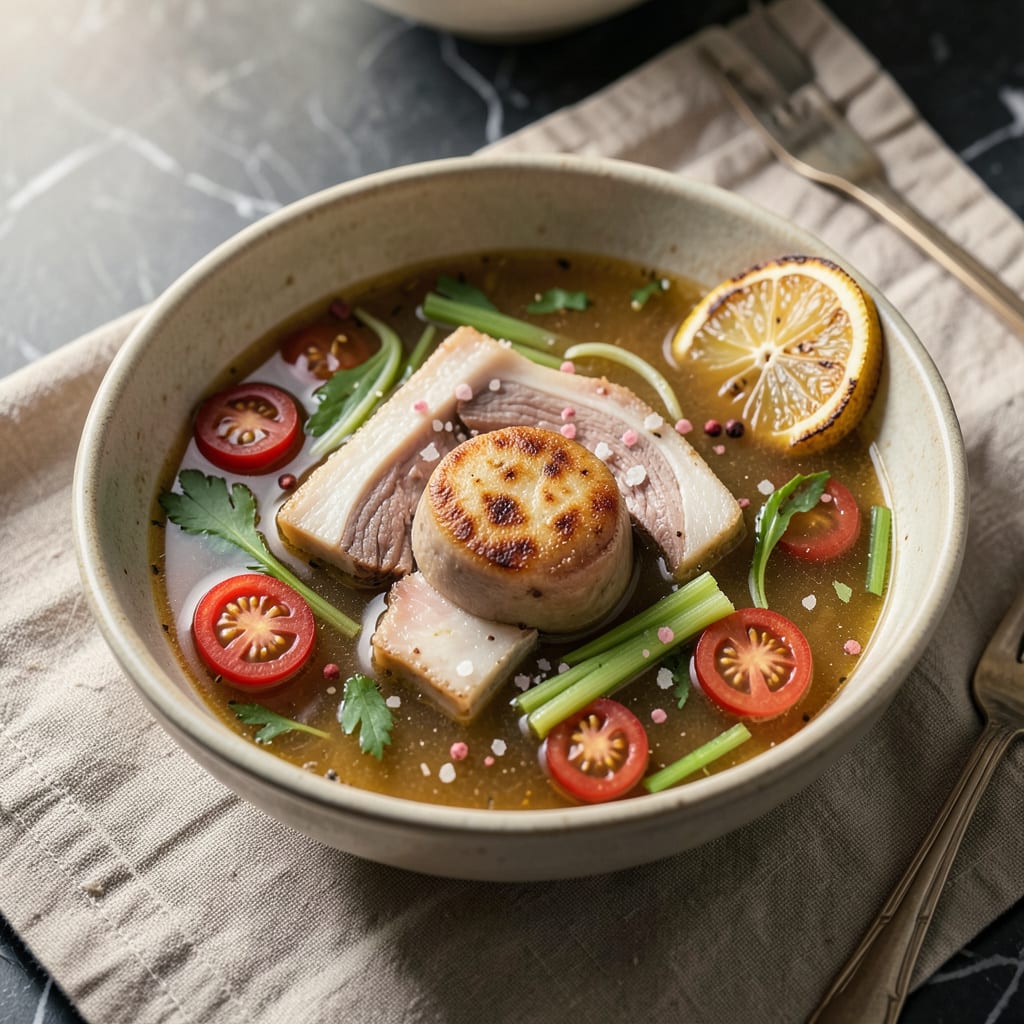
Properly stored bone broth lasts 3–4 days in the fridge at or below 40°F (4°C). For longer storage, freeze it within this timeframe to maintain safety and quality.
This timeline isn’t arbitrary—it’s based on how quickly bacteria multiply in protein-rich liquids. 🔥 The collagen and gelatin in bone broth create an ideal environment for microbial growth if left too long. I always recommend using a fridge thermometer to confirm your appliance stays at or below 40°F, as even slight temperature fluctuations can cut storage time short.
What many don’t realize is that the clock starts ticking as soon as the broth cools. For maximum freshness, I chill my batches rapidly by dividing them into shallow containers before refrigerating. This prevents that dangerous “temperature danger zone” between 40°F and 140°F where bacteria thrive. ✨
💡 In This Article
- Why Bone Broth Spoils and How to Spot Signs
- Best Containers and Freezing Tips for Bone Broth
Why Bone Broth Spoils and How to Spot Signs
Bone broth’s rich protein and fat content creates a perfect breeding ground for bacteria like Listeria and Salmonella. These microorganisms multiply exponentially between 40°F and 140°F, which is why rapid cooling is critical.
The collagen and gelatin that give broth its body also provide nutrients that accelerate bacterial growth once the broth leaves the heat source. 🔥
Fat separation on the surface forms a protective layer that can trap heat and slow cooling. I’ve measured broth temperatures dropping from 212°F to 70°F in just 2 hours when divided into shallow containers, versus 6+ hours in deep pots.
This difference is crucial because every minute spent above 40°F gives bacteria more time to establish colonies that will continue growing even after refrigeration. ✨
The spoilage process becomes visible through texture changes first. Fresh broth should pour smoothly with a slightly viscous consistency. Spoiled broth develops a slimy film or chunks—this is coagulated protein from bacterial enzymes breaking down the collagen.
The aroma shifts from rich and meaty to sharply sour or putrid, similar to spoiled milk but more concentrated. 💫
Mold appears as fuzzy spots (usually white, green, or black) that float or cling to container sides. Unlike surface fat, mold can’t be skimmed off safely because invisible hyphae penetrate deep into the liquid. I once tested broth that looked fine but had a faint “off” smell—microscopic analysis showed bacterial counts exceeding safe limits.
When in doubt, remember: bone broth’s low acidity means it won’t self-preserve like fermented foods. ⚡
Pro tip: The 2-hour rule applies here. Broth left at room temperature for more than 2 hours (or 1 hour if above 90°F) should be discarded, even if it looks fine.
I use probe thermometers to verify my broth reaches 40°F within this window—it’s the only way to be certain you’re not playing bacterial roulette with your health. 🌟
Consider these red flags that mean your broth has turned:
- Visual: Cloudiness that wasn’t present when fresh, or any mold growth
- Texture: Slimy film on surface or stringy consistency when poured
- Smell: Sour, rancid, or “off” odors that differ from the original meaty aroma
- Taste: Any bitter or unpleasantly sharp flavors (never taste-test suspect broth!)

Trained in classic French technique but raised on slow-cooked ribs and spicy rubs, she blends culinary skill with smoke and soul.
- Recipe for Boneless Pork Chops in Cast Iron Skillet: Sear and Baste to Juicy Perfection - October 3, 2026
- Recipe for Boneless Cross Rib Roast: Slow-Roasted Beef with Herb Crust - October 3, 2026
- Hamburgers in Sauce Recipe Crock Pot: Slow-Cooked Savory Delight - October 3, 2026