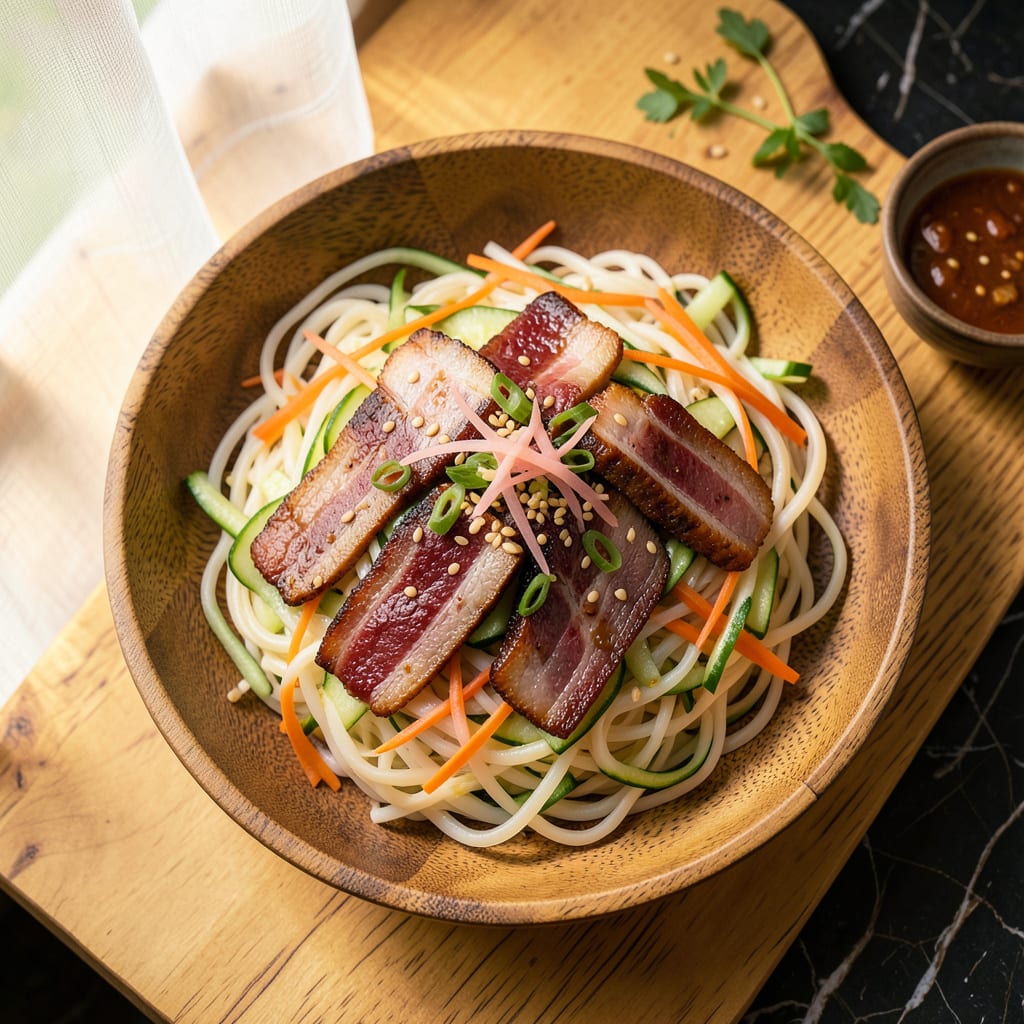
The Kamehameha Schools somen salad combines thin wheat noodles with char siu pork, green onions, sesame seeds, and a tangy soy-ginger dressing. This refreshing Hawaiian-style dish balances sweet, savory, and nutty flavors in every bite.
This iconic dish carries deep cultural significance in Hawaii, blending Japanese somen traditions with local flavors. 🌺 The char siu pork adds a smoky depth that contrasts beautifully with the bright, citrusy notes in the dressing—creating that perfect aloha-state harmony. I love how the crisp green onions and toasted sesame seeds add texture while keeping the dish light enough for tropical weather. It’s a staple at gatherings because it travels well and satisfies both kids and adults.
💡 In This Article
- Cultural Roots of Kamehameha Schools Somen Salad
- Step-by-Step Guide to Perfect Somen Salad at Home
Cultural Roots of Kamehameha Schools Somen Salad
This dish emerged from Hawaii’s plantation era when Japanese immigrants brought somen noodles to the islands. The thin wheat noodles became a staple because they were affordable, easy to prepare, and perfect for Hawaii’s warm climate.
What makes the Kamehameha version special is how it adapted to local tastes—adding Chinese-style char siu pork instead of traditional Japanese toppings. This fusion reflects Hawaii’s multicultural history where different ethnic groups shared ingredients and cooking techniques. 🌺
The school cafeteria version became legendary because it was designed to feed large groups efficiently while keeping flavors vibrant. The dressing’s soy-ginger base comes from Japanese cuisine, but Hawaiian cooks amplified the sweetness with local sugarcane products and added brightness with fresh green onions.
The sesame seeds weren’t just for texture—they represented the Japanese influence while the pork honored Chinese immigrant traditions. This careful balance made it universally appealing across Hawaii’s diverse communities.
What most people don’t realize is that somen salad became a cultural bridge in Hawaii. Japanese workers introduced the noodles, Chinese immigrants contributed the char siu technique, and Portuguese and Filipino communities added their own spice preferences.
The dish evolved in school kitchens where cooks had to satisfy hundreds of students daily—leading to the perfect ratio of noodles to protein to dressing that we know today. It’s a living example of how Hawaii’s food culture absorbs and transforms influences.
The Kamehameha Schools version specifically gained fame because of its precise ingredient ratios. The noodles are cooked just 1-2 minutes for that ideal al dente texture, while the char siu is sliced paper-thin (1/8 inch) to distribute evenly.
The dressing uses a 3:1 ratio of soy sauce to vinegar, creating that signature tangy-sweet balance that cuts through the richness of the pork. These exact measurements were perfected in institutional kitchens where consistency was key. ✨
Today, this salad appears at nearly every local gathering because it represents Hawaii’s shared history. The dish carries memories of school lunches for generations of Kamehameha Schools students, while also symbolizing the islands’ ability to blend cultures harmoniously.
When you make it at home, you’re not just preparing a salad—you’re continuing a tradition that connects Hawaii’s past with its present food culture. The careful layering of flavors tells the story of how different communities found common ground through food.
Even the serving style reflects Hawaii’s communal values. Somen salad is typically presented in large bowls for family-style sharing, with the bright colors of the green onions and sesame seeds contrasting against the pale noodles and pink pork.
This visual appeal wasn’t accidental—it was designed to be inviting and abundant, perfect for Hawaii’s tradition of potlucks and big gatherings where food brings people together. 💛

Trained in classic French technique but raised on slow-cooked ribs and spicy rubs, she blends culinary skill with smoke and soul.
- Recipe for Boneless Pork Chops in Cast Iron Skillet: Sear and Baste to Juicy Perfection - October 3, 2026
- Recipe for Boneless Cross Rib Roast: Slow-Roasted Beef with Herb Crust - October 3, 2026
- Hamburgers in Sauce Recipe Crock Pot: Slow-Cooked Savory Delight - October 3, 2026