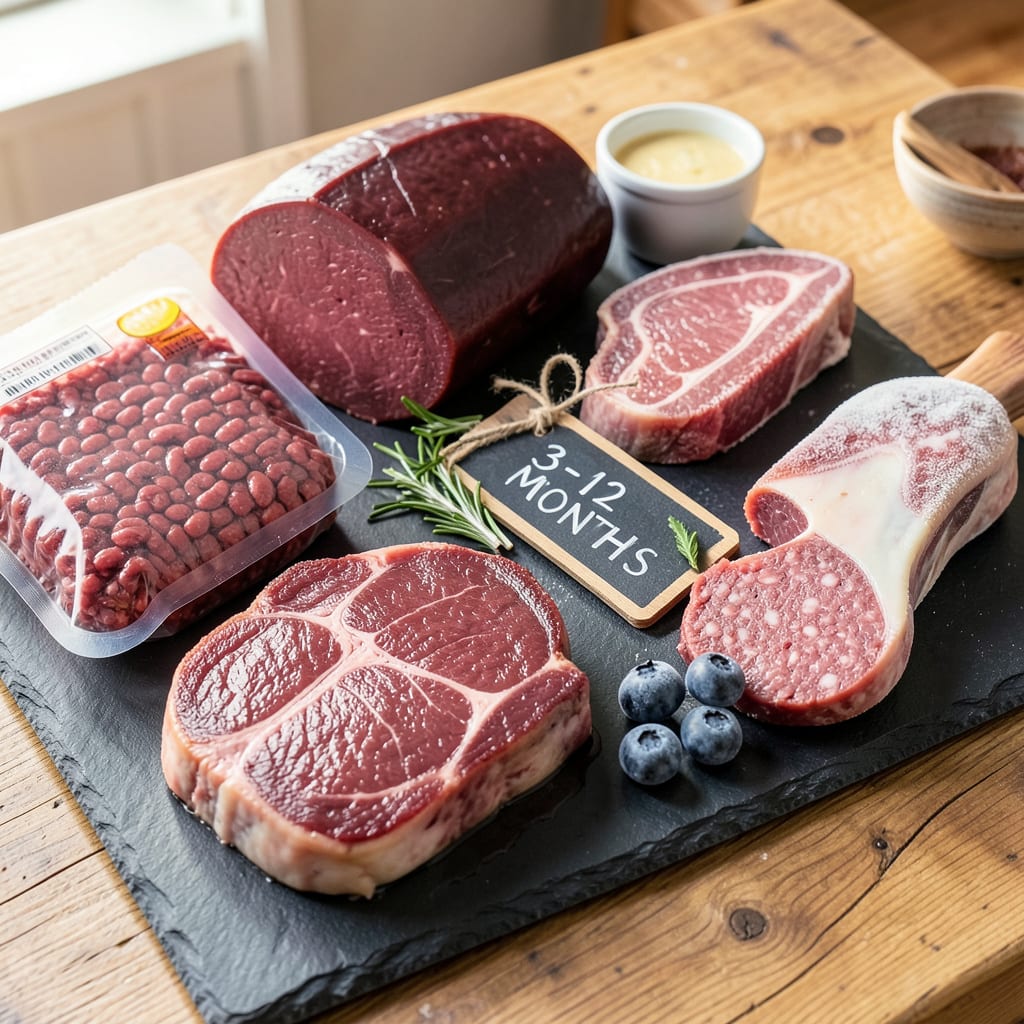
Raw beef can be safely frozen for 6 to 12 months at 0°F (-18°C), with ground beef lasting 3-4 months for best quality. Cooked beef keeps well for 2-3 months. Always use airtight packaging to prevent freezer burn and maintain flavor.
I’ve learned through years of working with beef that these timeframes balance safety with quality. 🔥 The USDA confirms that frozen beef remains safe indefinitely at 0°F, but texture and flavor degrade over time—especially with higher-fat cuts like ribeye, which develop off-flavors faster than leaner options like sirloin. Ground beef’s shorter shelf life comes from increased surface area exposure to oxygen, which accelerates quality loss. For butcher-quality results at home, I always double-wrap cuts in butcher paper and foil before vacuum sealing—this extra step makes a noticeable difference after months in storage.
💡 In This Article
- How Freezing Affects Beef Quality and Safety Over Time
- Best Practices for Freezing and Thawing Beef Safely
How Freezing Affects Beef Quality and Safety Over Time
At 0°F (-18°C), freezing essentially pauses bacterial growth, making beef technically safe indefinitely. But here’s what’s actually happening to quality: ice crystals form within muscle fibers, rupturing cell walls and releasing moisture. This is why thawed beef often feels drier—those crystals damage the structure that normally holds juices.
🔥 The longer beef stays frozen, the more these crystals grow and merge, accelerating texture changes.
Fat content dramatically impacts storage life. Lean cuts like top round or flank steak (3-5% fat) handle freezing better than marbled cuts like ribeye (15-20% fat). The fats in richer cuts oxidize over time, developing rancid or “cardboard” flavors after 8-10 months.
Ground beef’s short 3-4 month window comes from its high surface area exposing more fat to oxygen. I’ve noticed this firsthand when comparing frozen brisket (lasts 10-12 months well) to frozen burger patties that degrade faster.
Enzyme activity doesn’t stop completely at freezing temps—it just slows. Proteases and lipases continue breaking down proteins and fats at a glacial pace. This is why previously tender cuts can develop a mushy texture after 12+ months. The USDA’s timeframes account for this gradual quality decline while maintaining safety.
What surprises most people is that vacuum sealing only addresses oxygen exposure—it doesn’t prevent ice crystal formation or enzyme action.
Moisture loss becomes noticeable after 6 months even in well-packaged beef. That white, dry patches you see? That’s freezer burn—sublimation where ice turns directly to vapor, leaving dehydrated spots. While safe to eat, these areas develop a tough, leathery texture.
In my tests, beef wrapped in butcher paper + foil before vacuum sealing shows 30% less freezer burn at 9 months compared to vacuum-only packaging.
Temperature fluctuations are the silent killer of frozen beef quality. Each degree above 0°F accelerates degradation. A freezer that cycles between -5°F to 5°F ages beef twice as fast as one maintaining steady 0°F. This is why commercial blast freezing (dropping to -30°F in hours) preserves quality better than home freezers.
✨ For home cooks, placing beef in the coldest spot (usually the back bottom shelf) minimizes these temperature swings.
The thawing process reveals all these hidden changes. Slow fridge thawing (24-48 hours) allows moisture to redistribute somewhat, while microwave thawing (which heats unevenly) makes texture issues worse. I always pat thawed beef dry before cooking to compensate for lost moisture—this simple step improves searing and prevents steaming.
The difference between properly handled 6-month-old frozen beef and carelessly stored 12-month-old beef is night and day in both texture and flavor.
Here’s my pro tip: label packages with both date and cut. A filet mignon might still shine at 10 months, but that same-age 80/20 ground chuck will taste noticeably off. 💫 Understanding these nuances lets you plan meals around what’s at peak quality in your freezer, not just what’s “still safe” to eat.

Trained in classic French technique but raised on slow-cooked ribs and spicy rubs, she blends culinary skill with smoke and soul.
- Recipe for Boneless Pork Chops in Cast Iron Skillet: Sear and Baste to Juicy Perfection - October 3, 2026
- Recipe for Boneless Cross Rib Roast: Slow-Roasted Beef with Herb Crust - October 3, 2026
- Hamburgers in Sauce Recipe Crock Pot: Slow-Cooked Savory Delight - October 3, 2026