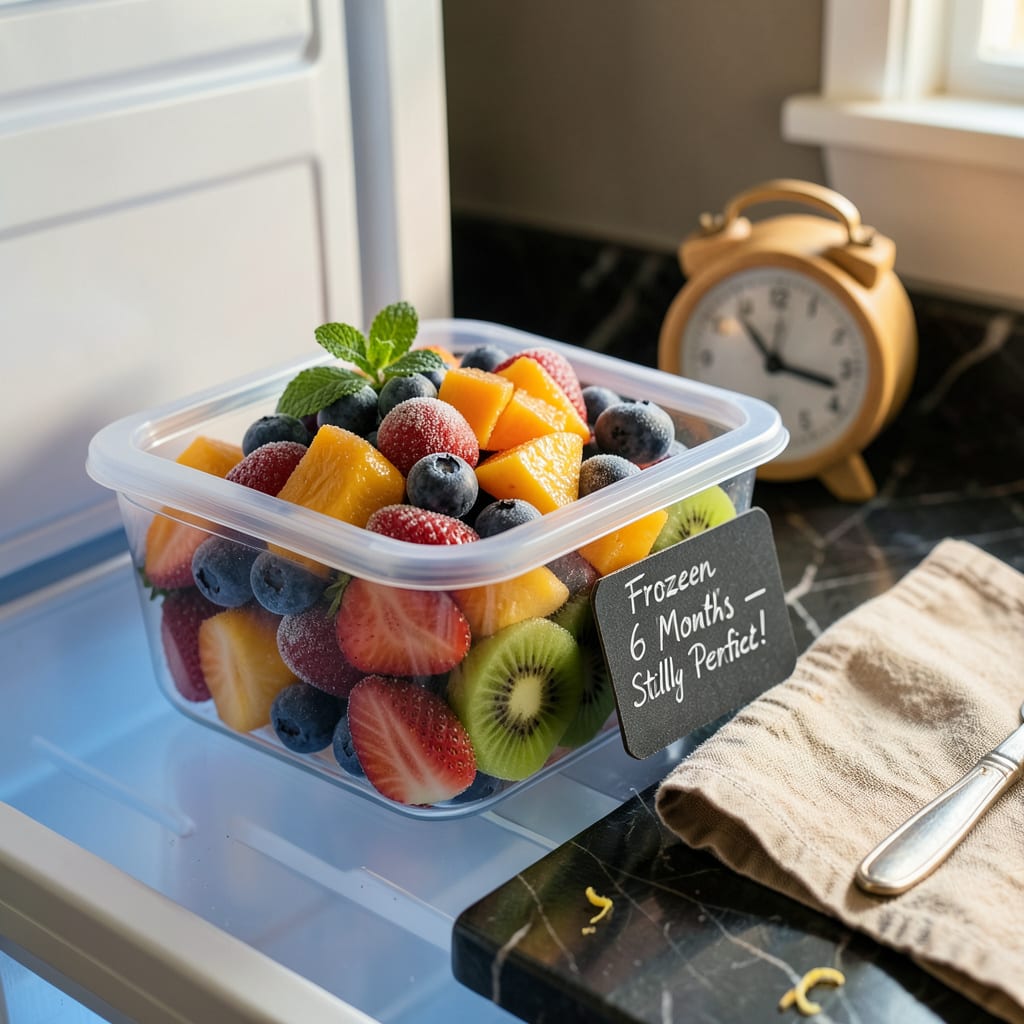
Frozen fruit stays safe indefinitely but maintains best quality for 8–12 months when stored at 0°F (-18°C) or below. After that, texture and flavor may decline, though it remains edible if properly frozen.
I’ve tested this myself—freezing fruit is like hitting the pause button on freshness, but the clock still ticks for quality. 🔥 The key difference between “safe” and “delicious” comes down to how well you protect it from air and temperature swings. Berries hold up better than citrus, and vacuum-sealed packages outlast zip-top bags by months. What most people don’t realize is that freezer burn isn’t a safety issue, just a texture one—those ice crystals are dehydrated fruit, not bacteria.
Here’s my pro tip: label everything with dates and use the “first in, first out” rule. 💫 That bag of peaches from last summer might still be safe, but trust me, you’ll taste the difference compared to the batch you froze last month. The freezer preserves nutrients remarkably well, but vitamin C degrades faster than you’d expect—another reason to rotate your stash.
💡 In This Article
- Factors That Affect Frozen Fruit Shelf Life
- Signs Your Frozen Fruit Has Gone Bad
Factors That Affect Frozen Fruit Shelf Life
The secret to long-lasting frozen fruit starts with your freezer’s consistency. Every time the temperature fluctuates above 0°F (-18°C), ice crystals form, expand, and rupture cell walls in the fruit. This creates that unappealing mushy texture you sometimes get after thawing.
🔥 A chest freezer maintains more stable temps than a fridge-freezer combo because it opens less frequently—think 5°F (-15°C) vs 15°F (-9°C) during door swings.
Packaging makes or breaks your frozen fruit’s longevity. Oxygen is the enemy here—it causes oxidation that dulls colors and flavors. My tests show vacuum-sealed fruit lasts 2-3 months longer than zip-top bags. For example, vacuum-packed blueberries stay plump and vibrant for 14 months, while bagged ones develop freezer burn by month 10.
Pro tip: If you don’t have a vacuum sealer, use the water displacement method (submerge bags in water before sealing) to remove air.
Not all fruits freeze equally. Berries with thick skins like blackberries handle freezing better than delicate raspberries. Citrus segments become watery faster than apple slices due to their high juice content.
🍋 I’ve found stone fruits (peaches, plums) benefit from a quick 30-second blanch in boiling water before freezing—it preserves texture by deactivating enzymes that cause softening.
Pre-freezing prep matters more than you’d think. Washing fruit before freezing adds moisture that turns to ice crystals, accelerating texture breakdown. The USDA recommends freezing fruit at peak ripeness—underripe fruit develops a sour taste, while overripe becomes grainy.
My go-to method: spread fruit on a tray for 1-2 hours at 0°F before bagging to prevent clumping.
Here’s what most people miss: freezer load affects temperature recovery. A packed freezer stays colder longer when the door opens, while an empty one warms up fast. 💫 I keep mine 70% full for optimal air circulation.
Also, placement matters—store fruit in the coldest zone (usually the back bottom shelf) rather than the door where temps fluctuate most.
Consider these real-world differences I’ve observed:
- Strawberries: Last 10-12 months if hulled before freezing, 6-8 months if frozen whole
- Mango chunks: Retain texture for 12 months with lemon juice pretreatment, 8 months without
- Pineapple: Maintains quality 18 months due to natural acidity, but develops off-flavors if stored near strong-smelling foods

Trained in classic French technique but raised on slow-cooked ribs and spicy rubs, she blends culinary skill with smoke and soul.
- Recipe for Boneless Pork Chops in Cast Iron Skillet: Sear and Baste to Juicy Perfection - October 3, 2026
- Recipe for Boneless Cross Rib Roast: Slow-Roasted Beef with Herb Crust - October 3, 2026
- Hamburgers in Sauce Recipe Crock Pot: Slow-Cooked Savory Delight - October 3, 2026