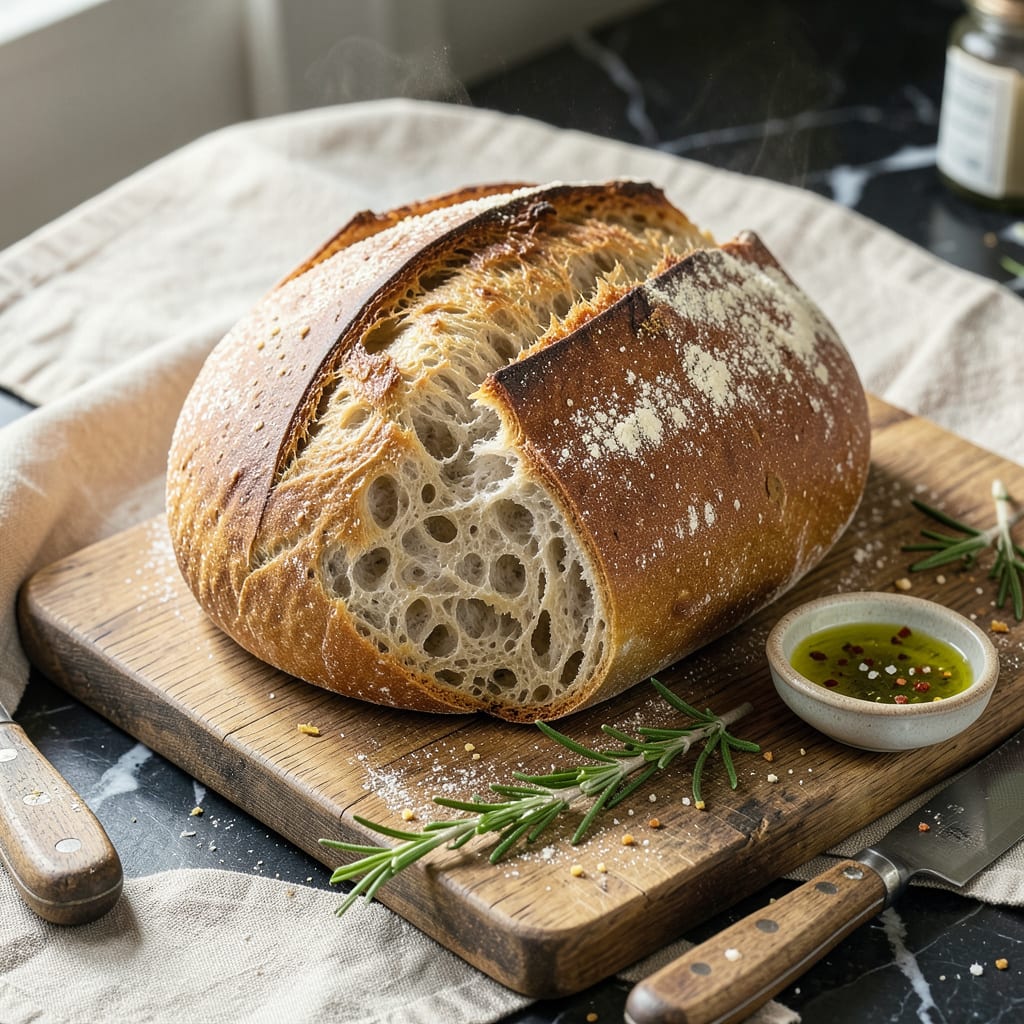
Yes, you can make bread with 00 flour, but it works best for soft, delicate varieties like pizza dough, focaccia, or brioche. Its fine texture and low protein content create a tender crumb rather than chewy, high-rise loaves.
I’ve found that 00 flour shines when you want a melt-in-your-mouth texture rather than a hearty, structured loaf. 🔥 The secret lies in its ultra-fine milling and lower protein levels—typically 8-12%—which means less gluten forms during kneading. This makes it perfect for Italian classics like Neapolitan pizza where you want a crisp yet airy crust, or enriched doughs like panettone where tenderness is key.
What surprises many bakers is how 00 flour handles hydration differently than bread flour. You’ll often need slightly less water in your recipes because the fine particles absorb moisture more efficiently. I always recommend starting with 5% less hydration than your usual recipe calls for, then adjusting as you mix—this prevents sticky dough disasters.
💡 In This Article
- How 00 Flour Affects Bread Texture and Rise
- Best Bread Recipes Using 00 Flour and Pro Tips
How 00 Flour Affects Bread Texture and Rise
The magic of 00 flour lies in its Italian milling process that creates an ultra-fine, powdery texture. With protein levels typically between 8-12%, it forms significantly less gluten than bread flour (12-14%) or even all-purpose (10-12%).
This means your dough will develop less elastic structure, resulting in breads with a tender, delicate crumb rather than chewy resilience. The fine particles also absorb water more quickly, which can trick bakers into over-hydrating their dough.
Here’s what’s actually happening during fermentation: The lower protein content means yeast has less gluten network to push against as it produces CO₂. This creates smaller, more numerous gas pockets rather than large, stretchy ones. That’s why 00 flour excels in flatbreads like pizza—you get that signature crisp yet airy crust with minimal chew.
For comparison, bread flour’s higher protein creates a stronger gluten matrix that can trap gas for taller loaves, while 00 flour’s gentler structure works best in recipes where tenderness is the goal. 🔥
Hydration becomes your secret weapon with 00 flour. I’ve found that recipes typically need 5-10% less water than with other flours because the fine particles absorb moisture more efficiently. Start with 60-65% hydration for pizza dough and 70-75% for enriched breads like brioche.
The key factor is monitoring dough temperature—00 flour doughs should feel slightly cooler to the touch (72-75°F) to prevent over-fermentation, which can make the delicate structure collapse.
What most people don’t realize is how 00 flour interacts with fermentation time. The fine grind means enzymes work faster, so bulk fermentation should be 20-30% shorter than with bread flour. I recommend the “poke test” for doneness—your dough should spring back slowly but not completely, leaving a slight indentation.
For pizza dough, aim for 24-48 hours of cold fermentation to develop flavor without overworking the delicate gluten structure.
The science behind this involves starch damage during milling. 00 flour’s ultra-fine grind creates more damaged starch granules that absorb water differently than coarser flours. This affects everything from mixing time (shorter) to final crumb texture (softer).
For comparison, bread flour’s coarser grind means it needs longer mixing to fully hydrate and develop gluten, while 00 flour reaches optimal hydration almost immediately. ✨
Consider these key differences when choosing:
- Pizza dough: 00 flour creates a crisp yet tender crust with beautiful leopard spotting at 900°F in wood-fired ovens
- Focaccia: The fine texture allows olive oil to penetrate deeply, creating a moist, flavorful crumb with minimal chew
- Enriched doughs: Brioche and panettone benefit from 00 flour’s tenderness, requiring less butter to achieve a rich mouthfeel
For sandwich loaves or artisan breads requiring structure, I recommend blending 00 flour with 20-30% bread flour to add strength while maintaining some of that signature tenderness. This hybrid approach gives you the best of both worlds—enough gluten for rise and structure, with the silky crumb that makes 00 flour so special. 🌟

Trained in classic French technique but raised on slow-cooked ribs and spicy rubs, she blends culinary skill with smoke and soul.
- Recipe for Boneless Pork Chops in Cast Iron Skillet: Sear and Baste to Juicy Perfection - October 3, 2026
- Recipe for Boneless Cross Rib Roast: Slow-Roasted Beef with Herb Crust - October 3, 2026
- Hamburgers in Sauce Recipe Crock Pot: Slow-Cooked Savory Delight - October 3, 2026