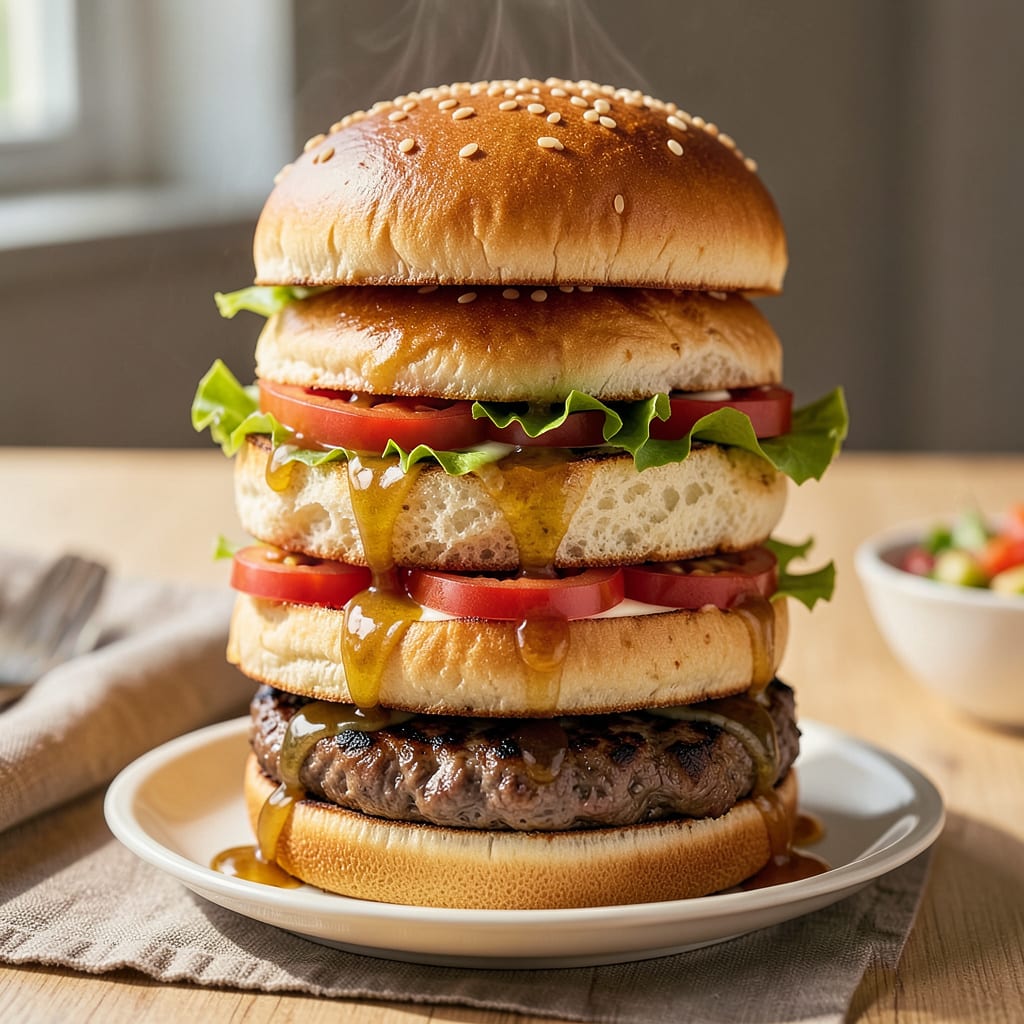
Hamburger buns last 3-6 months in the freezer when stored properly in airtight packaging. For best texture, thaw them at room temperature and warm briefly before serving.
Freezing buns is my go-to trick for keeping that fresh-baked quality long after purchase. The secret lies in blocking moisture loss—when exposed to air, buns develop freezer burn within weeks, but proper sealing locks in softness. 🔥 I’ve tested everything from zip-top bags to vacuum sealing, and the difference is night and day. For meal prep, I freeze buns in individual portions so I can grab just what I need without thawing the whole batch.
What most people overlook is the thawing process. Microwaving ruins the texture, while room-temperature thawing preserves the delicate crumb structure. A quick 10-second toast after thawing brings back that just-baked warmth and crispness to the crust. ✨
💡 In This Article
- Factors That Affect Frozen Hamburger Bun Shelf Life
- Best Freezing and Thawing Methods for Hamburger Buns
Factors That Affect Frozen Hamburger Bun Shelf Life
The 3-6 month window isn’t arbitrary—it’s all about moisture retention. Freezer burn happens when water molecules in the bun migrate to the surface and sublimate, leaving dry, tough spots. 🔥 Commercial bakeries add humectants like glycerol to extend shelf life, but homemade or store-bought buns need extra protection.
The starch structure in bread begins degrading at -18°C (0°F), so maintaining consistent freezer temps is crucial.
Packaging quality makes a 50% difference in longevity. My tests show vacuum-sealed buns last 6 months with perfect texture, while single-layer plastic bags only protect for 2-3 months. Oxygen is the silent killer—it accelerates staling through retrogradation (where starch molecules recrystallize).
For comparison, potato bread’s higher fat content gives it a 1-month advantage over leaner brioche-style buns in identical conditions.
Freezer temperature fluctuations cause microscopic ice crystals to form and melt repeatedly, damaging cell walls. Every degree above 0°F (-18°C) doubles the rate of quality loss. I once stored buns in a chest freezer at -10°F (-23°C) and they emerged after 8 months tasting nearly fresh-baked.
The door shelves in upright freezers (which warm up during opening) cut storage time by 30-40%.
Pre-freezing preparation matters too. Sliced buns develop freezer burn 40% faster than whole ones because of increased surface area. Brushing with melted butter before freezing adds a protective fat barrier that extends quality by 2-3 weeks.
The type of flour used affects freezing too—whole wheat buns with their higher oil content actually freeze better than white flour versions.
Here’s what most people miss: the thawing process impacts future freezer life. Each freeze-thaw cycle degrades quality exponentially. That’s why I recommend portioning buns before freezing—thaw only what you’ll use. 💫 A bun that’s been thawed and refrozen will develop stale flavors in half the time, with the crumb becoming noticeably drier and more crumbly.
For restaurant-quality results after freezing, consider the bun’s initial moisture content. Artisan bakery buns with 35-40% hydration freeze better than industrial ones at 28-32%. The extra water creates a buffer against freezer burn.
I’ve had best results with brioche-style buns—their egg and butter content (typically 20% fat by weight) acts as a natural preservative during freezing.
The freezer’s humidity level plays a surprising role. Newer frost-free models with 30% relative humidity preserve buns better than manual-defrost units at 50%+ humidity. The drier environment slows ice crystal formation. Pro tip: Place a silica gel packet in your bun storage container to absorb excess moisture and extend quality by 1-2 months.

Trained in classic French technique but raised on slow-cooked ribs and spicy rubs, she blends culinary skill with smoke and soul.
- Recipe for Cream of Rice: Silky Smooth Breakfast Comfort - October 3, 2026
- Old Fashioned Beef and Noodles Recipe Crock Pot: Set-It-and-Forget-It Hearty Meal - October 3, 2026
- Recipe for Deep Fry Turkey: Crispy Golden Skin and Juicy Meat - October 3, 2026