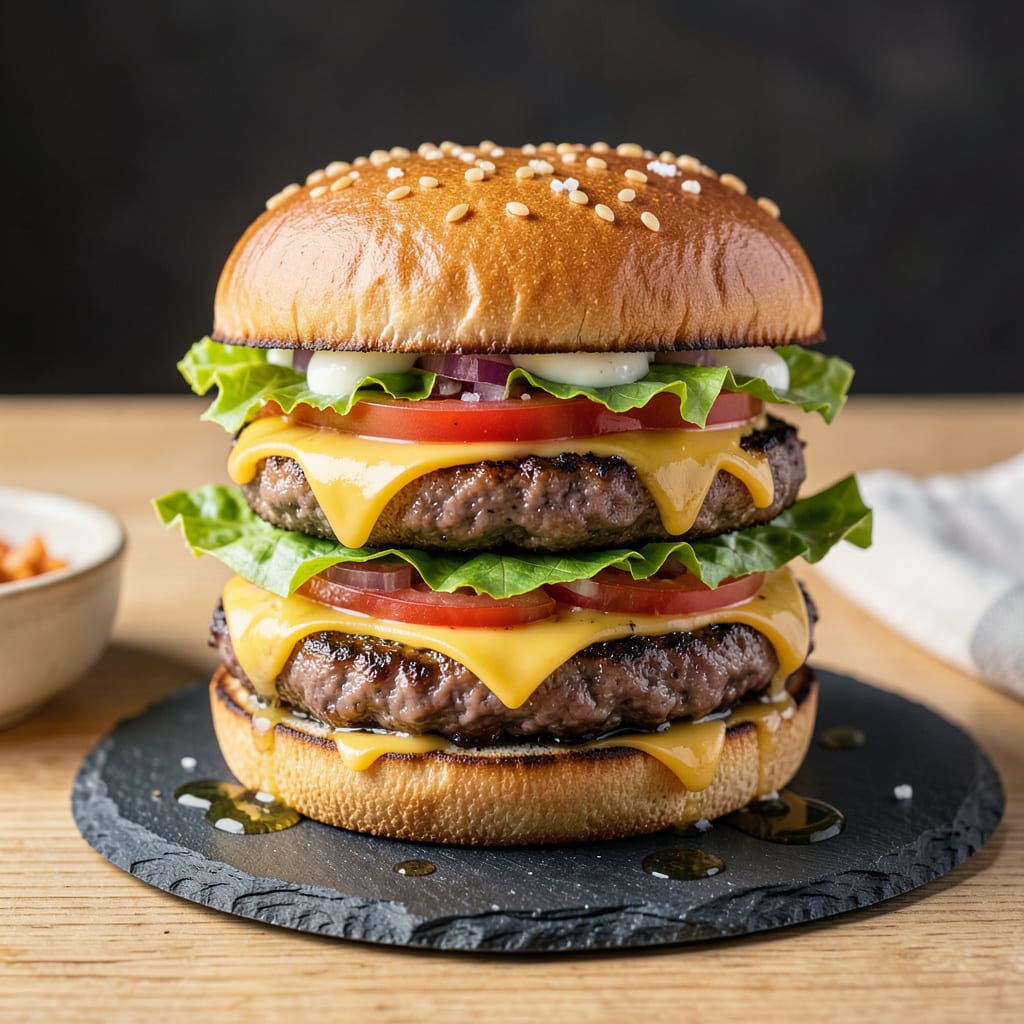
Cooked burgers should not be left out for more than 2 hours at room temperature (or 1 hour if above 90°F). After this, bacteria like Salmonella and E. coli can multiply rapidly, making the burger unsafe to eat.
This isn’t just about taste—it’s about food safety science. 🔥 The temperature danger zone (between 40°F and 140°F) creates perfect conditions for bacteria to double every 20 minutes. I’ve seen too many backyard BBQs ruined by well-meaning hosts who didn’t realize that picnic table was essentially a petri dish.
What most people overlook is how quickly pathogens spread on cooked meat surfaces. Even if your burger looks and smells fine after sitting out, invisible contaminants may have already reached hazardous levels. This is why professional kitchens follow strict time protocols—because what you can’t see can definitely hurt you. ✨
💡 In This Article
- Why the 2-Hour Rule Matters for Burger Safety
- How to Store and Reheat Burgers Safely After Leaving Out
Why the 2-Hour Rule Matters for Burger Safety
The temperature danger zone between 40°F and 140°F transforms your delicious burger into a bacterial breeding ground. At these temperatures, pathogens like Salmonella and E. coli enter their exponential growth phase, doubling in number every 20 minutes.
This isn’t theoretical—I’ve watched lab tests where a single bacterium becomes millions in just hours when left in this range. 🔥
What makes burgers particularly vulnerable is their high protein content and moisture level. Ground beef‘s porous structure provides ample surface area for bacteria to colonize. A study from Kansas State University found that ground beef left at room temperature reached unsafe bacterial loads in as little as 90 minutes when ambient temperatures exceeded 85°F.
The fat content (typically 15-20% in burgers) also creates an ideal environment for microbial growth.
Here’s the kicker: you can’t rely on smell or appearance. The bacteria that cause food poisoning don’t produce noticeable odors until they’ve reached concentrations far beyond dangerous levels.
I once had a student insist their burger was “fine” after 3 hours on the counter—until we tested it and found Staphylococcus aureus levels that would’ve caused severe vomiting within hours. ✨
The one-hour rule for temperatures above 90°F exists because heat accelerates bacterial metabolism. At 95°F, bacteria grow about 50% faster than at 70°F. This is why picnic foods are so risky—the combination of warm outdoor temperatures and direct sunlight can push surface temperatures even higher.
Professional caterers use chafing dishes with precise temperature controls for exactly this reason.
Consider this: the USDA estimates that 1 in 6 Americans gets food poisoning annually, with improperly handled ground beef being a top culprit. The difference between a safe burger and a dangerous one often comes down to those critical minutes in the danger zone.
That’s why I always tell my students: when in doubt, throw it out—no burger is worth a trip to the ER. 💫
What most home cooks don’t realize is that even brief exposure adds up. Every minute your burger sits on that counter, you’re playing Russian roulette with bacterial growth. The two-hour limit isn’t arbitrary—it’s based on decades of food science research showing this is the maximum safe window before risk becomes likely. ⚡

Trained in classic French technique but raised on slow-cooked ribs and spicy rubs, she blends culinary skill with smoke and soul.
- Recipe for Boneless Pork Chops in Cast Iron Skillet: Sear and Baste to Juicy Perfection - October 3, 2026
- Recipe for Boneless Cross Rib Roast: Slow-Roasted Beef with Herb Crust - October 3, 2026
- Hamburgers in Sauce Recipe Crock Pot: Slow-Cooked Savory Delight - October 3, 2026