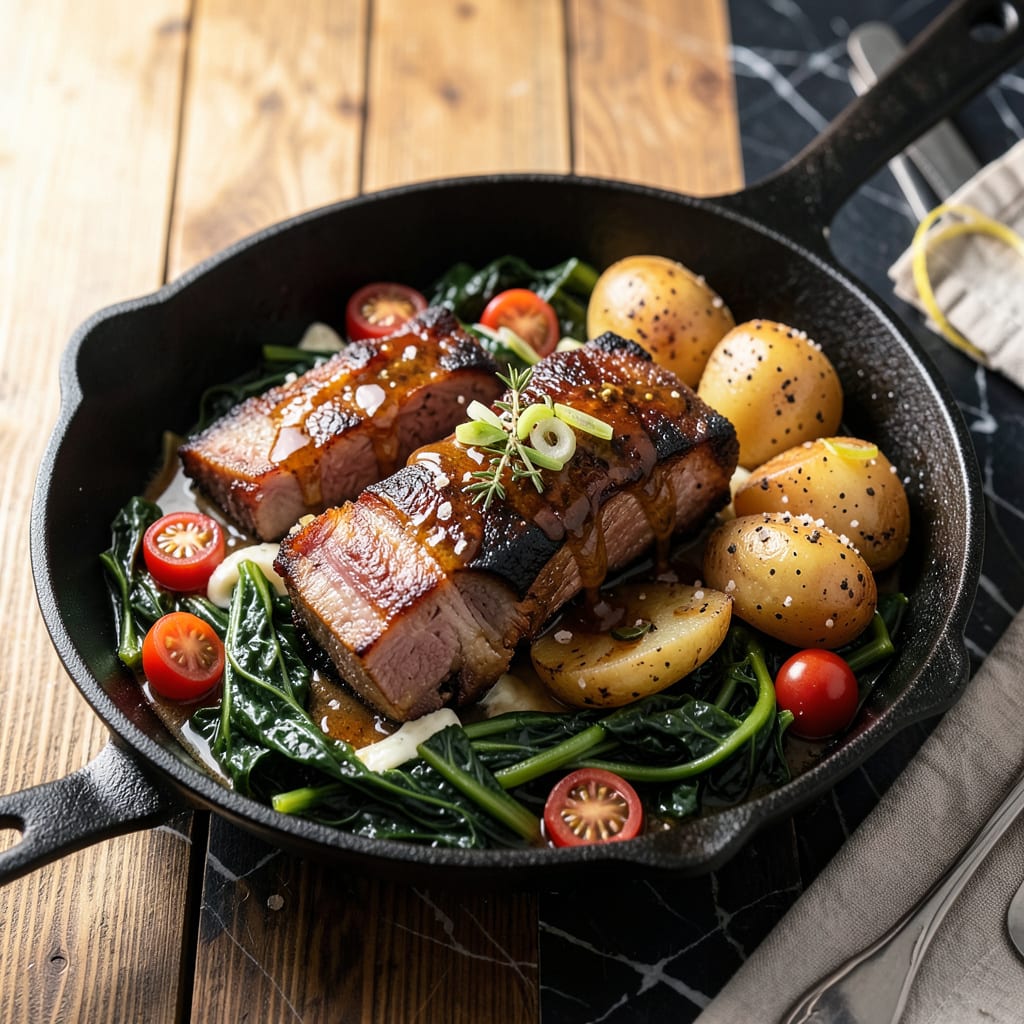
Smoked ham hocks typically need 2.5 to 3 hours of simmering in liquid for fall-off-the-bone tenderness. For oven-roasting at 325°F, allow 2 to 2.5 hours covered, then 30 minutes uncovered for crispy skin.
I’ve found the magic happens when collagen slowly melts into gelatin during this extended cooking time. 🔥 The key difference between stovetop and oven methods lies in moisture control – simmering keeps the meat submerged while roasting allows for caramelization. For busy cooks, I recommend checking doneness with a fork after 2 hours – it should slide in effortlessly when perfectly tender.
What most recipes don’t mention is how the smoking process already breaks down some connective tissue, so you’re working with a head start. The final texture depends equally on time and temperature consistency, which is why I always suggest using a meat thermometer to verify internal heat reaches 160°F at the thickest part.
💡 In This Article
- Why Cooking Time Affects Smoked Ham Hock Texture
- Best Liquid and Seasoning Pairings for Ham Hocks
Why Cooking Time Affects Smoked Ham Hock Texture
What transforms a tough smoked ham hock into melt-in-your-mouth perfection is the slow breakdown of collagen. These connective tissues begin converting to gelatin at around 160°F internal temperature, but the process accelerates between 180-205°F. The smoking process already starts this transformation, giving you a head start on tenderness.
🔥 When you simmer hocks for 2.5-3 hours, you’re allowing time for collagen fibers to fully unwind and dissolve into rich, silky gelatin that coats the meat fibers.
The moisture content plays a crucial role in this transformation. Simmering keeps hocks submerged, preventing temperature spikes that could cause proteins to seize up. I’ve found that maintaining a gentle simmer (small bubbles breaking the surface) at 180-190°F creates the ideal environment.
Compare this to oven-roasting where you lose about 20% moisture through evaporation – that’s why roasted hocks develop that desirable crispy exterior while staying juicy inside. The tradeoff is you’ll need to baste every 45 minutes to compensate for moisture loss.
Different cooking methods create distinct textural outcomes. Stovetop simmering produces the most uniform tenderness since the liquid conducts heat evenly. Oven-roasting at 325°F creates a gradient – crispy skin outside with ultra-tender meat near the bone. Slow cookers operate at 170-180°F, which extends cooking time to 4-5 hours but minimizes moisture loss.
What most cooks don’t realize is that the bone itself acts as a heat conductor, cooking the surrounding meat faster than outer layers. ✨
The smoking process already denatures some surface proteins, which is why pre-smoked hocks cook about 25% faster than fresh. I always recommend checking doneness by inserting a fork near the bone – it should slide in with zero resistance and emerge coated with glossy collagen.
For oven-roasted hocks, watch for the skin to develop a mahogany color and audible crackle when pressed. The final texture depends equally on time, temperature consistency, and how well you manage moisture throughout the process.
Here’s a pro tip from my pitmaster days: Rest hocks for 15-20 minutes after cooking. This allows the gelatin to redistribute and reabsorb into the meat fibers. Cutting too soon lets all that precious moisture escape, leaving you with drier results.
The resting period also lets the internal temperature stabilize – you’ll notice the meat pulls away from the bone more cleanly when sliced after proper resting. 💫
For those using slow cookers, remember that the lower temperature means collagen breaks down more slowly. I’ve had best results with 4 hours on high or 8 hours on low, adding an extra 30 minutes if the hocks are particularly large.
The advantage here is you can safely hold them at temperature for up to 2 additional hours without overcooking – perfect for meal prep or busy schedules.
The science behind this is fascinating: Collagen’s triple-helix structure unwinds at about 160°F, but the conversion to gelatin happens gradually over time. That’s why you can’t rush this process – the longer, gentler heat application creates more complete breakdown.
Think of it like unraveling a tightly wound rope strand by strand rather than trying to snap it in half. The patience pays off in that signature “stick to your ribs” texture we all love in properly cooked ham hocks. ⚡

Trained in classic French technique but raised on slow-cooked ribs and spicy rubs, she blends culinary skill with smoke and soul.
- Recipe for Boneless Pork Chops in Cast Iron Skillet: Sear and Baste to Juicy Perfection - October 3, 2026
- Recipe for Boneless Cross Rib Roast: Slow-Roasted Beef with Herb Crust - October 3, 2026
- Hamburgers in Sauce Recipe Crock Pot: Slow-Cooked Savory Delight - October 3, 2026