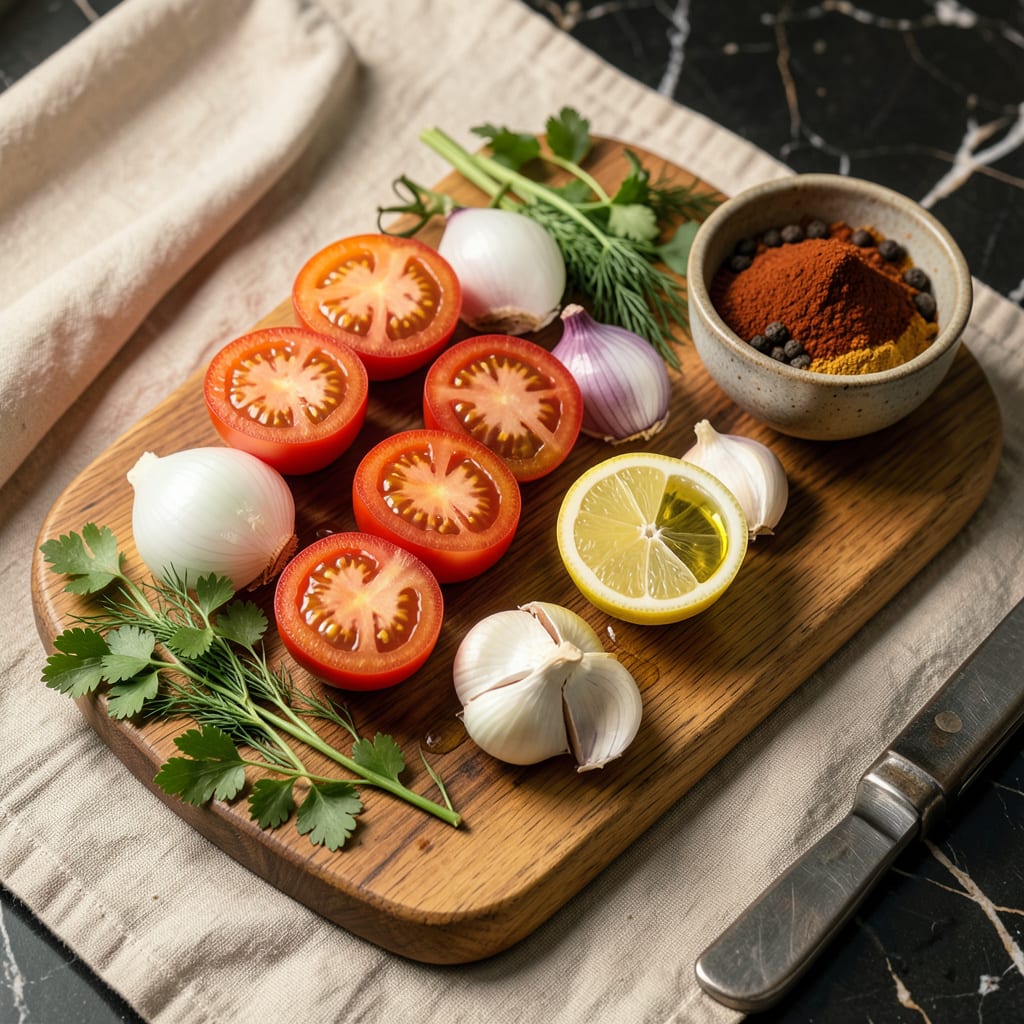
‘Malzemeler’ refers to the essential ingredients list in Turkish recipes. A well-prepared malzemeler recipe starts with fresh, high-quality components measured precisely for balanced flavors and textures in traditional dishes.
In Turkish cuisine, the malzemeler list isn’t just about what goes into a dish—it’s about honoring culinary traditions that have been perfected over centuries. I’ve found that the magic happens when you understand how each ingredient interacts, like how yogurt’s acidity tenderizes meats or how pul biber’s smoky heat transforms simple stews. 🔥 This intentional selection process is what separates good Turkish dishes from extraordinary ones.
The preparation approach matters just as much as the ingredients themselves. Turkish cooks often arrange their malzemeler in the order they’ll be used—a technique that creates rhythm in the kitchen. I always recommend pre-measuring spices into small bowls, as this prevents over-seasoning and helps maintain the delicate balance that defines authentic Turkish flavors.
💡 In This Article
- Key Components of Authentic Malzemeler in Turkish Cooking
- Organizing Your Malzemeler for Stress-Free Turkish Recipes
Key Components of Authentic Malzemeler in Turkish Cooking
The foundation of Turkish malzemeler starts with extra virgin olive oil—specifically the rich, peppery varieties from Ayvalık or Memecik olives. These oils contain 0.8-1.2% oleocanthal, a compound that creates that signature throat-catching sensation while carrying flavors deeper into dishes.
Unlike neutral oils, Turkish olive oil is intentionally robust, with smoke points around 375°F that make it ideal for both raw applications (like ezme salatası) and gentle cooking methods.
Yogurt serves as the backbone for both texture and fermentation. Traditional Turkish yogurt contains 4-5% milk fat and live cultures that break down proteins, creating that distinctive tangy creaminess. When used in marinades (like for şiş kebap), the lactic acid tenderizes meat fibers while the fat content prevents drying during grilling.
The difference between store-bought and homemade is dramatic—authentic versions develop a velvety consistency that coats ingredients perfectly.
Spices tell the regional story. Pul biber (Aleppo pepper) from Gaziantep delivers 30,000-50,000 SHU of fruity heat, while Urfa biber offers chocolatey depth with 0% capsaicin burn. Coastal regions favor sumac’s citrusy punch (pH 3-4), while central Anatolia relies on dried mint’s cooling menthol notes. The secret?
Toasting whole spices in a dry pan until fragrant (about 2-3 minutes at medium heat) before grinding releases essential oils that bloom in hot oil.
Fresh herbs transform simple dishes. Flat-leaf parsley and dill contain apigenin and limonene compounds that brighten rich flavors, while wild thyme (from Mediterranean hillsides) packs 2-3x more thymol than cultivated varieties. The Turkish approach layers herbs at different stages—some cooked into bases, others added fresh at the end—to create multidimensional aromas.
A classic mercimek çorbası might use dried mint in cooking but finish with fresh parsley for contrast.
Regional variations reveal Turkey’s diversity. Aegean coast recipes highlight citrus and seafood, using lemon zest’s d-limonene to cut through olive oil richness. Eastern dishes incorporate fermented pastes like tarhana (with 12-15% lactic acid bacteria) for sour depth.
The Black Sea region’s humid climate produces corn and anchovies that define dishes like hamsi pilavı, where the fish’s umami (1,200-1,500 mg/100g of glutamate) creates an irresistible base.
What most home cooks miss is the intentional layering. Turkish malzemeler aren’t just combined—they’re sequenced. Onions are caramelized to 320°F for sweetness before adding garlic (which burns at 350°F). Tomatoes cook down to concentrate glutamic acid before liquids are added.
This staged approach builds flavor compounds gradually, resulting in dishes where every ingredient’s role is distinct yet harmonious. ✨

Trained in classic French technique but raised on slow-cooked ribs and spicy rubs, she blends culinary skill with smoke and soul.
- Recipe for Boneless Pork Chops in Cast Iron Skillet: Sear and Baste to Juicy Perfection - October 3, 2026
- Recipe for Boneless Cross Rib Roast: Slow-Roasted Beef with Herb Crust - October 3, 2026
- Hamburgers in Sauce Recipe Crock Pot: Slow-Cooked Savory Delight - October 3, 2026